Vista previa Vista previa en RA Cambiar a formato impreso Encargar reproducción pintada a mano Compartir
Ver detalles Guía Añadir a favoritos Descargar Ver artículos similares Radiografía Presentación de diapositivas Estadísticas

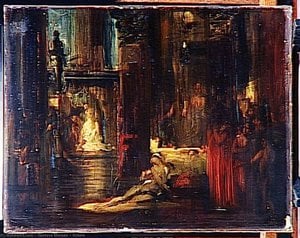
La Mort de Sapho

La Mort de Sapho depicts a woman lying on her side before a rocky landscape with a castle-like structure, symbolizing death and introspection through vibrant colors and intricate figures—a masterpiece by Gustave Moreau.

Explore la cautivadora obra simbolista de Gustave Moreau (1826-1898). Descubra sus pinturas alegóricas, escenas mitológicas y su influencia en Matisse y Rouault. Visite el Musée Gustave Moreau en París para experimentar el legado de esta figura fundamental.

Adquiera una imagen digital de alta resolución y optimizada, muy superior a la vista previa en línea.

Cada archivo es preparado meticulosamente por nuestros especialistas internos mediante el uso de herramientas avanzadas y un experto retoque manual. Nos aseguramos de que cada imagen posea una claridad excepcional, una precisión cromática impecable y un detalle minucioso.

El archivo final se entrega por correo electrónico en un plazo de 72 horas, optimizado para su uso inmediato en entornos profesionales, editoriales y de impresión. Esta es la misma calidad en la que confían los estudios de diseño, las editoriales y las galerías de primer nivel.

Imagen Digital

Descarga un archivo de alta resolución para exhibición personal, impresión y proyectos creativos. ( Cambiar a formato impreso Encargar reproducción pintada a mano)

Precio total

$ 24,90

Incluido en cada pedido de imágenes digitales

Entrega digital experta, garantizada.

Al elegir WahooArt.com, no solo está adquiriendo una imagen; está recibiendo una obra de arte digital mejorada profesionalmente, elaborada con precisión y respaldada por una garantía de satisfacción. Esto es todo lo que incluye su pedido, automáticamente:

shipping_icon
Entrega inmediata por email

Recibirá su archivo de imagen digital en alta resolución por correo electrónico en un plazo de 72 horas tras realizar su pedido, listo para su uso inmediato.

canvas_icon
Archivo digital optimizado por IA

Su obra de arte se optimiza profesionalmente mediante herramientas avanzadas de IA y edición manual, garantizando el máximo detalle, claridad y precisión cromática.

insurance_icon
Reenvío gratuito de por vida

¿Has borrado o perdido tu archivo por error? No te preocupes: te lo volveremos a enviar en cualquier momento, sin coste adicional.

tax_icon
Sin gastos de importación, siempre

Disfrute de su obra de arte al instante sin aduanas, aranceles ni gastos de envío; las descargas digitales siempre están libres de impuestos.

color_icon
Garantía de precisión de color

Garantizamos que su imagen digital refleje los colores originales con la mayor fidelidad posible, mediante el uso de herramientas profesionales y gestión del color.

return_icon
Garantía de satisfacción de 100 días

Si no está satisfecho con su imagen digital, la revisaremos o le reembolsaremos el 100% en un plazo de 100 días, sin preguntas.

guarantee_icon
100% Garantía de devolución de dinero

¿No está satisfecho? Obtenga un reembolso completo dentro de los 100 días posteriores a la recepción de su archivo digital, sin preguntas.

discount_icon
Descuentos por volumen

Compra 3 imágenes, ahorra 10% - Compra 5, ahorra 15% - Compra 10+, ahorra 20%. Ideal para proyectos creativos, galerías y agencias.

Datos clave

  • Artist: Gustave Moreau
  • Title: The Painting
  • Artistic style: Romantic Surrealism
  • Subject or theme: Mythology, Spirituality
  • Location: Private Collection
  • Medium: Oil on Canvas

Cuestionario de arte

Cada pregunta tiene una única respuesta correcta.

Pregunta 1:
What artistic movement is Gustave Moreau associated with?
Pregunta 2:
The painting depicts a woman lying on her side in front of what type of landscape?
Pregunta 3:
What architectural element is prominently featured in the background of “La Mort de Sapho”?
Pregunta 4:
Moreau’s artistic style prioritizes conveying what?
Pregunta 5:
What is the overall atmosphere created by Moreau’s use of color in “La Mort de Sapho”?

A Dream Weaver of Symbolism: The Life and Art of Gustave Moreau

Gustave Moreau—a name that conjures images of opulent interiors bathed in muted hues, populated by fantastical figures drawn from mythology and folklore—stands apart as a titan among the Symbolist painters who dominated the artistic landscape of late 19th-century Paris. Unlike his Impressionist contemporaries obsessed with capturing sunlight’s ephemeral dance across landscapes, Moreau wrestled with profound questions about consciousness, spirituality, and the subconscious mind, translating these intellectual explorations into breathtaking visual narratives. His life itself was marked by an unusual blend of scholarly pursuits and artistic obsession—a testament to his unwavering commitment to forging a singular path toward aesthetic truth. Moreau’s formative years were spent immersed in the intellectual ferment of Parisian salons, where he encountered thinkers like Nietzsche and Wagner—figures who profoundly influenced his worldview and fueled his fascination with esoteric traditions. This exposure instilled within him a conviction that art possessed the capacity to transcend mere representation, achieving instead a communion with deeper realities beyond sensory perception. He rejected the prevailing scientific materialism of the era, arguing passionately for the importance of intuition and imagination as instruments of artistic creation. His distinctive style—characterized by meticulous detail, flattened perspectives, and an arresting use of color—was born from this intellectual crucible. Moreau eschewed the naturalistic conventions championed by Realism, opting instead for a deliberately stylized approach that prioritized symbolic resonance over photographic accuracy. He employed techniques honed through years of painstaking observation and experimentation, layering translucent glazes upon thickly impastoed surfaces to achieve luminous effects and imbue his canvases with an otherworldly glow. This masterful manipulation of pigment—often incorporating iridescent hues—created textures that seemed to pulsate with inner life, mirroring the artist’s own preoccupation with psychological depth. Moreau's artistic output spanned decades, producing a prolific body of work encompassing paintings, sculptures, decorative arts, and prints. However, it is his monumental canvases—particularly those depicting biblical scenes and mythological figures—that cemented his reputation as one of Symbolism’s foremost masters. Consider “The Tower of Babel,” for instance—a sprawling composition dominated by towering stone structures and populated by grotesque humanoids engaged in futile attempts to ascend toward the heavens. The painting's symbolism is multilayered, reflecting Moreau’s anxieties about societal fragmentation and humanity’s inability to grasp transcendent truths. Similarly, his depiction of “Saint George and the Dragon”—a dramatic tableau imbued with palpable tension—employs flattened perspectives and stylized figures to convey a visceral sense of struggle between good and evil. Beyond its technical brilliance, Moreau's art possesses an undeniable emotional impact. His canvases evoke feelings of melancholy, wonder, and apprehension—reflecting his profound engagement with existential concerns. He sought not merely to depict events but to communicate inner states of mind, inviting viewers into a realm of psychological contemplation. By confronting the viewer with unsettling imagery and ambiguous narratives, Moreau compelled them to grapple with questions about faith, morality, and the human condition—a legacy that continues to inspire artists and collectors alike. Ultimately, Gustave Moreau’s enduring influence stems from his unwavering conviction that art could serve as a conduit for accessing realms beyond the visible world. He remains an exemplar of artistic integrity and visionary imagination—a testament to the transformative power of pursuing beauty and truth with uncompromising passion. His paintings endure not simply as aesthetically pleasing objects but as profound meditations on the mysteries of human experience, securing his place among the most significant figures in Symbolist art history.

Biografía del artista

**vida temprana y educación**

gustave moreau, un artista francés, nació el 6 de abril de 1826 en París. Recibió una formación académica tradicional en pintura en la école des beaux-arts, mostrando una aptitud para el dibujo desde temprana edad.

**el movimiento simbolista**

La obra de Moreau, caracterizada por temas alegóricos y mitológicos, lo posicionó como un destacado pintor simbolista, especialmente durante los años 1890. Su arte (y el simbolismo en general) cayó en desfavor pero ha sido reevaluado desde la década de 1960, con Moreau ahora considerado entre los pintores simbolistas más importantes.

**obras notables y exposiciones**

* salomé en la prisión (pintura de 'gustave moreau') es un ejemplo notable de su obra, mostrando su dominio del simbolismo. * autorretrato (pintura de 'gustave moreau') es otra poderosa representación del artista en sí mismo.

**museo gustavo moreau**

El museo nacional gustavo-moreau (museo gustavo moreau paris, francia) en París está dedicado a la obra de Moreau, que alberga más de 1200 pinturas, acuarelas y dibujos. El museo es un testimonio de su legado artístico.

**legado e influencia**

La influencia de Moreau en el movimiento simbolista es innegable. Enseñó en la école des beaux-arts, influyendo en artistas notables como hénri matisse y giorges rouault. Su naturaleza reclusiva no disminuyó su impacto en el mundo del arte. **en conclusión, el legado de gustavo moreau como figura seminal en el movimiento simbolista perdura, con su obra continuando inspirando e influyendo a los artistas hasta el día de hoy.**
Gustave Moreau

Gustave Moreau

1826 - 1898 , Francia

Datos clave

  • Artistas Influenciados:
    • Henri Matisse
    • Georges Rouault
  • Artistas Que Influyeron:
    • Eugène Delacroix
    • Miguel Ángel
    • Leonardo da Vinci
  • Fecha De Muerte: 1898
  • Fecha De Nacimiento: 6 de abril de 1826
  • Lugar De Nacimiento: París, Francia
  • Movimiento Artístico: Simbolismo
  • Nacionalidad: Francés
  • Nombre Completo: Gustave Moreau
  • Obras Notables:
    • Salomé en la prisión
    • Autorretrato
    • Júpiter y Semele
    • Orfeo
    • La Aparición