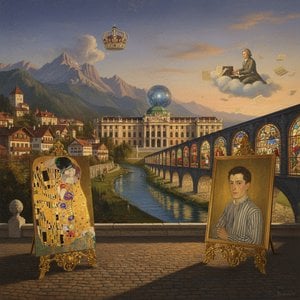
Junius: A Symbolist Masterpiece Embodied in Chalk
Gustav Klimt’s “Junius,” created in 1896, stands as a cornerstone of Austrian Symbolism and Art Nouveau—a movement that sought to transcend mere representation and delve into the realm of psychological and spiritual significance. Measuring 41 x 31 cm, this chalk drawing isn't merely an image; it’s a carefully constructed visual poem brimming with intricate details and potent symbolism. Klimt, deeply influenced by Japanese aesthetics and fascinated by exploring the subconscious mind, crafted “Junius” as a profound meditation on human experience—a testament to his artistic vision during a transformative period in European art history.
The Painting: A Glimpse into Symbolism
“Cite>Junius” exemplifies Klimt’s commitment to Symbolist principles. Unlike Impressionists who captured fleeting moments of light and color, Klimt aimed for something deeper—a depiction that communicates ideas and emotions rather than simply mirroring reality. The composition centers around two figures adorned with crowns, one gazing downwards in contemplation while the other appears to look upwards, suggesting a yearning for transcendence. This deliberate arrangement underscores Klimt’s preoccupation with spiritual themes and his desire to evoke feelings of awe and wonder within the viewer. The subtle shading and textural variations achieved through chalk contribute to the painting's ethereal quality—a characteristic hallmark of Symbolist art.
Symbolic Elements
The crowns are undeniably the most striking visual element in “Junius.” Traditionally, crowns symbolize power, nobility, or divine authority – concepts Klimt skillfully employs to elevate the figures depicted. However, their downward gaze speaks volumes about introspection and contemplation. It’s as if the figure is grappling with existential questions—a reflection of the broader Symbolist preoccupation with exploring the inner landscape of consciousness. The artist's meticulous attention to detail extends beyond the crowns themselves; every line and contour contributes to the overall sense of mystery and symbolic resonance.
Artistic Influences and Style
Klimt’s artistic journey was shaped by diverse influences, including Art Nouveau—a movement celebrated for its organic forms and flowing lines—and Japanese art, which captivated Klimt with its emphasis on asymmetry and flattened perspectives. “Junius” seamlessly blends these stylistic elements, resulting in a visual language that is both aesthetically pleasing and intellectually stimulating. Klimt’s masterful technique—characterized by the use of chalk to achieve remarkable tonal gradations—further enhances the painting's expressive power. The textured surface invites viewers to linger on its subtleties, fostering a connection with the artwork's emotional core.
Relevance in Modern Times
Despite being created over a century ago, “Junius” retains an enduring relevance today because it speaks to universal human concerns—questions of identity, spirituality, and contemplation. Klimt’s exploration of psychological depth continues to inspire artists and art enthusiasts alike—serving as a reminder that great art transcends time and culture. Its quiet grandeur and evocative symbolism resonate with contemporary audiences who appreciate works that provoke thought and emotion.
Preservation and Display
“Junius” is proudly housed in
The Museum Georg Schäfer in Germany—an institution dedicated to safeguarding artistic heritage for future generations. The museum’s careful curation ensures that visitors can experience Klimt's masterpiece firsthand—a crucial step in preserving the legacy of Symbolism and Art Nouveau.
Experience the beauty of art with WahooArt.com's handmade oil painting reproductions.
Preguntas y respuestas
¿A qué se debe la situación de los derechos de autor de "Junius" de Gustav Klimt?
"Junius" de Gustav Klimt es de en el dominio público: sus derechos de autor han expirado. La vigencia de los derechos de autor se cuenta a partir del fallecimiento del artista, que tuvo lugar en 1918.
¿Los colores de "Junius" de Gustav Klimt son intensos o tenues?
"Junius" de Gustav Klimt presenta una saturación de Color sutil y una intensidad de Equilibrado.
¿Dónde se recomienda exhibir el formato Formato vertical de "Junius"?
El formato (Formato vertical) y el espacio recomendado (Vestíbulos de hoteles) son los dos datos de colocación registrados para "Junius" de Gustav Klimt.



 Ver en contexto
 Cambiar a impresiones
 Enviar
 Compartir
 Detalles
 Guía
Guía

 Descargar
 Similares
 Radiografía
 Presentación de diapositivas
 Q&A
Q&A Estadísticas


 Ver más






































 La opción de vidrio solo está disponible en tamaños inferiores a 110 cm.