x
Ver en contextoVer en contexto Vista previa en RAVista previa en RA Comprar impresión Comprar impresiónComprar pintura hecha a mano Comprar pintura hecha a mano EnviarEnviar
DetallesDetalles Añadir a favoritos Añadir a favoritos DescargarDescargar SimilaresSimilares RadiografíaRadiografía Presentación de diapositivasPresentación de diapositivas

Perspective View (Stage design)

Discover Canaletto's 'Perspective View (Stage design)': A captivating capriccio depicting a fantastical Roman Capitol stage set, showcasing intricate details and masterful perspective.

Descubre los impresionantes paisajes urbanos de Venecia de Canaletto, maestro de la veduta. Admira su meticulosa precisión y descubre cómo utilizó la cámara oscura para capturar la belleza arquitectónica del siglo XVIII.

Adquiera una imagen digital de alta resolución y optimizada, muy superior a la vista previa en línea.

Cada archivo es preparado meticulosamente por nuestros especialistas internos mediante el uso de herramientas avanzadas y un experto retoque manual. Nos aseguramos de que cada imagen posea una claridad excepcional, una precisión cromática impecable y un detalle minucioso.

El archivo final se entrega por correo electrónico en un plazo de 72 horas, optimizado para su uso inmediato en entornos profesionales, editoriales y de impresión. Esta es la misma calidad en la que confían los estudios de diseño, las editoriales y las galerías de primer nivel.

Imagen Digital

Descarga un archivo de alta resolución para exhibición personal, impresión y proyectos creativos. (Comprar impresión Comprar impresiónComprar pintura hecha a mano Comprar pintura hecha a mano)

Precio total

$ 24,90

Incluido en cada pedido de imágenes digitales

Entrega digital experta, garantizada.

Al elegir WahooArt.com, no solo está adquiriendo una imagen; está recibiendo una obra de arte digital mejorada profesionalmente, elaborada con precisión y respaldada por una garantía de satisfacción. Esto es todo lo que incluye su pedido, automáticamente:

shipping_icon
Entrega rápida por email

Recibirá su archivo de imagen digital en alta resolución por correo electrónico en un plazo de 72 horas tras realizar su pedido, listo para su uso inmediato.

canvas_icon
Archivo digital optimizado por IA

Su obra de arte se optimiza profesionalmente mediante herramientas avanzadas de IA y edición manual, garantizando el máximo detalle, claridad y precisión cromática.

insurance_icon
Reenvío gratuito de por vida

¿Has borrado o perdido tu archivo por error? No te preocupes: te lo volveremos a enviar en cualquier momento, sin coste adicional.

tax_icon
Sin gastos de importación, siempre

Disfrute de su obra de arte al instante sin aduanas, aranceles ni gastos de envío; las descargas digitales siempre están libres de impuestos.

color_icon
Garantía de fidelidad de color

Garantizamos que su imagen digital refleje los colores originales con la mayor fidelidad posible, mediante el uso de herramientas profesionales y gestión del color.

return_icon
Garantía de satisfacción de 60 días

Si no está satisfecho con su imagen digital, la revisaremos o le reembolsaremos el 100% en un plazo de 60 días, sin preguntas.

guarantee_icon
100% Garantía de devolución de dinero

¿No está satisfecho? Obtenga un reembolso completo dentro de los 60 días posteriores a la recepción de su archivo digital, sin necesidad de explicaciones.

discount_icon
Descuentos por pedidos grandes

Compra 3 imágenes, ahorra 10% - Compra 5, ahorra 15% - Compra 10+, ahorra 20%. Ideal para proyectos creativos, galerías y agencias.

Datos clave

  • Movement: Venetian School
  • Title: Perspective View (Stage design)
  • Medium: Oil on canvas
  • Notable elements or techniques: Perspective, foreshortening
  • Artistic style: Veduta, Capriccio
  • Artist: giovanni antonio canal

Test de arte

Cada pregunta tiene una única respuesta correcta.

Pregunta 1:
What is the primary subject depicted in ‘Perspective View (Stage design)’?
Pregunta 2:
The description mentions that the painting may have been created shortly after Canaletto’s stay in Rome. What does this suggest about its style?
Pregunta 3:
The painting features a prominent equestrian monument. What historical figure does it resemble?
Pregunta 4:
According to the description, what is a key characteristic of Canaletto’s style that has been debated by scholars?
Pregunta 5:
What type of perspective is prominently featured in ‘Perspective View (Stage design)’?

A Captivating Vision of Venetian Theatre

Canaletto’s “Perspective View (Stage Design)” is more than just a depiction of a bustling scene; it's a window into the vibrant theatrical culture of 18th-century Venice. Painted likely in the early 1720s, this capriccio – a term Canaletto himself employed for imaginary or idealized views – transports us to a fantastical Capitol, glimpsed through a grand loggia adorned with Corinthian columns and shimmering with golden ornamentation. The composition is anchored by an equestrian monument, reminiscent of Marcus Aurelius, rising majestically from the steps of a triumphal arch, creating a powerful sense of grandeur and historical resonance.

The painting’s genius lies not merely in its technical precision but also in its evocative atmosphere. Canaletto masterfully employs linear perspective to draw the viewer into this meticulously rendered space. The receding lines of the loggia, the diminishing scale of the statues, and the subtle shifts in light create a convincing illusion of depth, inviting us to step through the painted world and become part of the scene. Notice how he uses atmospheric perspective – distant elements are paler and less defined, contributing to the overall sense of vastness and theatrical spectacle.

The Artist’s Context: Canaletto and Venetian Topography

Giovanni Antonio Canal, known as Canaletto, was a pivotal figure in the development of topographical painting. Born in Venice in 1697, he initially trained under his father, Bernardo Canal, a stage designer for theatrical productions. This early experience instilled in him a deep understanding of perspective and spatial relationships – skills that would later define his remarkable career. Canaletto’s work was profoundly shaped by the bustling commercial activity of Venice, a city renowned for its trade and artistic patronage. He meticulously documented the city's canals, palaces, markets, and everyday life, creating a vast archive of visual records.

His approach differed significantly from earlier Venetian painters who focused primarily on religious or mythological subjects. Canaletto’s interest lay in capturing the tangible reality of Venice – its architecture, its people, and its atmosphere. This shift towards secular subject matter reflected a broader cultural trend during the 18th century, as artists increasingly sought to depict the world around them with greater accuracy and detail. The painting's attribution has been debated by scholars, but Stefano Susinno recognized it as a unique example in Canaletto’s oeuvre due to its drawing, points of light, and similarities to other capricci.

Symbolism and Theatrical Allusion

Beyond its technical brilliance, “Perspective View (Stage Design)” is rich in symbolic meaning. The equestrian monument, a reference to Roman emperors, suggests an ideal of leadership and power. The triumphal arch evokes the grandeur of ancient Rome, while the golden ornaments symbolize wealth and prestige. The inclusion of figures engaged in various activities – musicians, spectators, and performers – underscores the importance of theatre as a central element of Venetian society. It’s a scene brimming with life, energy, and the allure of entertainment.

Interestingly, scholars believe this painting may have been created shortly after Canaletto's stay in Rome (1718-1720), possibly inspired by the city’s ancient ruins and theatrical traditions. The presence of numerous architectural elements reminiscent of Roman antiquity suggests a deliberate attempt to evoke the spirit of the classical world.

A Legacy of Precision and Vision

“Perspective View (Stage Design)” stands as a testament to Canaletto's exceptional skill and artistic vision. It’s a captivating blend of realism, imagination, and theatricality – a painting that continues to delight and intrigue viewers centuries after its creation. Reproductions of this work offer a remarkable opportunity to experience the beauty and detail of Canaletto’s artistry in your own home or office, bringing a touch of Venetian elegance and historical grandeur to any space.


Biografía del artista

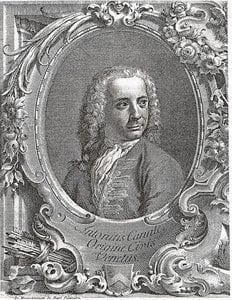
Giovanni Antonio Canal

Giovanni Antonio Canal, commonly known as canaletto, was born in Venice on October 18, 1697, to Bernardo Canal, a painter of theatrical scene settings, and Artemisia Barbieri. He was the son of a noble family steeped in artistic tradition—Bernardo Canal had himself trained as an artist—and his early life foreshadowed his extraordinary future career. Canaletto’s formative years were marked by exposure to Venetian art and culture, shaping his aesthetic sensibilities from a young age.

Early Life and Training

Canaletto began his artistic journey under the tutelage of his father, Bernardo Canal, who instilled in him the foundational principles of painting—observation, composition, and meticulous technique. Recognizing his son’s talent, Bernardo ensured he received a comprehensive education encompassing both artistic practice and humanist studies. Crucially, Canaletto's training extended beyond his father's guidance; he studied with Luca Carlevaris, a celebrated Venetian vedutista (landscape painter) who championed the use of precise perspective and detailed preparatory drawings—methods that would become hallmarks of Canaletto’s distinctive style. This mentorship solidified Canaletto’s understanding of how to capture the essence of urban spaces with remarkable accuracy and artistic merit.

The Making of a Master

In 1718, Canaletto embarked on a transformative journey to Rome, where he immersed himself in the vibrant artistic milieu of the era. He worked alongside his father producing scenery for two operas by Alessandro Scarlatti—a formative experience that honed his skills in theatrical design and exposed him to the influential ideas circulating within Roman intellectual circles. This period fostered Canaletto’s burgeoning creativity and cemented his commitment to mastering the art of illusionistic painting, a technique central to Venetian Baroque aesthetics. Upon returning to Venice, Canaletto swiftly established himself as a prolific painter, specializing in vedute—detailed depictions of Venetian cityscape—that captured the grandeur and dynamism of the city during his time.

Notable Works and Collaborations

Canaletto’s artistic output spanned decades, producing an impressive body of work that cemented his reputation as one of Venice's foremost artists. Among his most celebrated paintings are “The Stonemason’s Yard” (c. 1725), a masterful early depiction showcasing Canaletto’s burgeoning talent and demonstrating his ability to convey atmosphere and emotion with subtle brushstrokes; “Regatta on the Grand Canal” (c. 1730), which immortalizes a pivotal Venetian public ceremony—a testament to Canaletto's keen eye for capturing social life and architectural detail; and “Eton College” (1746-1756), where he skillfully rendered the collegiate campus in England, reflecting his growing influence as an artist abroad. Canaletto’s collaboration with his nephew Bernardo Bellotto—who became a respected painter in his own right—further enriched Venetian artistic culture, resulting in complementary views of Venice and other European cities.

Artistic Style and Technique

Canaletto's distinctive style was characterized by unwavering attention to detail and the masterful application of technique. He famously employed a camera obscura—a darkened room equipped with a lens—to achieve unparalleled topographical accuracy, meticulously transferring observed scenes onto canvas with remarkable precision. However, Canaletto’s artistic vision extended beyond mere replication; he prioritized compositional design, ensuring his paintings were not merely accurate recordings but also aesthetically compelling experiences for the viewer. His brushwork was deliberate and controlled, favoring smooth gradations of color and subtle tonal variations—a technique that conveyed a palpable sense of atmosphere and luminosity. Canaletto's legacy resides in his ability to transform observation into art—to distill the essence of Venice onto canvas with breathtaking beauty and enduring significance.

Legacy and Collections

Canaletto’s paintings are housed in prestigious museums worldwide, including The National Gallery in London, where “The Stonemason’s Yard” stands as a cornerstone of Venetian Baroque art; and the Museo Thyssen-Bornemisza in Madrid, which proudly displays “Regatta on the Grand Canal.” His influence extended far beyond his own lifetime, inspiring generations of artists who sought to emulate his meticulous style and evocative vision. Canaletto's contribution to European art history is undeniable—he remains a symbol of Venetian artistic excellence and a testament to the transformative power of observation and artistic skill.
Giovanni Antonio Canal

Giovanni Antonio Canal

1697 - 1768 , Italia

Breves datos

  • Artistic Movement Or Style: Vedute Venice
  • Artists Who Influenced This Artist:
    • Luca Carlevaris
    • Giovanni Paolo Pannini
  • Date Of Birth: October 18, 1697
  • Date Of Death: April 19, 1768
  • Full Name: Giovanni Antonio Canal
  • Nationality: Italian
  • Notable Artworks:
    • The Stonemason's Yard
    • Regatta on the Grand Canal
    • Eton College
  • Place Of Birth: Venice, Italy