Vista previa Vista previa en RA Encargar reproducción pintada a mano Ver versión en imagen digital Compartir
Ver detalles Guía Añadir a favoritos Descargar Ver artículos similares Radiografía Presentación de diapositivas Estadísticas

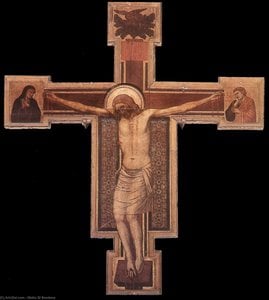
Crucifix (17)

El Crucifix de Giotto di Bondone, obra maestra del Renacimiento temprano, destaca por su innovación espacial y emocional profundidad en el Tempio Malatestiano de Rimini.

Descubre a Giotto di Bondone (1267-1337), el revolucionario pintor y arquitecto italiano. ¡Explora sus frescos proto-renacentistas, su naturalismo, su profundidad emocional y sus obras icónicas como la Capilla Scrovegni. Una figura fundamental en la historia del arte europeo.

Giclée / Impresión de arte

Impresiones giclée o en lienzo de calidad de museo con producción rápida y opciones de acabado flexibles. ( Encargar reproducción pintada a mano Ver versión en imagen digital)

P118B $10
P118H $10
P118W $10
P438Z $10
P508JH $12
P508YH $12
P805H $10
P805Z $10
P919BZ $10
P919G $10
P919XJ $10
P959ZH $10
P968JZ $12
W106C $8
W218G $10
W218JH $8
W218Y $10
W307PJ $10
W316G $10
W316PJ $8
W316Y $10
W398PJ $8
W4111J $10
W500HY $15
W500JH $15
W692G $12
W849H $8
W940BG $15
W953PJ $8

Estándar
personalizado
CM
INCH

Elija entre nuestros tamaños predefinidos que respetan las proporciones originales de la obra.

ancho
altura

Puede introducir sus propias dimensiones para adaptarse a un marco o espacio específico. Si el tamaño seleccionado no coincide con las proporciones de la imagen original, recortaremos la obra de arte o extenderemos la imagen con un borde con efecto espejo o de color sólido. Se enviará una maqueta digital para su aprobación antes de que comience la producción.
Tenga en cuenta que la vista previa en pantalla no refleja el recorte o la extensión real. Solo la maqueta mostrará con precisión la composición final.
Aunque existen tamaños personalizados, recomendamos seleccionar una dimensión de la lista predefinida para preservar las proporciones originales.

Envío a todo el mundo () en 2 semanas en lugar de las 4/5 semanas estándar. (25 septiembre)

why_choose_icon
Envío exprés gratuito a todo el mundo
why_choose_icon
Lienzo de lino de alta calidad
why_choose_icon
Seguro de envío completo
why_choose_icon
Garantía de reembolso de impuestos aduaneros
why_choose_icon
Garantía de fidelidad cromática exacta
why_choose_icon
Política de devolución de 100 días (solo por defectos)
why_choose_icon
Garantía de devolución del 100% del dinero
why_choose_icon
Oferta por volumen

Precio total

$ 68

reproduction

Crucifix (17)

Giclée / Impresión de arte

Tamaño de la reproducción

-

Precio total

$ 68

Datos clave

  • Dimensions: 430 × 303 cm
  • Influences: Byzantine art
  • Artist: Giotto di Bondone
  • Medium: Tempera on panel
  • Notable elements or techniques: Spatial depth; Emotional intensity
  • Location: Tempio Malatestiano, Rimini
  • Subject or theme: Religious iconography

Cuestionario de arte

Cada pregunta tiene una única respuesta correcta.

Pregunta 1:
What is the primary subject matter depicted in Giotto di Bondone’s Crucifix?
Pregunta 2:
In which Italian city is the original Crucifix housed?
Pregunta 3:
Who designed the Tempio Malatestiano, where the Crucifix resides?
Pregunta 4:
What artistic style is Giotto credited with transitioning from?
Pregunta 5:
The Crucifix exemplifies Giotto's innovative approach to spatial representation by emphasizing:

Giotto Di Bondone: Crucifix – A Renaissance Revelation

The Crucifix by Giotto di Bondone stands as an unparalleled testament to the burgeoning artistic spirit of the Early Renaissance, marking a decisive break from Byzantine conventions and establishing a new paradigm for representing religious themes. Created around 1310 and housed within the Tempio Malatestiano in Rimini, Italy—a temple designed by Leone Battista Alberti and Matteo de’ Pasti—this monumental painting transcends mere depiction; it embodies an emotional depth and humanist sensibility that profoundly influenced subsequent generations of artists.

Composition and Symbolism: Spatial Innovation

Giotto's genius lay not only in capturing the physicality of Christ but also in reimagining spatial representation. Unlike the flattened, stylized figures characteristic of Byzantine art, Giotto employed a technique known as *spazio aperto*, or “open space,” creating an illusion of depth that was revolutionary for its time. The central crucifix dominates the canvas, positioned prominently against a backdrop featuring two smaller figures flanking it—likely representing Mary Magdalene and Nicodemus—adding to the sense of drama and conveying a profound understanding of perspective. These figures are not merely decorative; they serve as crucial elements in establishing the spatial hierarchy and enhancing the emotional impact of the scene. The careful arrangement of lines and planes contributes significantly to the painting's overall atmosphere, reflecting Giotto’s pioneering approach to artistic realism.

Artistic Significance: Tempera on Scale

The choice of tempera paint—a medium known for its luminosity and durability—was itself a bold innovation. Applying tempera onto a large scale demanded considerable skill and precision, demonstrating Giotto's mastery of materials and techniques. This monumental fresco cycle is considered one of the most important achievements of Early Renaissance art, signaling a shift away from religious dogma toward human emotion and observation. The Tempio Malatestiano’s architectural grandeur further amplifies the painting’s impact, creating an immersive experience for viewers that underscores Giotto's artistic vision.

Historical Context: Rimini and Alberti’s Temple

The Tempio Malatestiano represents a pinnacle of Renaissance architecture, embodying Alberti’s humanist ideals and incorporating classical principles of proportion and symmetry. Constructed during the reign of Sigismondo Malatesta, the temple served as a symbol of civic pride and artistic patronage—a testament to Rimini's cultural vitality. Giotto’s Crucifix was commissioned specifically for this temple, cementing its place within the broader context of Renaissance artistic experimentation and intellectual discourse. Its presence alongside sculptures by Agostino Di Duccio – notably “The Moon” and Saturn – further enriched the temple’s artistic heritage.

Relevance in Modern Times: An Enduring Legacy

Giotto's Crucifix continues to inspire artists today, serving as a cornerstone of Western art history. Its influence can be seen in countless subsequent religious paintings, demonstrating its enduring power to communicate profound spiritual truths. For those seeking to appreciate the beauty and emotional resonance of this masterpiece firsthand, WahooArt offers exceptional reproductions crafted by skilled artisans—allowing you to experience Giotto’s vision anew. Explore more about Giotto's remarkable oeuvre at Giotto Di Bondone: Crucifix (17) and immerse yourself in the splendor of Renaissance art at The Museum San Francesco (Rimini, Italy).

Biografía del artista

**una vida de innovación y revolución artística**

giotto di bondone, el renombrado pintor y arquitecto italiano, dejó una huella imborrable en el mundo del arte con sus contribuciones pioneras a los períodos proto-renacentista y gótico. Nacido en 1267 en Florencia, Italia, la vida de Giotto permanece algo envuelta en misterio, pero su legado artístico es innegable.

**contribuciones e innovaciones artísticas**

La obra más celebrada de Giotto, la Capilla Scrovegni (o Capilla Arena) en Padua, terminada alrededor de 1305, es un testimonio de su espíritu innovador. Este ciclo de frescos, que representa la vida de la Virgen y la vida de Cristo, no solo demuestra su genio artístico sino que también muestra una capacidad narrativa que fue un cambio significativo con respecto al enfoque estilizado bizantino.
  • Revolucionando la pintura: La insistencia de Giotto en el naturalismo, la atención a las emociones humanas y la exploración de figuras espaciales y voluminosas en la pintura sentaron las bases para los desarrollos en el arte occidental que siguieron.
  • Contribuciones arquitectónicas: Su encargo en 1334 por parte del gobierno comunal de Florencia para diseñar el nuevo campanile (campanario) de la catedral de Florencia afirma su doble talento como artista y arquitecto.

**obras notables y su significado**

**legado e influencia**

La influencia de Giotto en el arte occidental es profunda, sentando las bases para el movimiento artístico renacentista. Su énfasis en el naturalismo, las emociones humanas y la conciencia espacial en la pintura ha perdurado, asegurando su posición como una figura fundamental en la historia del arte europeo. explorar más obras e influencias de Giotto di bondone en WahooArt.com.

Giotto di Bondone

Giotto di Bondone

1267 - 1337 , Italia

Datos clave

  • Artistas Influenciados:
    • Masaccio
    • Leonardo da Vinci
  • Artistas Que Influyeron: ['Cimabue']
  • Fecha De Muerte: 1337
  • Fecha De Nacimiento: 1267
  • Lugar De Nacimiento: Florencia, Italia
  • Movimiento Artístico: Proto-Renacimiento
  • Nacionalidad: Italiana
  • Nombre Completo: Giotto di Bondone
  • Obras Notables:
    • Capilla Scrovegni
    • Madonna de Ognissanti
    • Frescos de Asís
Explore obras de arte organizadas por temas, estilos y características.