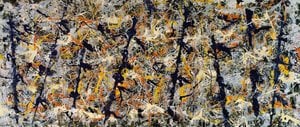
Obtenga un archivo listo para imprimir que supera con creces la vista previa web. Cada imagen digital que vendemos proviene de un maestro de alta resolución de nuestro archivo —generalmente de entre 5.000 y 15.000 píxeles de ancho— para que pueda realizar impresiones de gran formato, recortar con precisión o reproducir detalles minuciosos con total confianza.
Ningún archivo sale de nuestro estudio sin ser intervenido. Un experto digital coteja los colores con la pintura original y los corrige si es necesario, para luego mejorar la claridad y el detalle mediante herramientas de retoque profesional —siempre manteniendo la fidelidad a la pincelada y al estilo del artista. El resultado es una imagen que evoca la esencia de la pintura, no un escaneo con filtros.
Aprobación previa al finalizar: nuestro experto le enviará la imagen por correo electrónico en un plazo de 72 horas para su revisión. ¿No está satisfecho? Puede solicitar mejoras o correcciones, o pedir un reembolso si la calidad no cumple con sus expectativas.
Esta es la calidad en la que confían editoriales, estudios de diseño, galerías e imprentas.
Descarga un archivo de alta resolución para exhibición personal, impresión y proyectos creativos. ( Cambiar a impresiones Comprar pintura hecha a mano)
Al elegir WahooArt.com, no solo está adquiriendo una imagen; está recibiendo una obra de arte digital mejorada profesionalmente, elaborada con precisión y respaldada por una garantía de satisfacción. Esto es todo lo que incluye su pedido, automáticamente:
Recibirá su archivo de imagen digital en alta resolución por correo electrónico en un plazo de 72 horas tras realizar su pedido, listo para su uso inmediato.
Su obra de arte se optimiza profesionalmente mediante herramientas avanzadas de IA y edición manual, garantizando el máximo detalle, claridad y precisión cromática.
¿Has borrado o perdido tu archivo por error? No te preocupes: te lo volveremos a enviar en cualquier momento, sin coste adicional.
Disfrute de su obra de arte al instante sin aduanas, aranceles ni gastos de envío; las descargas digitales siempre están libres de impuestos.
Garantizamos que su imagen digital refleje los colores originales con la mayor fidelidad posible, mediante el uso de herramientas profesionales y gestión del color.
Si no está satisfecho con su imagen digital, la revisaremos o le reembolsaremos el 100% en un plazo de 100 días, sin preguntas.
¿No está satisfecho? Obtenga un reembolso completo dentro de los 100 días posteriores a la recepción de su archivo digital, sin necesidad de explicaciones.
Compra 3 imágenes, ahorra 10% - Compra 5, ahorra 15% - Compra 10+, ahorra 20%. Ideal para proyectos creativos, galerías y agencias.
Giorgio Vasari's “The Annunciation,” painted circa 1567, isn’t merely a depiction of a biblical scene; it’s a carefully constructed tableau brimming with symbolic weight and technical mastery. This remarkable work, often considered a pivotal study for a larger ceiling painting, offers a rare glimpse into the artist’s process – a testament to his dedication to capturing not just likeness but also the profound emotional resonance of faith. The image, rendered in the delicate hues of carta azzurra (azure paper), immediately draws the eye with its ethereal quality and remarkable sense of spatial depth.
Vasari’s choice of blue pigment is crucial to understanding the painting's impact. The specific shade, a pale, almost luminous azure, was highly prized in Renaissance Italy for its ability to create an airy, atmospheric effect. It’s not simply a color; it’s a key element in conveying the divine presence and the sense of otherworldly grace that permeates the scene. The artist skillfully employs washes of ink and delicate highlights – a technique reminiscent of tempera painting – to build up layers of texture and luminosity, avoiding the heavy impasto favored by some of his contemporaries. This restrained approach allows for an astonishing level of detail, particularly in the rendering of Mary’s face and the angel Gabriel's flowing robes.
Beyond its exquisite color palette, “The Annunciation” is distinguished by its sophisticated architectural design. Vasari masterfully integrates architectural elements – a coffered ceiling, a portal in the background, and a tent-shaped baldachin – to reinforce the composition’s clarity and stability. These aren't merely decorative flourishes; they serve as visual anchors, guiding the viewer’s eye through the scene and creating a sense of depth and perspective. The low vantage point, characteristic of ceiling paintings, emphasizes the scale of the figures and the grandeur of the event. Notice how Vasari uses linear perspective to create the illusion of receding space – the distant portal subtly diminishing in size, drawing us into the narrative.
The arrangement of the figures is equally deliberate. Gabriel, positioned on the left, extends his arm towards Mary, who sits serenely in the center of the frame. The subtle gestures and expressions convey a sense of reverence and anticipation. Even the secondary figures – a man near the top-left corner and another at the bottom-right – contribute to the scene’s dynamism, suggesting a broader context and inviting contemplation. The inclusion of a simple chair and vase adds a touch of domesticity, grounding the divine event within a recognizable human setting.
Giorgio Vasari (1511-1574) was more than just a painter; he was a polymath – an architect, sculptor, historian, and biographer. His “Lives of the Most Excellent Painters, Sculptors, and Architects,” published in 1550, established a framework for understanding Renaissance art that continues to influence scholars today. Vasari’s work profoundly shaped our perception of the period, elevating the status of artists and establishing Florence as the epicenter of artistic innovation. “The Annunciation” exemplifies his commitment to capturing both the beauty and the spiritual significance of religious subjects.
Further research reveals that this painting was originally intended for a ceiling in the Chapel of Santa Michele in the Torre Pia, Vatican Palace, alongside three other roundels depicting the Nativity, the Annunciation, Zacharias and the Angel, and the Liberation of St. Peter. The rediscovery of these related works has illuminated Vasari’s artistic process and provided valuable insights into the history of Renaissance art. The image's presence in the Louvre Museum and its detailed documentation through online resources – such as WikiArt and Google Arts & Culture – ensure that this remarkable masterpiece remains accessible to a global audience.
A high-quality reproduction of Vasari’s “The Annunciation” offers a stunning opportunity to bring the drama and beauty of this Renaissance painting into your home or office. The delicate color palette, masterful composition, and profound symbolism will undoubtedly captivate viewers and evoke a sense of serenity and contemplation. Consider commissioning a hand-painted replica – a faithful recreation that captures the essence of Vasari’s original work, allowing you to experience the artistry firsthand.
"The Annunciation" de Giorgio Vasari es de en el dominio público: sus derechos de autor han expirado. Este estado determina cómo se puede reproducir la imagen de la obra.
"The Annunciation" de Giorgio Vasari es una composición en Portrait con unas dimensiones de 19 x 22 cm en su formato original.
"The Annunciation" de Giorgio Vasari presenta un contraste Serene entre sus zonas de luz y sombra.


1511 - 1574 , Italia
 Ver en contexto
 Enviar
 Compartir
 Detalles
 Guía
Guía

 Descargar
 Similares
 Radiografía
 Presentación de diapositivas
 Preguntas y respuestas
 Estadísticas

 Ver más