Vista previa Vista previa en RA Encargar reproducción pintada a mano Ver versión en imagen digital Compartir
Ver detalles Guía Añadir a favoritos Descargar Ver artículos similares Radiografía Presentación de diapositivas Estadísticas

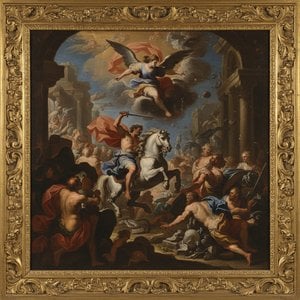
Perseus and Andromeda

Discover Giorgio Vasari’s ‘Perseus & Andromeda,’ a dramatic Baroque masterpiece! Explore this 1570 oil painting's classical myth, rich detail, and dynamic composition. A stunning Renaissance artwork.

Giorgio Vasari (1511-1574): pintor, arquitecto e historiador del arte renacentista italiano. Famoso por sus pinturas manieristas, la Galería Uffizi y 'Las Vidas', obra clave en historia del arte.

Giclée / Impresión de arte

Impresiones giclée o en lienzo de calidad de museo con producción rápida y opciones de acabado flexibles. ( Encargar reproducción pintada a mano Ver versión en imagen digital)

P118B $10
P118H $10
P118W $10
P438Z $10
P508JH $12
P508YH $12
P805H $10
P805Z $10
P919BZ $10
P919G $10
P919XJ $10
P959ZH $10
P968JZ $12
W106C $8
W218G $10
W218JH $8
W218Y $10
W307PJ $10
W316G $10
W316PJ $8
W316Y $10
W398PJ $8
W4111J $10
W500HY $15
W500JH $15
W692G $12
W849H $8
W940BG $15
W953PJ $8

Estándar
personalizado
CM
INCH

Elija entre nuestros tamaños predefinidos que respetan las proporciones originales de la obra.

ancho
altura

Puede introducir sus propias dimensiones para adaptarse a un marco o espacio específico. Si el tamaño seleccionado no coincide con las proporciones de la imagen original, recortaremos la obra de arte o extenderemos la imagen con un borde con efecto espejo o de color sólido. Se enviará una maqueta digital para su aprobación antes de que comience la producción.
Tenga en cuenta que la vista previa en pantalla no refleja el recorte o la extensión real. Solo la maqueta mostrará con precisión la composición final.
Aunque existen tamaños personalizados, recomendamos seleccionar una dimensión de la lista predefinida para preservar las proporciones originales.

Envío a todo el mundo () en 2 semanas en lugar de las 4/5 semanas estándar. (24 septiembre)

why_choose_icon
Envío exprés gratuito a todo el mundo
why_choose_icon
Lienzo de lino de alta calidad
why_choose_icon
Seguro de envío completo
why_choose_icon
Garantía de reembolso de impuestos aduaneros
why_choose_icon
Garantía de fidelidad cromática exacta
why_choose_icon
Política de devolución de 100 días (solo por defectos)
why_choose_icon
Garantía de devolución del 100% del dinero
why_choose_icon
Oferta por volumen

Precio total

$ 68

reproduction

Perseus and Andromeda

Giclée / Impresión de arte

Tamaño de la reproducción

-

Precio total

$ 68

Datos clave

  • Notable elements or techniques: Dramatic lighting; Layered brushstrokes
  • Artistic style: Classical Mythology
  • Dimensions: 117 x 100 cm
  • Influences: Renaissance
  • Movement: Baroque
  • Year: 1570
  • Medium: Oil on canvas

Cuestionario de arte

Cada pregunta tiene una única respuesta correcta.

Pregunta 1:
What is the primary subject matter of Perseus and Andromeda?
Pregunta 2:
Which artistic style is most characteristic of Giorgio Vasari's Perseus and Andromeda?
Pregunta 3:
What prominent artist influenced Vasari’s artistic vision?
Pregunta 4:
The painting utilizes a technique known for layering colors and creating depth. What is this technique called?
Pregunta 5:
Where was Perseus and Andromeda originally displayed?

A Dramatic Rescue: Giorgio Vasari's "Perseus and Andromeda"

Giorgio Vasari’s “Perseus and Andromeda,” completed in 1570, is more than just a depiction of a classical myth; it’s a visceral embodiment of the Baroque spirit – a tempestuous drama rendered with meticulous detail and imbued with potent symbolism. Measuring 117 x 100 cm, this oil-on-canvas masterpiece transports the viewer directly into the heart of a heroic rescue, a narrative steeped in themes of divine intervention, courage, and ultimately, redemption. The scene unfolds within a dramatically lit coastal setting, dominated by a colossal rock formation that serves as both a stage for the unfolding action and a powerful visual anchor.

  • The Myth Unveiled: The painting portrays the legendary tale of Andromeda, chained to a rock as a sacrifice to appease a monstrous sea creature. Perseus, guided by the gods, arrives to rescue her, battling the beast with heroic strength and ultimately severing its head.
  • Baroque Flourishes: Vasari’s style is firmly rooted in the Baroque movement, characterized by dynamic composition, theatrical lighting, and an emphasis on emotional intensity. The swirling waves, the muscular forms of Perseus and Andromeda, and the imposing presence of Poseidon all contribute to a sense of dramatic movement and heightened realism.

Technique and Materials: A Master’s Hand

Vasari's mastery is immediately apparent in his skillful application of oil paint on canvas. The technique showcases a layered approach, utilizing visible brushstrokes to build up texture and create a palpable sense of depth. The smooth blending of colors – primarily earthy tones of browns, ochres, and greens punctuated by vibrant blues and reds – contributes to the illusion of three-dimensionality. The artist’s meticulous attention to detail is evident in the rendering of the rocky landscape, the flowing drapery, and the expressive faces of the figures. The use of atmospheric perspective subtly recedes into the distance, further enhancing the painting's spatial depth.

  • Oil on Canvas: The medium itself – oil paint applied to canvas – allowed for the rich colors and luminous effects characteristic of Baroque art.
  • Layered Brushwork: Vasari’s technique involved building up color and form through multiple layers of thin glazes, creating a sense of depth and realism.

Symbolism and Emotional Impact

Beyond the immediate narrative, “Perseus and Andromeda” is rich in symbolic meaning. The sea monster represents chaos and destruction, while Andromeda’s vulnerability underscores the need for divine protection. Poseidon's intervention symbolizes power and salvation, highlighting the role of the gods in human affairs. Vasari expertly captures the emotional intensity of the scene – the desperation of Andromeda, the heroic determination of Perseus, and the raw power of Poseidon – creating a profoundly moving experience for the viewer. The dramatic lighting further amplifies this effect, casting strong contrasts between light and shadow to emphasize key figures and heighten the sense of drama.

Historical Context and Artistic Significance

Completed in 1570, “Perseus and Andromeda” reflects the artistic currents of its time – a period marked by a renewed interest in classical antiquity and a burgeoning Baroque style. Giorgio Vasari’s work stands as a testament to his versatility and his commitment to celebrating the achievements of past masters. This painting exemplifies the Renaissance fascination with mythology and heroism, while simultaneously pushing the boundaries of artistic expression through its dynamic composition and dramatic use of light and color. Its enduring appeal lies in its ability to evoke powerful emotions and transport viewers to another time and place.


Biografía del artista

Primeros años y formación

Giorgio Vasari, un renombrado pintor, arquitecto, escritor e historiador italiano, nació el 30 de julio de 1511 en Arezzo, Toscana. Comenzó su viaje artístico como discípulo de Guglielmo da Marsiglia, un hábil pintor de vidrieras. A los dieciséis años, Vasari se unió al círculo de Andrea del Sarto y sus alumnos, Rosso Fiorentino y Jacopo Pontormo, en Florencia.

Carrera artística

Las propias pinturas manieristas de Vasari fueron muy admiradas durante su vida. En 1529, visitó Roma, donde estudió las obras de Rafael y otros artistas del Alto Renacimiento romano. Algunas de sus obras notables incluyen:
  • El taller del pintor (fresco, 1548), ubicado en Casa Vasari, Arezzo, Italia (ver en WahooArt)
  • El Juicio Final (fresco, 1572), en la cúpula de la catedral de Florencia
  • La Adoración de los Magos (pintura al óleo, 1566), en la iglesia de Santa Croce, Florencia (más en WahooArt)

Contribuciones arquitectónicas

Los logros arquitectónicos de Vasari incluyen:
  • La logia del Palazzo degli Uffizi, Florencia, que funciona como una plaza pública
  • El Corredor de Vasari, que conecta los Uffizi con el Palazzo Pitti en Florencia (explorar en WahooArt)
  • La renovación de iglesias medievales, como Santa Maria Novella y Santa Croce

Legado

Vasari a menudo se le llama "el primer historiador del arte" debido a su libro Vidas de los más excelentes pintores, escultores y arquitectos italianos, que sigue siendo un texto fundamental en la escritura histórico-artística. Murió el 27 de junio de 1574 en Florencia, Gran Ducado de Toscana, a la edad de 62 años. Descubre más sobre la vida y obra de Giorgio Vasari en WahooArt: Giorgio Vasari | 72 obras de arte

Giorgio Vasari

Giorgio Vasari

1511 - 1574 , Italia

Datos clave

  • Artistas Que Influyeron:
    • Rafael
    • Miguel Ángel
  • Estilo Artístico: Manierismo
  • Fecha De Muerte: 27 de junio de 1574
  • Fecha De Nacimiento: 30 de julio de 1511
  • Lugar De Nacimiento: Arezzo, Italia
  • Nacionalidad: Italiana
  • Nombre Completo: Giorgio Vasari
  • Obras Notables:
    • El taller del pintor
    • El Juicio Final
    • La Adoración de los Magos
Explore obras de arte organizadas por temas, estilos y características.