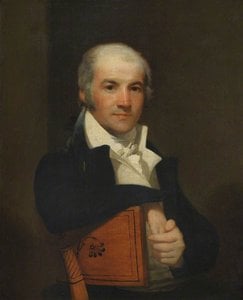
The Weight of Authority: Gilbert Stuart’s “George Washington”
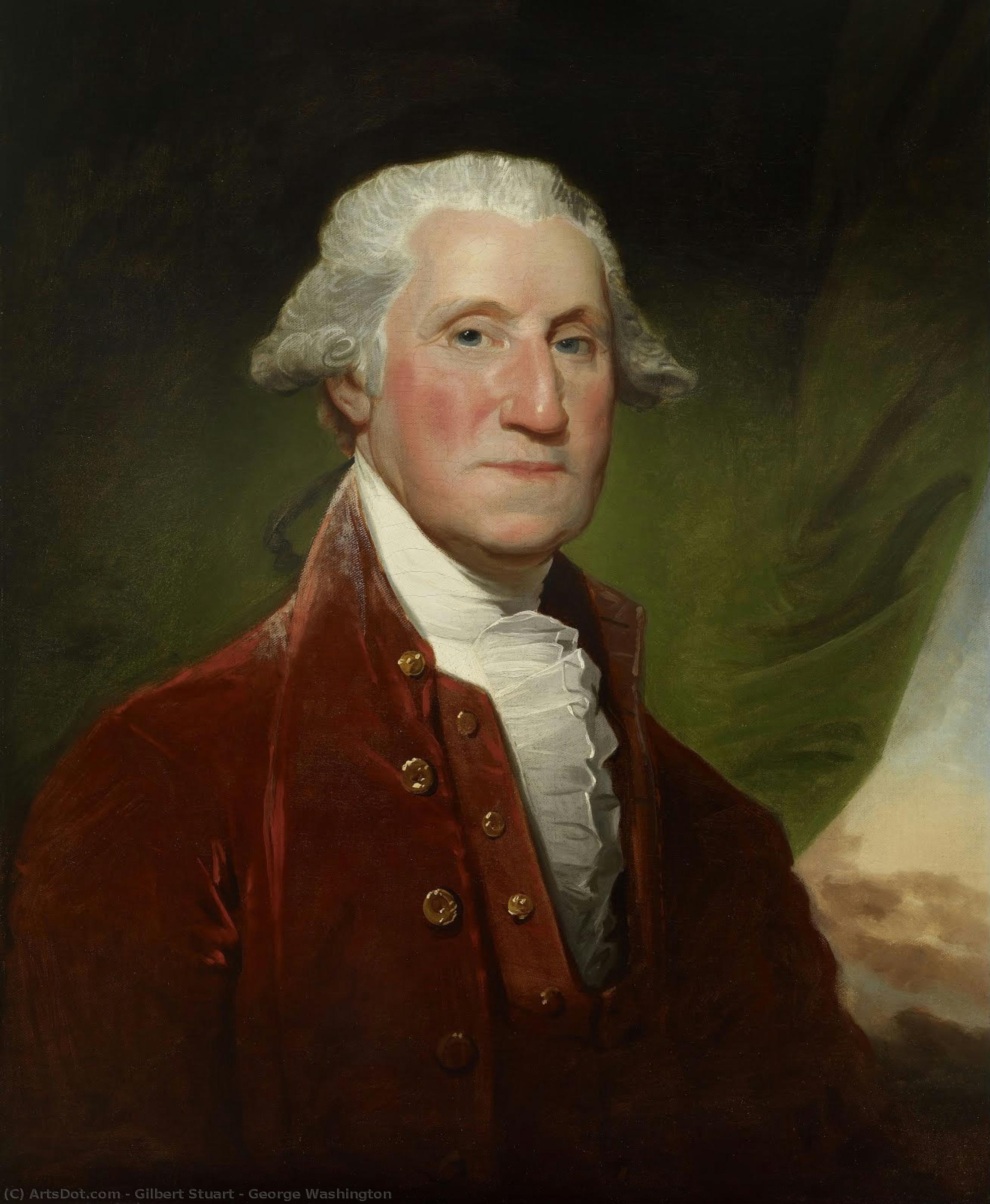
Gilbert Stuart's "George Washington," painted in 1796, isn’t merely a portrait; it’s a carefully constructed embodiment of the nascent American republic. This remarkable work, now housed within the Frick Collection in New York City, transcends the simple act of representation and delves into the very essence of leadership, virtue, and the weighty responsibility of guiding a new nation. Stuart, a master of his craft, skillfully captures Washington’s dignified presence, imbuing him with an aura of both strength and quiet contemplation – qualities desperately needed in the years following the Revolutionary War.
The painting itself is a testament to Stuart's Neoclassical training, evident in its balanced composition and restrained palette. The muted tones of brown, gray, and green create a sense of gravitas, drawing the viewer’s eye directly to Washington’s face – a study in subtle expressions that convey both resolve and humility. The artist meticulously rendered every detail, from the texture of the fabric of his coat to the delicate lines etched by time around his eyes, revealing an almost obsessive attention to realism. Yet, it's not a literal depiction; Stuart employs chiaroscuro—the dramatic contrast between light and shadow—to sculpt Washington’s form and emphasize his importance within the scene.
A Portrait of a Nation Forged in Virtue
The historical context surrounding “George Washington” is crucial to understanding its significance. Painted just a few years after the end of the Revolutionary War, the portrait coincided with a fervent desire to establish a stable and virtuous government. Stuart’s decision to portray Washington in a formal, three-quarter pose – a departure from earlier, more informal depictions – immediately elevates him to the status of an ideal statesman. The red coat, a symbol of military honor, subtly references his role as commander-in-chief, while the white collar and cravat speak to his adherence to social decorum and respect for tradition.
Interestingly, this particular version – often referred to as the “Vaughan type” – differs slightly from other known portraits of Washington. The subtle shift in the color of the coat is a key distinguishing feature, suggesting that Stuart may have been experimenting with his technique or responding to specific requests from John Vaughan, one of the painting’s patrons. The background, a simple yet evocative landscape, reinforces the idea of Washington as a man deeply connected to the land and its future.
Symbolism Woven into the Canvas
Beyond the obvious symbolism of military rank and civic virtue, “George Washington” is rich with subtle visual cues. The careful arrangement of his hands – one resting on a book, a symbol of knowledge and wisdom, and the other holding a quill pen, representing his role as a writer and communicator – speaks to his commitment to education and informed governance. The slight furrow in his brow suggests a thoughtful consideration of the challenges facing the new nation, while his steady gaze conveys an unwavering determination to uphold its ideals.
Furthermore, the painting’s scale—measuring 74 x 61 cm—contributes to its impact. It's large enough to command attention and invite prolonged contemplation, reflecting the monumental task of building a new nation. The portrait wasn’t simply intended as a likeness; it was designed to inspire confidence and instill a sense of shared purpose within the American populace.
A Timeless Legacy for Art & Design
Gilbert Stuart's “George Washington” remains an enduring masterpiece, admired for its technical brilliance, historical significance, and profound emotional resonance. It’s a painting that speaks to the ideals upon which America was founded – liberty, justice, and self-governance – and continues to captivate viewers centuries later. Today, high-quality reproductions of this iconic portrait offer art enthusiasts and interior designers alike an opportunity to bring a touch of American history and enduring artistic excellence into their homes or offices. The painting’s dignified presence and subtle complexities make it a truly timeless addition to any collection.
Preguntas y respuestas
¿Qué armonía cromática presenta "George Washington" de Gilbert Stuart?
La armonía cromática de "George Washington" se describe como Softly Mixed Palette.
¿Qué técnica se utilizó para "George Washington" y cuándo fue creado?
"George Washington" fue realizada en 1796, en Acrylic On Canvas.
¿De qué tamaño se recomienda "George Washington" para un Living Room?
En un Living Room, se sugiere imprimir "George Washington" en un tamaño de Large.
¿Qué técnica y estilo caracterizan a "George Washington" de Gilbert Stuart?
"George Washington" de Gilbert Stuart combina la técnica de Acrylic On Canvas con el estilo Neoclassical Portraiture. La técnica y el movimiento describen la elaboración y el estilo de la obra.
¿Puedo usar la realidad aumentada para ver "George Washington" de Gilbert Stuart en mi habitación?
Puedes visualizar "George Washington" de Gilbert Stuart en tu propia pared con la página de Vista previa AR de la obra, utilizando realidad aumentada en un dispositivo compatible.
¿Qué tan fuerte es el contraste en "George Washington" de Gilbert Stuart?
El nivel de contraste de "George Washington" de Gilbert Stuart es Gentle.
¿Cómo se relacionan los colores de "George Washington" de Gilbert Stuart con su emoción?
La paleta Earthy de "George Washington" de Gilbert Stuart armoniza con su tono emocional Reflective. El color es una de las formas en que una obra transmite sentimiento.
¿Cómo se puede utilizar "George Washington" de Gilbert Stuart en la decoración del hogar?
El uso de (Statement) y el espacio (Living Room) son las dos recomendaciones registradas para "George Washington" de Gilbert Stuart.


 Vista previa
 Encargar reproducción pintada a mano
 Compartir
 Compartir
 Ver detalles
 Guía
Guía

 Descargar
 Ver artículos similares
 Radiografía
 Presentación de diapositivas
 Estadísticas


 Leer más






































 La opción de vidrio solo está disponible en tamaños inferiores a 110 cm.