Gianni Versace: A Visionary Embrace of Boldness and Glamour
Gianni Versace stands as an undisputed titan in the annals of fashion history—a name synonymous with audacious style, unapologetic glamour, and a provocative aesthetic that irrevocably reshaped the landscape of the 1980s and 90s. Born December 2nd, 1946, in Reggio Calabria, Italy, Versace’s journey began not amidst the ivory towers of design academies but within the intimate crucible of his mother's dressmaking business—a formative experience that instilled a fundamental understanding of form, fabric, and the transformative power inherent in clothing. This practical education proved far more valuable than any formal curriculum, nurturing an innate talent for design and honing an eye for meticulous detail. He honed these skills further collaborating with established Italian labels like Genny, Callaghan, and Complice before embarking on his independent path in 1978—establishing Versace S.r.l., Milan. This wasn’t merely the genesis of a brand; it was the assertion of a singular artistic vision determined to defy convention and captivate audiences.
- Early Influences: Versace's formative years were profoundly shaped by his birthplace – Reggio Calabria—a region steeped in ancient Greek heritage, which permeated his aesthetic sensibilities. This connection to classical art served as an enduring inspiration for his designs, evident in recurring motifs and a deliberate embrace of grandeur.
- The Birth of Versace: Recognizing the potential for innovation within the established fashion world, Versace partnered with his brother Santo and Claudio Luti—establishing Versace S.r.l., Milan—a collaborative effort fueled by ambition and an unwavering belief in the transformative power of creative expression.
A Bold Aesthetic Defined
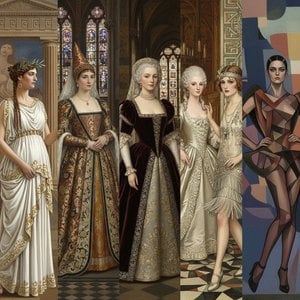
Versace’s signature style quickly distinguished itself from prevailing trends, rejecting muted palettes and understated elegance for vibrant hues, daring prints, and silhouettes that celebrated the human form with unapologetic sensuality. He famously declared, “I don't believe in good taste,” encapsulating his rebellious spirit—a stance reflected in collections characterized by opulent embellishments and a masterful manipulation of texture and color. Versace’s designs frequently drew inspiration from historical periods like Classicism, Byzantium, and the Art Deco era, reimagining elements such as mosaics and geometric patterns into contemporary fashion statements. This stylistic audacity cemented Versace's reputation as a trailblazer—a designer who dared to challenge societal norms and elevate fashion to an art form.
- Iconic Prints: Versace’s collections are instantly recognizable for their bold prints—often featuring stylized florals, geometric shapes, and animal motifs—that commanded attention and conveyed powerful visual narratives.
- Silhouettes & Fabrics: Versace championed fluid silhouettes crafted from luxurious fabrics like silk chiffon, satin, and velvet—creating garments that draped elegantly and accentuated the contours of the body with sensual grace.
Symbolism and Artistic Vision
Beyond mere aesthetics, Versace’s work possessed a deeper symbolic resonance—reflecting his fascination with mythology, art history, and cultural references. Recurring motifs such as Medusa’s head—a symbol of power and transformation—appeared prominently in jewelry and apparel—underscoring Versace's commitment to elevating fashion beyond superficial ornamentation. Collaborations with contemporary artists like Andy Warhol and Roy Lichtenstein further enriched Versace’s artistic vocabulary—demonstrating his willingness to engage with diverse creative voices and explore innovative visual languages. His designs weren’t simply garments; they were statements—expressions of individuality and a celebration of beauty in its most audacious form.
- The Medusa Motif: Versace consistently incorporated the image of Medusa—a Gorgon from Greek mythology known for her snakes hair—into his jewelry and apparel designs, symbolizing strength, resilience, and transformation.
- Collaborations with Artists: Versace actively partnered with renowned artists like Andy Warhol and Roy Lichtenstein, adapting their visual styles into fashion prints and embellishments—expanding the boundaries of artistic expression within the realm of haute couture.
A Legacy Enduring
Gianni Versace’s untimely demise in July 1997 marked the end of an extraordinary creative journey—yet his legacy continues to inspire designers and captivate audiences worldwide. His unwavering commitment to innovation, boldness, and artistic vision solidified his place as one of the most influential figures in fashion history—a testament to the enduring power of creativity and the transformative potential of style. Versace’s influence extends beyond mere aesthetics; it embodies a spirit of defiance—a refusal to conform to convention and an insistence on pursuing beauty with unapologetic passion.
Preguntas y respuestas
¿Puedo ver una vista de rayos X de "Suit" de Gianni Versace?
La vista de rayos X de "Suit" de Gianni Versace se encuentra en la página Rayos X de la obra: un examen interactivo de la imagen a través de once capas ópticas.
¿Cómo puedo descubrir obras de arte similares a "Suit" de Gianni Versace?
La página de Similares de "Suit" de Gianni Versace presenta obras relacionadas.
¿Qué nivel de contraste presenta "Suit" de Gianni Versace?
El nivel de contraste de "Suit" de Gianni Versace es Intenso.
¿A qué se debe el estado de los derechos de autor de "Suit"?
El estado de los derechos de autor de "Suit" - aún protegido por derechos de autor - se deriva del fallecimiento del artista en 1997.
¿Qué tan conocida es la obra "Suit" de Gianni Versace?
"Suit" de Gianni Versace tiene un nivel de popularidad Icónico. Esta clasificación refleja el grado de reconocimiento de la obra.
¿Está "Suit" libre de derechos de autor?
"Suit" de Gianni Versace es de aún protegido por derechos de autor. Este estado determina cómo se puede reproducir la imagen de la obra.
¿Qué espacio se sugiere para "Suit" de Gianni Versace?
El espacio recomendado para "Suit" de Gianni Versace es un Salón principal. Por supuesto, esta sugerencia puede adaptarse a su interiorismo.
¿Quién vende copias pintadas a mano de "Suit" de Gianni Versace?
Las copias pintadas a mano de "Suit" de Gianni Versace se venden en este sitio web: una reproducción al óleo pintada a mano sobre lienzo de lino, las cuales pueden solicitarse desde esta página.



 Vista previa
 Encargar reproducción pintada a mano
 Compartir
 Compartir
 Ver detalles
 Guía
Guía

 Descargar
 Ver artículos similares
 Radiografía
 Presentación de diapositivas
 Estadísticas


 Leer más






































 La opción de vidrio solo está disponible en tamaños inferiores a 110 cm.