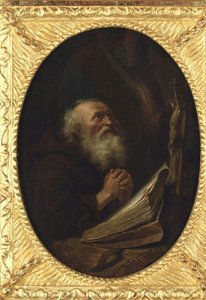
biografía de un prolífico pintor
gerrit (gérard) dou, una figura destacada en la pintura del
edad de oro holandesa, nació el 7 de abril de 1613 en Leiden, Países Bajos. Falleció el 9 de febrero de 1675, dejando atrás un impresionante legado de pinturas altamente pulidas que continúan cautivando a los entusiastas del arte en todo el mundo.
estilo artístico y especialización
El estilo artístico de Gerrit Dou se caracteriza por su tratamiento minucioso y elaborado, a menudo presentando escenas de género y pinturas "nicho" con efecto *trompe-l'oeil*. Su dominio del claroscuro es particularmente notable, como se ve en sus escenas nocturnas iluminadas con velas. Esta combinación única de habilidades lo ha llevado a asociarse con los *fijnschilders* de Leiden.
vida y formación
Gerrit Dou nació en una familia de clase media en Leiden. Su padre era fabricante de vidrieras, y Dou inicialmente aprendió el oficio familiar. Sin embargo, pronto demostró un talento excepcional para la pintura, lo que llevó a su padre a enviarlo como aprendiz al taller de
Rembrandt van Rijn en 1628. Permaneció con Rembrandt durante aproximadamente tres años, donde adquirió sus habilidades en el color y los sutiles efectos del claroscuro. Aunque inicialmente influenciado por Rembrandt, Dou pronto desarrolló su propio estilo distintivo, caracterizado por una minuciosidad extrema y un enfoque en detalles delicados. Se dice que dedicaba días enteros a pintar una sola mano, y fabricaba sus propias brochas para lograr la precisión deseada.
obras notables y colecciones
*
El astrónomo a la luz de las velas, una pintura que muestra la experiencia de Dou en capturar los matices de la luz, se puede encontrar en
WahooArt.com. * La
colección Leiden, Nueva York, un renombrado museo de arte, presenta obras de Gerrit Dou, entre otros artistas notables. Para obtener más información sobre la colección, visite
la colección Leiden, Nueva York: una guía completa en WahooArt.com.
influencia y legado
La influencia de Gerrit Dou se puede ver en sus alumnos, incluyendo a Frans van Mieris el Viejo y Gabriel Metsu. Su trabajo también ha sido exhibido en varios museos, como el
Museo Huis ten Bosch en La Haya, Países Bajos, que alberga una impresionante colección de arte europeo del siglo XVI al XVIII.
- hechos clave: * nacido: 7 de abril de 1613, Leiden, Países Bajos * falleció: 9 de febrero de 1675 * obras notables: el astrónomo a la luz de las velas, escenas de género y escenas nocturnas iluminadas con velas * influyó en: Frans van Mieris el Viejo, Gabriel Metsu y otros
- lecturas recomendadas: * Gerrit (Gerard) Dou en WahooArt.com * La edad de oro holandesa en Wikipedia
conclusión
Las notables contribuciones de Gerrit (Gerard) Dou a la edad de oro holandesa han dejado una huella imborrable en el mundo del arte. Sus cautivadoras pinturas, caracterizadas por sus intrincados detalles y su magistral uso de la luz, continúan inspirando a artistas y entusiastas del arte por igual. Para explorar más de sus obras y las de otros artistas notables, visite
WahooArt.com.



 Ver en contexto
 Cambiar a Impresión
 Enviar
 Compartir
 Detalles

 Descargar
 Similares
 Radiografía
 Presentación de diapositivas
 Estadísticas


 Ver más






































 La opción de vidrio solo está disponible en tamaños inferiores a 110 cm.