Vista previa Vista previa en RA Cambiar a formato impreso Ver versión en imagen digital Compartir
Ver detalles Guía Añadir a favoritos Descargar Ver artículos similares Radiografía Presentación de diapositivas Estadísticas

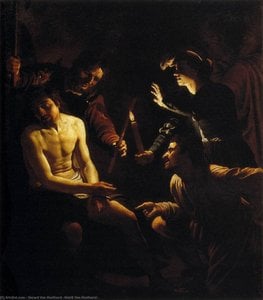
Christ Crowned with Thorns, Gerard van Honthorst, c. 1622

Discover Gerard van Honthorst’s dramatic ‘Christ Crowned with Thorns,’ a Baroque masterpiece showcasing intense light & emotion. Explore its Caravaggist style & historical significance.

Descubre a Gerard van Honthorst (1590-1656), maestro del Siglo de Oro Neerlandés y figura clave del caravaggismo en Utrecht. Retratos, escenas bíblicas e influencia barroca.

Reproducción al óleo hecha a mano

Óleo sobre lienzo pintado a mano en el tamaño y marco de su elección, realizado por encargo por nuestros artistas. ( Cambiar a formato impreso Ver versión en imagen digital)

P118B $10
P118H $10
P118W $10
P438Z $10
P508JH $12
P508YH $12
P805H $10
P805Z $10
P919BZ $10
P919G $10
P919XJ $10
P959ZH $10
P968JZ $12
W106C $8
W218G $10
W218JH $8
W218Y $10
W307PJ $10
W316G $10
W316PJ $8
W316Y $10
W398PJ $8
W4111J $10
W500HY $15
W500JH $15
W692G $12
W849H $8
W940BG $15
W953PJ $8

Estándar
personalizado
CM
INCH

Elija entre nuestros tamaños predefinidos que respetan las proporciones originales de la obra.

ancho
altura

Puede ingresar sus propias dimensiones para adaptarse a un marco o espacio específico. Si el tamaño seleccionado no coincide con las proporciones de la imagen original, recortaremos la obra o extenderemos la pintura con elementos adicionales pintados a mano. Se le enviará una maqueta digital para su aprobación antes de comenzar la producción.
Tenga en cuenta que la vista previa en pantalla no refleja el recorte o la extensión reales. Solo la maqueta mostrará con precisión la composición final.
Si bien existen tamaños personalizados, recomendamos seleccionar una dimensión de la lista predefinida para preservar las proporciones originales.

Ejemplos de lo que se puede personalizar: Reemplace el rostro con una foto del cliente; Agregue una mascota (por ejemplo, cambie un gato por un perro); Incluya un mensaje oculto en el fondo; Cambie el paisaje o los elementos del fondo.
Tras realizar el pedido, el equipo de WahooArt.com enviará un correo electrónico al cliente para solicitar instrucciones y proporcionarle una vista previa del boceto.

Envío a todo el mundo () en 3-4 semanas en lugar de las 5 semanas estándar. (22 septiembre). Sin comprometer la calidad.

why_choose_icon
Envío exprés gratuito a todo el mundo
why_choose_icon
Lienzo de lino de alta calidad
why_choose_icon
Seguro de envío completo
why_choose_icon
Garantía de reembolso de impuestos aduaneros
why_choose_icon
Garantía de fidelidad cromática exacta
why_choose_icon
Política de devolución de 100 días (solo por defectos)
why_choose_icon
Garantía de devolución del 100% del dinero
why_choose_icon
Oferta por volumen

Precio total

$ 372

reproduction

Christ Crowned with Thorns, Gerard van Honthorst, c. 1622

Técnica de reproducción

Tamaño de la reproducción

-

Precio total

$ 372

Datos clave

  • Title: The Starry Night
  • Medium: Oil on Canvas
  • Influences: Japanese prints
  • Year: 1889
  • Dimensions: 73.7 × 54.6 cm
  • Artistic style: Expressionist
  • Notable elements or techniques: Impasto technique; Use of complementary colors (yellow and blue)

Cuestionario de arte

Cada pregunta tiene una única respuesta correcta.

Pregunta 1:
What is the title of this painting?
Pregunta 2:
Which artist created this masterpiece?
Pregunta 3:
Approximately when was this painting executed?
Pregunta 4:
What artistic technique is prominently used in this artwork?
Pregunta 5:
The painting depicts a scene related to which religious tradition?

A Symphony in Crimson and Gold: Exploring “The Astronomer” by Johannes Vermeer

Johannes Vermeer’s “The Astronomer,” completed around 1668, transcends mere portraiture; it's a masterful distillation of Baroque aesthetics and intellectual curiosity. Painted during the Dutch Golden Age, this captivating artwork captures a moment frozen in time – a scholar engrossed in observing the celestial heavens through a meticulously crafted brass telescope.

Composition and Technique: Vermeer’s Baroque Brilliance

Vermeer's genius lies in his ability to create an illusion of depth within a relatively confined space. The painting employs a pyramidal composition, anchoring the gaze on the astronomer’s head and subtly guiding it downwards towards the telescope and its surroundings. Light plays a crucial role, emanating from a window positioned high on the left wall, illuminating the astronomer's face and casting dramatic shadows across the room.

Vermeer’s technique is characterized by meticulous layering of thin glazes – a hallmark of Baroque painting – allowing for unparalleled luminosity and tonal subtlety. He skillfully captures the textures of fabric (the astronomer’s robe), brass, and wood, demonstrating an astonishing level of realism. Vermeer's masterful use of chiaroscuro enhances the drama and emphasizes the contemplative mood of the scene.

Historical Context: Scientific Inquiry Meets Artistic Expression

“The Astronomer” reflects the burgeoning interest in scientific observation during the seventeenth century. The telescope, a relatively new invention at the time, represented a significant advancement in understanding the cosmos. Vermeer’s depiction wasn't merely aesthetically pleasing; it served as a commentary on the intellectual pursuits of his era.

However, Vermeer skillfully avoids didacticism, prioritizing artistic beauty over explicit instruction. The astronomer’s gaze is directed outwards, symbolizing contemplation and wonder—a reflection of the humanist values prevalent in Dutch society during this period.

Symbolism: Light, Knowledge, and Inner Reflection

The prominent window and its radiant light symbolize enlightenment and divine illumination – concepts central to Baroque spirituality. The telescope itself represents intellectual curiosity and the pursuit of knowledge. Furthermore, the astronomer’s posture conveys a sense of introspection and inner reflection, inviting viewers to contemplate their own place in relation to the universe.

The muted colors—primarily browns, golds, and reds—contribute to the painting's solemn atmosphere. Vermeer’s careful attention to detail underscores the importance of observation and contemplation – themes that resonate powerfully with audiences today.

Emotional Impact: Capturing a Moment of Serenity

"The Astronomer" evokes a profound sense of tranquility and intellectual engagement. It invites viewers to pause and consider the beauty of simplicity, mirroring Vermeer’s own artistic philosophy. The painting's enduring appeal lies in its ability to capture a fleeting moment of contemplative serenity—a testament to Vermeer’s unparalleled skill as an artist and his contribution to the legacy of Baroque art.


Biografía del artista

Primeros años y formación

Gerrit van Honthorst, un destacado pintor del Siglo de Oro neerlandés, nació el 4 de noviembre de 1590 en Utrecht, Países Bajos. Era hijo de un pintor decorativo y inicialmente se formó bajo la tutela de su padre. Posteriormente, continuó su educación artística con Abraham Bloemaert.

Carrera e influencias

La carrera temprana de Van Honthorst incluyó una visita a Roma, donde fue fuertemente influenciado por el estilo de Caravaggio. Esta influencia es evidente en sus obras posteriores, particularmente en su uso de escenas iluminadas artificialmente, lo que le valió el apodo de "Gherardo delle Notti" o "Gerard de las noches". Tras su regreso a los Países Bajos, Van Honthorst se convirtió en un retratista líder.

Patronazgo y encargos notables

El trabajo de Van Honthorst tuvo una gran demanda, con notables patronos que incluyen a Vincenzo Giustiniani, quien lo encargó para pintar "Cristo ante el sumo sacerdote", ahora alojado en la National Gallery de Londres. También trabajó para Cosimo II de' Medici, Gran Duque de Toscana, y fue un favorito entre la República Neerlandesa y en el extranjero.

Legado y vida posterior

En 1620, Van Honthorst regresó a Utrecht, donde construyó una considerable reputación. Para 1623, el año de su matrimonio, se había convertido en presidente del gremio de San Lucas en Utrecht. Su éxito llevó a recomendaciones por parte de Sir Dudley Carleton para el Conde de Arundel y Lord Dorchester.

Obras clave y colaboraciones

  • "La toma de Cristo", una obra colaborativa inicialmente atribuida a Van Honthorst, ahora reconocida como obra de otro artista.
  • "Cristo ante el sumo sacerdote", encargado por Vincenzo Giustiniani, muestra la habilidad de Van Honthorst para capturar escenas iluminadas artificialmente.
  • Colaboraciones con otros artistas, como Peter Paul Rubens, demuestran su influencia en el estilo barroco flamenco.

Movimiento artístico y estilo

Van Honthorst formó parte del movimiento de los utrecht caravaggisti, caracterizado por su uso de una iluminación dramática y una profundidad emocional intensa. Su obra refleja la influencia del barroco italiano, al mismo tiempo que contribuye al desarrollo del Siglo de Oro neerlandés.
Gerard van Honthorst

Gerard van Honthorst

1590 - 1656 , Países Bajos

Datos clave

  • Artistas Influenciados:
    • Rembrandt van Rijn
    • Georges de la Tour
  • Artistas Que Influyeron:
    • Caravaggio
    • Abraham Bloemaert
  • Fecha De Nacimiento: 4 de noviembre de 1590
  • Lugar De Nacimiento: Utrecht, Países Bajos
  • Movimiento Artístico: Caravaggismo Utrechtano
  • Nacionalidad: Neerlandés
  • Nombre Completo: Gerard van Honthorst
  • Obras Notables:
    • Cristo ante el sumo sacerdote
    • La toma de Cristo
    • Escenas nocturnas iluminadas
Explore obras de arte organizadas por temas, estilos y características.