Vista previa Vista previa en RA Encargar reproducción pintada a mano Ver versión en imagen digital Compartir
Ver detalles Guía Añadir a favoritos Descargar Ver artículos similares Radiografía Presentación de diapositivas Estadísticas

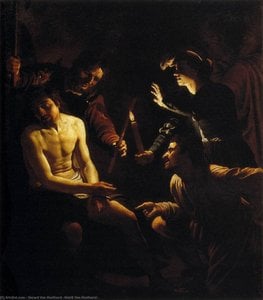
Christ before the High Priest

Experience the dramatic intensity of Gerard van Honthorst's 'Christ Before the High Priest.' A captivating Baroque masterpiece showcasing biblical tension with masterful light and shadow.

Descubre a Gerard van Honthorst (1590-1656), maestro del Siglo de Oro Neerlandés y figura clave del caravaggismo en Utrecht. Retratos, escenas bíblicas e influencia barroca.

Giclée / Impresión de arte

Impresiones giclée o en lienzo de calidad de museo con producción rápida y opciones de acabado flexibles. ( Encargar reproducción pintada a mano Ver versión en imagen digital)

P118B $10
P118H $10
P118W $10
P438Z $10
P508JH $12
P508YH $12
P805H $10
P805Z $10
P919BZ $10
P919G $10
P919XJ $10
P959ZH $10
P968JZ $12
W106C $8
W218G $10
W218JH $8
W218Y $10
W307PJ $10
W316G $10
W316PJ $8
W316Y $10
W398PJ $8
W4111J $10
W500HY $15
W500JH $15
W692G $12
W849H $8
W940BG $15
W953PJ $8

Estándar
personalizado
CM
INCH

Elija entre nuestros tamaños predefinidos que respetan las proporciones originales de la obra.

ancho
altura

Puede introducir sus propias dimensiones para adaptarse a un marco o espacio específico. Si el tamaño seleccionado no coincide con las proporciones de la imagen original, recortaremos la obra de arte o extenderemos la imagen con un borde con efecto espejo o de color sólido. Se enviará una maqueta digital para su aprobación antes de que comience la producción.
Tenga en cuenta que la vista previa en pantalla no refleja el recorte o la extensión real. Solo la maqueta mostrará con precisión la composición final.
Aunque existen tamaños personalizados, recomendamos seleccionar una dimensión de la lista predefinida para preservar las proporciones originales.

Envío a todo el mundo () en 2 semanas en lugar de las 4/5 semanas estándar. (21 septiembre)

why_choose_icon
Envío exprés gratuito a todo el mundo
why_choose_icon
Lienzo de lino de alta calidad
why_choose_icon
Seguro de envío completo
why_choose_icon
Garantía de reembolso de impuestos aduaneros
why_choose_icon
Garantía de fidelidad cromática exacta
why_choose_icon
Política de devolución de 100 días (solo por defectos)
why_choose_icon
Garantía de devolución del 100% del dinero
why_choose_icon
Oferta por volumen

Precio total

$ 68

reproduction

Christ before the High Priest

Giclée / Impresión de arte

Tamaño de la reproducción

-

Precio total

$ 68

Datos clave

  • Influences: Caravaggio
  • Dimensions: 272 x 183 cm
  • Artist: Gerard van Honthorst
  • Movement: Baroque
  • Style: Dramatic realism
  • Year: 1617
  • Location: National Gallery, London

Cuestionario de arte

Cada pregunta tiene una única respuesta correcta.

Pregunta 1:
What is the primary subject of Gerard van Honthorst’s ‘Christ Before the High Priest’?
Pregunta 2:
Which artistic technique is most prominently featured in ‘Christ Before the High Priest’?
Pregunta 3:
According to the description, what is a key element emphasized in the painting’s composition?
Pregunta 4:
In what year was ‘Christ Before the High Priest’ painted?
Pregunta 5:
The description mentions Honthorst's artistic influences. Which artist is specifically cited as having influenced his style?

A Moment Frozen in Shadow: Gerard van Honthorst’s “Christ Before the High Priest”

Gerard van Honthorst's "Christ Before the High Priest," painted in 1617, is not merely a depiction of a biblical scene; it’s a carefully constructed drama rendered with the dramatic intensity that would become synonymous with his name. This oil on canvas masterpiece, now residing within the National Gallery in London, offers a profound glimpse into the anxieties and spiritual turmoil surrounding Christ's impending trial – a moment captured with an almost palpable sense of foreboding. The painting’s power lies not just in its subject matter but also in Honthorst’s masterful manipulation of light and shadow, echoing the influence of Caravaggio while forging his own distinctive style.

The Scene Unfolds: Narrative and Context

The composition immediately draws the viewer into a claustrophobic space – a dimly lit chamber dominated by the stark contrast between illumination and darkness. Christ, presented as a youthful figure of serene dignity, stands before the High Priest Caiaphas, surrounded by Roman soldiers and a gathering of onlookers. The narrative unfolds with chilling precision: Christ is being questioned about his teachings, subjected to false accusations and the threat of death under Jewish law. The scene is rooted in the Gospels – specifically Matthew 26:57-66 – depicting the agonizing moments leading up to Jesus’s arrest and trial. Honthorst doesn't offer a grand spectacle; instead, he focuses on the intimate confrontation, amplifying the psychological weight of the event.

Caravaggism in Utrecht: Light, Shadow, and Drama

Honthorst’s artistic journey to Rome proved transformative. His encounter with Caravaggio's revolutionary use of *tenebrism* – a technique employing dramatic contrasts between light and dark – fundamentally altered his approach to painting. In “Christ Before the High Priest,” this is immediately evident. A single, powerful candle illuminates Christ’s face and hands, drawing our attention to his vulnerability and inner strength. The surrounding figures are shrouded in shadow, creating an atmosphere of suspicion and uncertainty. This masterful use of light not only directs the viewer's eye but also evokes a sense of unease and impending doom. The darkness isn’t simply decorative; it represents the moral ambiguity and spiritual struggle at the heart of the scene.

Symbolism and Detail: A Tapestry of Meaning

Beyond the immediate narrative, the painting is rich in symbolic detail. The book on the table before the High Priest contains the *proscriptions* – legal decrees outlining the charges against Christ – a stark reminder of his impending fate. The raised finger of the High Priest, bathed in light, symbolizes judgment and condemnation. The arrangement of figures—the soldiers, the onlookers, the questioning priests—represents the forces arrayed against Christ, highlighting the conflict between faith and power. Even the simple act of holding a candle speaks volumes about hope amidst darkness – a fragile beacon in a world consumed by shadows.

Emotional Resonance: A Timeless Portrait of Suffering

“Christ Before the High Priest” transcends its historical context to resonate with viewers across centuries. It’s not just a depiction of a biblical event; it's an exploration of human suffering, betrayal, and the weight of injustice. Honthorst masterfully captures the psychological drama of the moment, conveying Christ’s quiet dignity in the face of overwhelming adversity. The painting invites contemplation on themes of faith, sacrifice, and the enduring struggle between good and evil. Its powerful emotional impact makes it a compelling work for collectors and interior designers seeking to infuse their spaces with depth, meaning, and a touch of dramatic beauty.


Biografía del artista

Primeros años y formación

Gerrit van Honthorst, un destacado pintor del Siglo de Oro neerlandés, nació el 4 de noviembre de 1590 en Utrecht, Países Bajos. Era hijo de un pintor decorativo y inicialmente se formó bajo la tutela de su padre. Posteriormente, continuó su educación artística con Abraham Bloemaert.

Carrera e influencias

La carrera temprana de Van Honthorst incluyó una visita a Roma, donde fue fuertemente influenciado por el estilo de Caravaggio. Esta influencia es evidente en sus obras posteriores, particularmente en su uso de escenas iluminadas artificialmente, lo que le valió el apodo de "Gherardo delle Notti" o "Gerard de las noches". Tras su regreso a los Países Bajos, Van Honthorst se convirtió en un retratista líder.

Patronazgo y encargos notables

El trabajo de Van Honthorst tuvo una gran demanda, con notables patronos que incluyen a Vincenzo Giustiniani, quien lo encargó para pintar "Cristo ante el sumo sacerdote", ahora alojado en la National Gallery de Londres. También trabajó para Cosimo II de' Medici, Gran Duque de Toscana, y fue un favorito entre la República Neerlandesa y en el extranjero.

Legado y vida posterior

En 1620, Van Honthorst regresó a Utrecht, donde construyó una considerable reputación. Para 1623, el año de su matrimonio, se había convertido en presidente del gremio de San Lucas en Utrecht. Su éxito llevó a recomendaciones por parte de Sir Dudley Carleton para el Conde de Arundel y Lord Dorchester.

Obras clave y colaboraciones

  • "La toma de Cristo", una obra colaborativa inicialmente atribuida a Van Honthorst, ahora reconocida como obra de otro artista.
  • "Cristo ante el sumo sacerdote", encargado por Vincenzo Giustiniani, muestra la habilidad de Van Honthorst para capturar escenas iluminadas artificialmente.
  • Colaboraciones con otros artistas, como Peter Paul Rubens, demuestran su influencia en el estilo barroco flamenco.

Movimiento artístico y estilo

Van Honthorst formó parte del movimiento de los utrecht caravaggisti, caracterizado por su uso de una iluminación dramática y una profundidad emocional intensa. Su obra refleja la influencia del barroco italiano, al mismo tiempo que contribuye al desarrollo del Siglo de Oro neerlandés.
Gerard van Honthorst

Gerard van Honthorst

1590 - 1656 , Países Bajos

Datos clave

  • Artistas Influenciados:
    • Rembrandt van Rijn
    • Georges de la Tour
  • Artistas Que Influyeron:
    • Caravaggio
    • Abraham Bloemaert
  • Fecha De Nacimiento: 4 de noviembre de 1590
  • Lugar De Nacimiento: Utrecht, Países Bajos
  • Movimiento Artístico: Caravaggismo Utrechtano
  • Nacionalidad: Neerlandés
  • Nombre Completo: Gerard van Honthorst
  • Obras Notables:
    • Cristo ante el sumo sacerdote
    • La toma de Cristo
    • Escenas nocturnas iluminadas
Explore obras de arte organizadas por temas, estilos y características.