


Impresiones giclée o en lienzo de calidad de museo con producción rápida y opciones de acabado flexibles. ( Comprar pintura hecha a mano Comprar imagen)





























Elija entre nuestros tamaños predefinidos que respetan las proporciones originales de la obra.

Puede introducir sus propias dimensiones para adaptarse a un marco o espacio específico. Si el tamaño seleccionado no coincide con las proporciones de la imagen original, recortaremos la obra de arte o extenderemos la imagen con un borde con efecto espejo o de color sólido. Se enviará una maqueta digital para su aprobación antes de que comience la producción.
Tenga en cuenta que la vista previa en pantalla no refleja el recorte o la extensión real. Solo la maqueta mostrará con precisión la composición final.
Aunque existen tamaños personalizados, recomendamos seleccionar una dimensión de la lista predefinida para preservar las proporciones originales.
Envío a todo el mundo () en 2 semanas en lugar de las 4/5 semanas estándar. (6 septiembre)


Skunk Cabbage
Dimensiones de la reproducción
Georgia O’Keeffe’s “Skunk Cabbage,” painted in 1922, isn’t merely a depiction of a plant; it’s an immersion into the raw, elemental beauty of the American Southwest. This oil on canvas, measuring 18 x 14 inches, represents a pivotal moment in O'Keeffe’s artistic evolution – a deliberate shift away from representational realism and toward a deeply personal, almost abstract exploration of form and texture. The painting captures a skunk cabbage plant, native to the eastern United States, but it’s the way O’Keeffe renders this humble subject that truly captivates: she elevates it to an object of intense scrutiny, demanding our attention with its bold colors and simplified geometry.
What immediately draws the eye is O’Keeffe’s unconventional perspective. Rather than presenting a traditional view from above, she adopts a “worm’s-eye” angle, as if looking up at the plant from ground level. This choice dramatically alters our perception of the subject, transforming it into a monumental presence dominating the foreground. The close proximity creates an intimate and almost unsettling feeling – we are brought face to face with the plant's robust structure, its thick, heart-shaped leaves, and the dark, pungent form of its flower head. The painting’s composition is remarkably dynamic; the twisting stem and upward-reaching leaf create a sense of movement and growth, while the swirling background suggests an expansive, almost chaotic landscape.
O'Keeffe’s masterful use of color is central to the painting’s impact. Deep browns and reddish hues dominate, evoking the earthiness of the plant’s roots and the rich soil it inhabits. These are juxtaposed with vibrant greens and yellows in the background, creating a striking contrast that emphasizes the plant's form. The texture is equally important; O’Keeffe employs thick, impasto brushstrokes – applying paint directly to the canvas in heavy layers – to build up the surface and create a tactile quality. This technique not only adds visual interest but also conveys a sense of physicality, as if we could reach out and touch the plant itself. The dark, almost bruised tones of the cabbage’s foliage are particularly notable, hinting at its characteristic odor when crushed.
The skunk cabbage, a resilient plant thriving in swampy conditions, carries symbolic weight. It represents tenacity, adaptability, and an ability to flourish in challenging environments – qualities that resonated deeply with O’Keeffe as she explored the rugged landscapes of New Mexico. Furthermore, the painting can be interpreted as a meditation on the relationship between humanity and nature. By isolating this seemingly unremarkable plant and presenting it with such intensity, O'Keeffe invites us to reconsider our perceptions of the natural world and appreciate its inherent beauty and complexity. The painting’s roots in the Northeast—a region she left behind—add another layer of meaning, suggesting a nostalgic longing for her origins while simultaneously embracing the new landscapes of the Southwest.
“Skunk Cabbage” stands as a testament to Georgia O’Keeffe's groundbreaking approach to painting. It exemplifies her ability to transform ordinary subjects into extraordinary works of art, driven by an unwavering commitment to personal expression and a profound connection with the natural world. Reproductions of this iconic piece offer a window into O’Keeffe’s unique vision – a vision that continues to inspire artists and captivate viewers today.


1887 - 1986 , Estados Unidos de América

Unlock your creative potential with WahooArt. Learn how to scale your art business through our automated print and premium oil reproduction services, transforming your original works into a global, passive income stream without compromising academic excellence.

Discover the distinction between WahooArt's hand-painted oil masterpieces and archival Giclée prints. An expert guide for elite collectors evaluating texture, longevity, and bespoke customization for their private art collections.

Master the nuances of Giclée printing with our expert guide. Discover how pigment-based inks and museum-grade substrates create fade-resistant, high-fidelity art reproductions designed for discerning collectors seeking unparalleled quality and longevity.
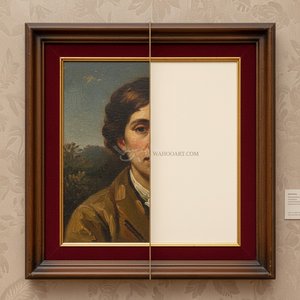
Discover the distinction between WahooArt's hand-painted oil reproductions and archival Giclée prints. An expert guide for elite collectors seeking texture, depth, and museum-quality excellence for their private collections.

 Ver en contexto
 Enviar
 Compartir
 Detalles

 Descargar
 Similares
 Radiografía
 Presentación de diapositivas


 Ver más







 La opción de vidrio solo está disponible en tamaños inferiores a 110 cm.


