Vista previa Vista previa en RA Encargar reproducción pintada a mano Ver versión en imagen digital Compartir
Ver detalles Guía Añadir a favoritos Descargar Ver artículos similares Radiografía Presentación de diapositivas Estadísticas

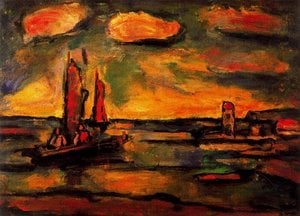
The child Jesus among doctors

Georges Rouault’s ‘The Child Jesus Among Doctors’ presents a somber Expressionist vision of faith and suffering through crowded figures and muted tones, capturing the artist's empathy for the marginalized. Discover this poignant masterpiece and bring its timeless beauty into your home.

Descubre a Georges Rouault (1871-1958), pintor francés de arte expresionista y religioso. Explora su técnica inspirada en vidrieras y legado artístico del siglo XX.

Giclée / Impresión de arte

Impresiones giclée o en lienzo de calidad de museo con producción rápida y opciones de acabado flexibles. ( Encargar reproducción pintada a mano Ver versión en imagen digital)

P118B $10
P118H $10
P118W $10
P438Z $10
P508JH $12
P508YH $12
P805H $10
P805Z $10
P919BZ $10
P919G $10
P919XJ $10
P959ZH $10
P968JZ $12
W106C $8
W218G $10
W218JH $8
W218Y $10
W307PJ $10
W316G $10
W316PJ $8
W316Y $10
W398PJ $8
W4111J $10
W500HY $15
W500JH $15
W692G $12
W849H $8
W940BG $15
W953PJ $8

Estándar
personalizado
CM
INCH

Elija entre nuestros tamaños predefinidos que respetan las proporciones originales de la obra.

ancho
altura

Puede introducir sus propias dimensiones para adaptarse a un marco o espacio específico. Si el tamaño seleccionado no coincide con las proporciones de la imagen original, recortaremos la obra de arte o extenderemos la imagen con un borde con efecto espejo o de color sólido. Se enviará una maqueta digital para su aprobación antes de que comience la producción.
Tenga en cuenta que la vista previa en pantalla no refleja el recorte o la extensión real. Solo la maqueta mostrará con precisión la composición final.
Aunque existen tamaños personalizados, recomendamos seleccionar una dimensión de la lista predefinida para preservar las proporciones originales.

Envío a todo el mundo () en 2 semanas en lugar de las 4/5 semanas estándar. (22 septiembre)

why_choose_icon
Envío exprés gratuito a todo el mundo
why_choose_icon
Lienzo de lino de alta calidad
why_choose_icon
Seguro de envío completo
why_choose_icon
Garantía de reembolso de impuestos aduaneros
why_choose_icon
Garantía de fidelidad cromática exacta
why_choose_icon
Política de devolución de 100 días (solo por defectos)
why_choose_icon
Garantía de devolución del 100% del dinero
why_choose_icon
Oferta por volumen

Precio total

$ 68

reproduction

The child Jesus among doctors

Giclée / Impresión de arte

Tamaño de la reproducción

-

Precio total

$ 68

Datos clave

  • Subject or theme: Religious scene, Wisdom
  • Artist: Georges Rouault
  • Notable elements: Dark contours, halo
  • Movement: Expressionism
  • Medium: Oil on Canvas
  • Influences: Medieval Art

Cuestionario de arte

Cada pregunta tiene una única respuesta correcta.

Pregunta 1:
Which artistic movement is most closely associated with Georges Rouault’s style as exemplified in ‘The Child Jesus Among Doctors’?
Pregunta 2:
The painting's color palette is primarily characterized by:
Pregunta 3:
What technique did Rouault frequently employ to create a textured and aged appearance in his works?
Pregunta 4:
The distorted perspective in ‘The Child Jesus Among Doctors’ contributes to which effect?
Pregunta 5:
Considering Rouault's background, what was a significant influence on his artistic style?

A Vision of Somber Piety: Exploring Georges Rouault’s ‘The Child Jesus Among Doctors’

Georges Rouault's “The Child Jesus Among Doctors” is not merely a depiction of a biblical scene; it’s an intensely felt meditation on faith, suffering, and the quiet dignity of marginalized figures. Painted in 1930, this work exemplifies Rouault’s unique artistic vision – one forged in the crucible of Parisian life and profoundly shaped by his deeply held Catholic beliefs. The painting immediately arrests with its subdued palette: browns, greens, and muted yellows dominate, creating an atmosphere of profound solemnity, almost claustrophobic in its density. Heavy shadows and expressive brushstrokes contribute to a palpable sense of age and weariness, inviting the viewer into a space where time seems to slow and introspection becomes paramount.

The composition itself is deliberately unsettling. Rather than offering a triumphant portrayal of Christ’s wisdom, Rouault presents a scene of quiet observation, a gathering of learned men surrounding the Child Jesus. The figures are crowded together, their faces etched with varying degrees of concern and contemplation. A large window or archway – a recurring motif in Rouault's work – dominates the background, filled with indistinct architectural details that further contribute to the painting’s dreamlike quality. The artist employs a distorted perspective, flattening space and emphasizing emotional impact over precise realism, a hallmark of Expressionism.

Decoding the Symbolism: Faith, Suffering, and Marginality

Rouault's work is deeply rooted in his personal faith and his empathy for those on the fringes of society. “The Child Jesus Among Doctors” powerfully embodies this concern. The halo surrounding the young Christ isn’t a symbol of divine glory but rather a subtle acknowledgement of his inherent humanity, his vulnerability to suffering. The dark contours framing the luminous color fields – a technique inherited from his stained-glass apprenticeship – serve to isolate and emphasize the figures, particularly the Child Jesus, drawing attention to their individual struggles and beliefs. The muted colors themselves speak volumes; they evoke a sense of melancholy and perhaps even foreshadowing, reflecting the hardships faced by those Rouault sought to portray.

The seated figures, likely representing doctors or scholars, are not idealized representations of wisdom but rather individuals grappling with complex questions – their faces bearing the marks of contemplation and, perhaps, doubt. This deliberate ambiguity aligns perfectly with Rouault’s broader artistic project: to challenge conventional notions of religious iconography and to offer a more honest and emotionally resonant depiction of faith.

Technique and Materiality: A Masterful Expression of Texture

The painting's remarkable texture is achieved through Rouault’s masterful technique. Thick impasto brushstrokes, applied with both brushes and palette knives, create a palpable sense of physicality. Layer upon layer of paint builds up a rich surface that seems to vibrate with energy. The artist’s deliberate use of rough textures – mimicking the worn surfaces of the depicted space – further enhances the painting's emotional impact. The choice of oil paints on canvas allowed for the depth and luminosity Rouault sought, while the visible marks of his hand are not flaws but rather integral components of the artwork’s expressive power.

This reproduction captures every nuance of Rouault’s original vision, offering a stunning testament to his artistic genius. It's an opportunity to bring this profoundly moving work into your home or office – a piece that will undoubtedly spark conversation and inspire contemplation for years to come.


Biografía del artista

Primeros años y formación

Georges Henri Rouault, un pintor, dibujante e impresor francés, nació en París el 27 de mayo de 1871, en una familia humilde. Su madre fomentó su amor por las artes, y a los 14 años comenzó un aprendizaje como vidrieros y restaurador, que duró hasta 1890. Esta experiencia temprana probablemente influyó en su estilo pictórico maduro, caracterizado por el contorneado negro intenso y los colores brillantes, reminiscente del vidrio emplomado.

Trayectoria artística

Durante su aprendizaje, Rouault asistió a clases nocturnas en la Escuela de Bellas Artes y posteriormente ingresó en la École des Beaux-Arts en 1891, donde estudió bajo Gustave Moreau. Los primeros trabajos de Rouault muestran un simbolismo en el uso del color, reflejando la influencia de Moreau. Tras la muerte de Moreau en 1898, Rouault fue nombrado curador del Museo Moreau en París.

Fauvismo y Expresionismo

Rouault conoció a artistas notables como Henri Matisse, Albert Marquet, Henri Manguin y Charles Camoin, lo que le llevó al movimiento fauvista, con Matisse como su líder. Su uso de contrastes marcados y emotividad estuvo influenciado por Vincent van Gogh. Sus caracterizaciones de personalidades grotescas exageradas inspiraron a los pintores expresionistas.

Obras destacadas y exposiciones

  • En 1891, Rouault pintó *El camino del Calvario*.
  • A partir de 1895, participó en importantes exhibiciones públicas, incluido el Salon d'Automne, que ayudó a fundar.
  • En 1907, Rouault comenzó una serie de pinturas dedicadas a cortes, payasos y prostitutas, interpretadas como crítica moral y social.

Post-Impresionismo y Legado

Georges Rouault se dedicó a la pintura desde 1917, con la fe cristiana informando su obra. Creó diseños para el ballet *El hijo pródigo* de Diaghilev en 1929. En 1930, comenzó a exponer en países extranjeros, principalmente en Londres, Nueva York y Chicago. Rouault murió en París el 13 de febrero de 1958, dejando atrás un legado como uno de los artistas cristianos más apasionados del siglo XX. Importante: Al final de su vida, Rouault quemó 300 de sus cuadros, estimados en más de quinientos millones de francos hoy en día.

Georges Rouault

Georges Rouault

1871 - 1958 , Francia

Datos clave

  • Artistas Que Influyeron:
    • Gustave Moreau
    • Vincent van Gogh
  • Fecha De Fallecimiento: 13 de febrero de 1958
  • Fecha De Nacimiento: 27 de mayo de 1871
  • Influenciado Artistas: ['Expresionistas']
  • Lugar De Nacimiento: París, Francia
  • Movimiento Artístico: Expresionismo, Fauvismo
  • Nacionalidad: Francesa
  • Nombre Completo: Georges Rouault
  • Obras Notables:
    • El camino a Calvario
    • Retratos de cortesanos
Explore obras de arte organizadas por temas, estilos y características.