Impresiones giclée o en lienzo de calidad de museo con producción rápida y opciones de acabado flexibles. ( Comprar pintura hecha a mano Comprar imagen)





























Elija entre nuestros tamaños predefinidos que respetan las proporciones originales de la obra.

Puede introducir sus propias dimensiones para adaptarse a un marco o espacio específico. Si el tamaño seleccionado no coincide con las proporciones de la imagen original, recortaremos la obra de arte o extenderemos la imagen con un borde con efecto espejo o de color sólido. Se enviará una maqueta digital para su aprobación antes de que comience la producción.
Tenga en cuenta que la vista previa en pantalla no refleja el recorte o la extensión real. Solo la maqueta mostrará con precisión la composición final.
Aunque existen tamaños personalizados, recomendamos seleccionar una dimensión de la lista predefinida para preservar las proporciones originales.
Envío a todo el mundo () en 2 semanas en lugar de las 4/5 semanas estándar. (6 septiembre)


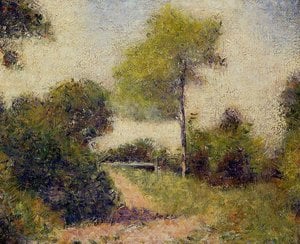
The Clearing
Dimensiones de la reproducción
To step before Georges Seurat’s The Clearing is to enter a realm where the boundaries between science and soul begin to dissolve. Painted in 1887, this luminous landscape serves as a breathtaking bridge between the fleeting, emotional spontaneity of Impressionism and the rigorous, calculated precision of Pointillism. At first glance, the viewer is greeted by a serene woodland scene, bathed in the warm, golden glow of an autumnal afternoon. Yet, as one lingers, the painting reveals itself to be far more than a mere depiction of nature; it is a meticulously engineered optical experience designed to vibrate with life.
The composition draws the eye deep into the heart of the woods, where a soft pathway winds through lush grass and dense foliage. Seurat masterfully utilizes the interplay of light and shadow to create an immense sense of depth, inviting the observer to wander mentally through the trees. The vibrant yellow leaves, catching the dappified sunlight, act as brilliant focal points that contrast beautifully against the deeper, cooler tones of the forest floor. This careful balance of warmth and shade creates a rhythmic movement across the canvas, making the atmosphere feel almost palpable, as if one could feel the gentle humidity and the quiet stillness of the clearing.
What truly distinguishes The Clearing is Seurat’s revolutionary approach to technique, a method known as Pointillism or Chromoluminarism. Eschewing the traditional method of blending pigments on a palette, Seurat applied tiny, distinct dots of pure color directly onto the canvas. This was not merely an aesthetic choice but a scientific endeavor influenced by contemporary theories of optics and simultaneous contrast. By placing complementary colors in close proximity, Seurat relied on the viewer's eye to perform the "optical mixing" of the colors from a distance.
This painstaking process demands immense patience and intellectual rigor. Each dot is a deliberate note in an optical symphony, calculated to maximize luminosity and tonal accuracy. For the discerning collector or interior designer, this technique offers a unique visual texture that changes depending on one's perspective. Up close, the painting reveals a complex mosaic of individual pigment points; from afar, these fragments coalesce into a seamless, shimmering landscape. It is this very tension between the microscopic detail and the macroscopic beauty that gives the work its enduring, hypnotic power.
Beyond the technical brilliance lies a profound layer of symbolism that resonates with the human experience. The choice of an autumnal setting—marked by the dominant, sun-drenched yellows—carries heavy themes of transition, decay, and eventual regeneration. In the context of late 19th-century Symbolist art, such landscapes often served as metaphors for the cycles of life itself. However, Seurat avoids any sense of overwhelming melancholy through his masterful orchestration of light. Instead, the sunlight filtering through the canopy suggests a sense of hope and the eternal persistence of nature.
For those seeking to bring a piece of art history into a modern living space, The Clearing offers an unparalleled emotional impact. It provides a sense of tranquility and intellectual depth, making it an ideal centerpiece for a room designed for contemplation or sophisticated relaxation. A high-quality reproduction of this masterpiece allows the warmth of Seurat’s palette to infuse an interior with light, while its complex textures provide a conversation piece that celebrates both the beauty of the natural world and the brilliance of human innovation.


1859 - 1891 , Francia

Explore the ethereal beauty of Impressionist landscapes. Discover how masters like Monet captured fleeting light through color and texture, and learn to curate these timeless, luminous masterpieces for your home collection.

Discover the profound serenity of timeless pastoral landscapes. From Impressionist masterpieces to bespoke oil commissions, explore how curated fine art brings the enduring beauty and tranquility of nature into your luxury home interior.

 Ver en contexto
 Enviar
 Compartir
 Detalles

 Descargar
 Similares
 Radiografía
 Presentación de diapositivas

 Ver más







 La opción de vidrio solo está disponible en tamaños inferiores a 110 cm.