Vista previa Vista previa en RA Cambiar a formato impreso Ver versión en imagen digital Compartir
Ver detalles Añadir a favoritos Descargar Ver artículos similares Radiografía Presentación de diapositivas Estadísticas

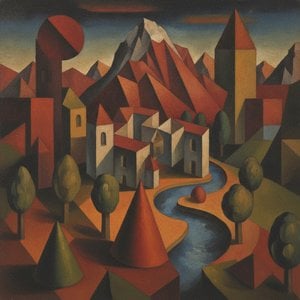
Musical instruments and Fruit

Explore Georges Braque’s ‘Musical Instruments & Fruit,’ a Cubist still life showcasing fragmented forms & dramatic lighting. Discover this iconic artwork's geometric abstraction.

Explore la vida y el arte de Georges Braque (1882-1963), una figura clave en la pintura del siglo XX. Pionero del Cubismo junto a Picasso, conocido por el Fauvismo, el collage y formas geométricas innovadoras. Descubre su legado en WahooArt!

Reproducción al óleo hecha a mano

Óleo sobre lienzo pintado a mano en el tamaño y marco de su elección, realizado por encargo por nuestros artistas. ( Cambiar a formato impreso Ver versión en imagen digital)

P118B $10
P118H $10
P118W $10
P438Z $10
P508JH $12
P508YH $12
P805H $10
P805Z $10
P919BZ $10
P919G $10
P919XJ $10
P959ZH $10
P968JZ $12
W106C $8
W218G $10
W218JH $8
W218Y $10
W307PJ $10
W316G $10
W316PJ $8
W316Y $10
W398PJ $8
W4111J $10
W500HY $15
W500JH $15
W692G $12
W849H $8
W940BG $15
W953PJ $8

Estándar
personalizado
CM
INCH

Elija entre nuestros tamaños predefinidos que respetan las proporciones originales de la obra.

ancho
altura

Puede ingresar sus propias dimensiones para adaptarse a un marco o espacio específico. Si el tamaño seleccionado no coincide con las proporciones de la imagen original, recortaremos la obra o extenderemos la pintura con elementos adicionales pintados a mano. Se le enviará una maqueta digital para su aprobación antes de comenzar la producción.
Tenga en cuenta que la vista previa en pantalla no refleja el recorte o la extensión reales. Solo la maqueta mostrará con precisión la composición final.
Si bien existen tamaños personalizados, recomendamos seleccionar una dimensión de la lista predefinida para preservar las proporciones originales.

Ejemplos de lo que se puede personalizar: Reemplace el rostro con una foto del cliente; Agregue una mascota (por ejemplo, cambie un gato por un perro); Incluya un mensaje oculto en el fondo; Cambie el paisaje o los elementos del fondo.
Tras realizar el pedido, el equipo de WahooArt.com enviará un correo electrónico al cliente para solicitar instrucciones y proporcionarle una vista previa del boceto.

Envío a todo el mundo () en 3-4 semanas en lugar de las 5 semanas estándar. (19 septiembre). Sin comprometer la calidad.

why_choose_icon
Envío exprés gratuito a todo el mundo
why_choose_icon
Lienzo de lino de alta calidad
why_choose_icon
Seguro de envío completo
why_choose_icon
Garantía de reembolso de impuestos aduaneros
why_choose_icon
Garantía de fidelidad cromática exacta
why_choose_icon
Política de devolución de 100 días (solo por defectos)
why_choose_icon
Garantía de devolución del 100% del dinero
why_choose_icon
Oferta por volumen

Precio total

$ 272

reproduction

Musical instruments and Fruit

Técnica de reproducción

Tamaño de la reproducción

-

Precio total

$ 272

Datos clave

  • Location: Tate Modern, London
  • Medium: Oil on canvas
  • Title: Musical Instruments and Fruit
  • Year: 1927
  • Influences: Cézanne
  • Movement: Cubism
  • Artist: Georges Braque

Cuestionario de arte

Cada pregunta tiene una única respuesta correcta.

Pregunta 1:
What artistic movement is most closely associated with Georges Braque’s ‘Musical Instruments and Fruit’?
Pregunta 2:
The painting utilizes a fragmented perspective, characteristic of which art movement?
Pregunta 3:
What is the primary subject matter depicted in ‘Musical Instruments and Fruit’?
Pregunta 4:
Based on the image description, what is a prominent feature of the lighting in ‘Musical Instruments and Fruit’?
Pregunta 5:
Which artist is most closely associated with Georges Braque, particularly during the development of Cubism?

A Fragmented World: The Genesis of Cubism

Georges Braque's "Musical Instruments and Fruit" isn’t merely a still life; it’s a carefully orchestrated dismantling of perception, a visual embodiment of the revolutionary ideas taking shape in early 20th-century Paris. Painted in 1927, during a period of intense collaboration with Pablo Picasso, this work represents a pivotal moment in the development of Cubism – an artistic movement that sought to redefine how we see and represent reality. The canvas isn’t concerned with replicating a single, unified view; instead, it presents multiple viewpoints simultaneously, as if peering through fractured lenses at a commonplace scene. This deliberate fragmentation reflects the burgeoning anxieties and intellectual shifts of the era, mirroring a world grappling with rapid industrialization, technological advancements, and a growing sense of instability.

Braque’s approach was deeply rooted in Cézanne's geometric explorations, particularly his emphasis on analyzing objects into their fundamental forms. Cézanne’s influence is palpable in the painting’s flattened perspective and the reduction of recognizable elements – the bowl, the sheet of paper, the draped cloth – to a series of interlocking planes and angles. This isn’t an attempt at photographic realism; rather, it's a conscious rejection of traditional representation, prioritizing the exploration of form, space, and the very nature of seeing itself. The muted color palette—primarily ochres, browns, and grays—further enhances this sense of detachment from the tangible world, contributing to the painting’s contemplative mood.

The Language of Geometry: Form and Structure

The composition is dominated by a rigorous geometric vocabulary. Rectangular blocks define the table and its contents, while triangular shapes suggest the contours of the fruit bowl and draped cloth. These forms aren't smoothly blended; they are sharply delineated, creating a dynamic tension between solidity and instability. Notice how Braque uses overlapping planes to create an illusion of depth – not through linear perspective, but by layering geometric shapes that seem to shift and rearrange themselves before your eyes. This technique is central to Cubism’s challenge to traditional spatial representation, forcing the viewer to actively engage with the painting and reconstruct its form in their mind.

  • The Bowl of Fruit: Representing abundance and fertility, the fruit itself becomes a collection of fragmented shapes, mirroring the overall fractured composition.
  • The Sheet of Paper: Suggests intellectual activity and documentation – perhaps reflecting Braque’s own role as an artist documenting his explorations of form.
  • The Draped Cloth: Adds a layer of complexity to the arrangement, its folds and creases contributing to the overall sense of dynamism and instability.

Musicality in Monochrome: Symbolism and Emotion

Beyond its purely formal qualities, “Musical Instruments and Fruit” resonates with a subtle emotional depth. The inclusion of musical instruments – specifically a mandolin – introduces an element of melody and rhythm into the composition. This suggests that Braque wasn’t simply interested in dissecting objects; he was also exploring their inherent relationships and the ways they could evoke feelings and associations. The painting's title itself hints at this interplay between visual form and auditory experience, inviting the viewer to imagine a silent symphony of shapes and colors.

Furthermore, the still life genre traditionally held symbolic weight, often representing the five senses. Braque’s choice to depict fruit and musical instruments aligns with this tradition, suggesting an exploration of pleasure, nourishment, and artistic creation. The muted color palette contributes to a sense of quiet contemplation, inviting viewers to reflect on the beauty and complexity of everyday objects.

A Legacy in Fragments: Reproduction and Interpretation

Reproductions of “Musical Instruments and Fruit” offer a remarkable opportunity to appreciate Braque’s groundbreaking innovations. The painting's fragmented composition and geometric forms are particularly well-suited to digital reproduction, allowing viewers to examine the intricate details of its construction. Whether displayed in a modern interior or a dedicated art gallery, this work continues to challenge our perceptions of reality and inspire new ways of seeing the world – a testament to Braque’s enduring legacy as one of the most influential artists of the 20th century.


Biografía del artista

**vida temprana y formación**

georges braque, un destacado pintor francés, collageador, dibujante, grabador y escultor, nació el 13 de mayo de 1882 en Argelo, Val-d'Oise. Creció en Le Havre y inicialmente se formó para ser pintor de casas y decorador, como su padre y abuelo. Sin embargo, las inclinaciones artísticas de Braque lo llevaron a estudiar pintura en la École des Beaux-Arts en Le Havre de 1897 a 1899.

**evolución artística y fauvismo**

En 1902, después de completar su aprendizaje con un decorador en París, Braque asistió a la Academia Humbert hasta 1904. Este período marcó su introducción al fauvismo, un estilo caracterizado por colores vibrantes y respuestas emocionales. Influenciado por las obras de henri matisse y andré derain, Braque adoptó un enfoque fauvista, como se ve en su pintura the patience (fauvismo, óleo sobre lienzo).

**contribución al cubismo**

La colaboración de Braque con pablo picasso desde 1908 hasta 1912 llevó al desarrollo del cubismo. Sus obras cubistas analíticas, como georges braque: the patience y pablo picasso: clarinet(cubismo analítico, óleo sobre lienzo), se consideran hitos en la historia del arte.

**legado y obras notables**

* Houses at l'Estaque: un testimonio del uso innovador de la geometría y la perspectiva simultánea de Braque. * The Patience(fauvismo, óleo sobre lienzo): demuestra el estilo fauvista de Braque. * Clarinet(cubismo analítico, óleo sobre lienzo): una obra cubista colaborativa con Picasso.

**museos y colecciones**

* Musée d'Orsay: presenta una extensa colección de arte impresionista y postimpresionista, incluyendo obras de Braque. * Musée de l'Orangerie: exhibe una amplia gama de obras de arte, incluyendo las de Braque y otros artistas notables. **Georges Braque's estilo innovador y su colaboración con Pablo Picasso continúan inspirando a artistas y entusiastas del arte.**
Georges Braque

Georges Braque

1882 - 1963 , Francia

Datos clave

  • Artistas Influenciados Por Este Artista: ['Pablo Picasso']
  • Artistas Que Influyeron:
    • Henri Matisse
    • André Derain
    • Paul Cézanne
  • Fecha De Muerte: 31 de agosto de 1963
  • Fecha De Nacimiento: 13 de mayo de 1882
  • Lugar De Nacimiento: Argenteuil, Francia
  • Movimiento Artístico: Cubismo, Fauvismo
  • Nacionalidad: Francés
  • Nombre Completo: Georges Braque
  • Obras Notables:
    • Casas en L'Estaque
    • La paciencia (Fauvismo)
    • Violin y Paleta
    • Mandola
Explore obras de arte organizadas por temas, estilos y características.