A Moment Frozen in Bronze: The Spirit of the American Frontier
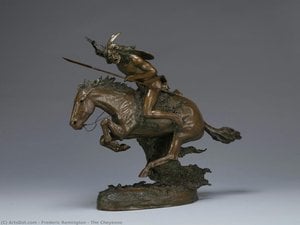
In the heart of Frederic Remington’s prolific career lies a masterpiece that transcends mere sculpture to become a visceral embodiment of the American West. "Coming Through the Rye," created in 1902, is far more than a depiction of movement; it is a testament to courage, resilience, and the relentless pursuit of survival against a formidable landscape. As viewers encounter this bronze work, they are immediately swept into a pivotal scene from the late 19th century, where the dust of the frontier seems to rise from the very base of the sculpture. Remington, an artist who possessed an uncanny ability to translate visual narratives into powerful artistic statements, captures four cowboys emerging from a field of rye, their horses caught in a moment of high-stakes tension.
The sculpture’s power resides in its dynamic composition. By arranging the horses in a staggered formation, Remington creates an immersive sense of depth and action that draws the eye through the thicket of movement. The riders, with arms raised and rifles held ready, suggest an imminent conflict or a sudden discovery, imbuing the piece with an unmistakable sense of urgency. For the collector or interior designer, this work offers a commanding presence; its ability to convey motion within the stillness of bronze makes it a captivating focal point for any space dedicated to celebrating heritage, adventure, or the rugged grandeur of history.
Mastery of Form and the Lost-Wax Technique
Remington’s artistic brilliance is rooted in his commitment to realism—a meticulous dedication to representing the physical textures of the frontier. Through the sophisticated use of the lost-wax casting technique, every nuance of the subjects' anatomy and environment is preserved with breathtaking clarity. One can trace the tension in the horses' muscles, the heavy folds of the riders' clothing, and the rough, earth-like texture of the base that anchors the figures to the ground. This level of detail ensures that the sculpture does not merely represent a scene but recreates the tactile reality of the era.
The interplay of light and shadow across the bronze surface adds a layer of emotional complexity to the work. Even in a monochromatic palette, the range from deep, velvety blacks in the shadows to bright, shimmering highlights on the contours of the animals creates a three-dimensional vitality. This sculptural mastery allows the piece to interact beautifully with ambient lighting in a gallery or home setting, as shifting light can reveal new details of the horsehair, the metallic sheen of the rifles, and the determined facial expressions of the cowboys.
Symbolism and the Legacy of the Vanishing West
Beyond its technical prowess, "Coming Through the Rye" serves as a profound historical document. It reflects the late 19th-century preoccupation with westward expansion and the hardships endured by those attempting to carve out a life in the wilderness. The choice of the rye field is not merely aesthetic; it symbolizes the untamed obstacles of the frontier. The cowboys themselves embody the values of independence, self-reliance, and the rugged ethos that defined the American pioneer spirit. Remington, though an Easterner by birth, utilized his keen observations and military experiences to chronicle a way of life that was rapidly vanishing.
For those seeking to bring a piece of this enduring legacy into their collections, a high-quality reproduction of this work offers more than decoration; it offers an emotional connection to the mythic West. The sculpture evokes themes of adventure and the tension between man and nature, making it an inspiring choice for those who appreciate art that tells a story of profound strength and historical significance. To possess such a piece is to hold a fragment of the American legend, captured forever in the timeless medium of bronze.



 Comprar pintura hecha a mano
 Enviar
 Compartir
 Detalles

 Descargar
 Similares
 Presentación de diapositivas
 Estadísticas


 Ver más






































 La opción de vidrio solo está disponible en tamaños inferiores a 110 cm.