x
Comprar pintura hecha a mano Comprar pintura hecha a manoComprar imagen Comprar imagen EnviarEnviar
DetallesDetalles Añadir a favoritos Añadir a favoritos DescargarDescargar SimilaresSimilares Presentación de diapositivasPresentación de diapositivas

Bronco Buster

Experience Frederic Remington's iconic "Bronco Buster" sculpture – a dynamic bronze depiction of a cowboy’s daring ride. A timeless symbol of the American West, now available as a hand-painted reproduction.

Descubre Frederic Remington (1861-1909), el icónico pintor del Oeste americano. Caballeros, nativos americanos y paisajes épicos en WahooArt.

Giclée / Impresión de arte

Impresiones giclée o en lienzo de calidad de museo con producción rápida y opciones de acabado flexibles. (Comprar pintura hecha a mano Comprar pintura hecha a manoComprar imagen Comprar imagen)

Estándar
a medida
CM
INCH

Elija entre nuestros tamaños predefinidos que respetan las proporciones originales de la obra.

ancho
altura

Puede introducir sus propias dimensiones para adaptarse a un marco o espacio específico. Si el tamaño seleccionado no coincide con las proporciones de la imagen original, recortaremos la obra de arte o extenderemos la imagen con un borde con efecto espejo o de color sólido. Se enviará una maqueta digital para su aprobación antes de que comience la producción.
Tenga en cuenta que la vista previa en pantalla no refleja el recorte o la extensión real. Solo la maqueta mostrará con precisión la composición final.
Aunque existen tamaños personalizados, recomendamos seleccionar una dimensión de la lista predefinida para preservar las proporciones originales.

Envío a todo el mundo () en 2 semanas en lugar de las 4/5 semanas estándar. (31 agosto)

why_choose_icon
Envío exprés gratuito a todo el mundo
why_choose_icon
Lienzo de lino de alta calidad
why_choose_icon
Seguro de envío total
why_choose_icon
Garantía de reembolso de impuestos aduaneros
why_choose_icon
Garantía de fidelidad cromática exacta
why_choose_icon
Política de devolución de 60 días (solo por defectos)
why_choose_icon
Garantía de devolución del 100% del dinero
why_choose_icon
Descuento por cantidad

Precio total

$ 68

reproduction

Bronco Buster

Giclée / Impresión de arte

Dimensiones de la reproducción

-

Precio total final

$ 68

Datos clave

  • Influences: Remington sketches
  • Movement: American West Art
  • Title: The Bronco Buster
  • Artist: Frederic Remington
  • Subject or theme: Cowboy & Bronco
  • Dimensions: 22.5 × 18.5 × 14 in.
  • Medium: Bronze

Test de arte

Cada pregunta tiene una única respuesta correcta.

Pregunta 1:
What is the primary subject depicted in Frederic Remington’s ‘The Bronco Buster’?
Pregunta 2:
The sculpture ‘The Bronco Buster’ was originally cast using which technique?
Pregunta 3:
What is the significance of ‘The Bronco Buster’ in Frederic Remington's artistic career?
Pregunta 4:
The image description highlights which aspect of the sculpture’s texture?
Pregunta 5:
According to the text, what inspired Frederic Remington to create ‘The Bronco Buster’?

A Chronicle of the Wild West: Frederic Remington’s “The Bronco Buster”

Frederic Remington's "The Bronco Buster," sculpted in 1895 and cast in bronze, isn’t merely a depiction of a cowboy wrestling with a bucking bronco; it’s a potent distillation of the American West itself – a landscape forged by rugged individualism, relentless challenge, and an enduring spirit of frontier life. Remington, born in Canton, New York, initially distanced from the dusty trails he so vividly captured, found his artistic voice through a deep fascination with military themes and a keen eye for storytelling. His early exposure to the narratives surrounding the Civil War and subsequent westward expansion ignited a passion that would define his career, transforming him into arguably the most recognizable artist of this pivotal era.

The sculpture’s genesis lies in Remington's own sketches, notably “Pitching Broncho,” published in Harper’s Weekly in 1892. This drawing served as the foundational inspiration for "The Bronco Buster," a piece that transcends simple illustration and embodies the raw energy of the Western experience. Remington masterfully captured not just the physical struggle but also the psychological tension between man and beast, conveying a sense of both danger and controlled dominance. The dynamic pose—the cowboy’s outstretched arm grappling with the horse's mane, the stirrup swinging free—immediately draws the viewer into the heart of the action, creating an immersive experience that speaks to the fundamental human desire for mastery over nature.

A Masterclass in Bronze Casting and Realistic Detail

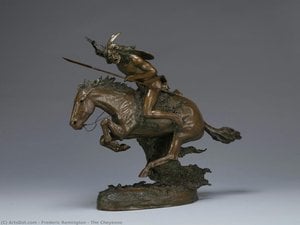
Technically, “The Bronco Buster” represents a significant leap forward for Remington. Moving beyond the limitations of flat paper, he embraced the three-dimensional possibilities of bronze casting – a technique that allowed him to imbue his subject with unprecedented realism and dynamism. The sculpture’s creation involved both sand-casting and later, lost-wax methods, resulting in a remarkably detailed surface texture. The rough, uneven quality of the bronze reflects the inherent materiality of the medium, while subtle variations in tone create depth and highlight the musculature of both man and horse. Close examination reveals sharp edges where details like clothing folds or the horse’s mane are sculpted, further enhancing the sense of tactile realism.

The choice of bronze itself is crucial to the sculpture's impact. Bronze possesses a remarkable durability, ensuring that “The Bronco Buster” has endured as a powerful symbol of the American West for over a century. Furthermore, the patina – the natural oxidation process that develops on copper and bronze surfaces – adds layers of history and character, subtly altering the color and texture of the metal over time. This aging process not only enhances the sculpture’s aesthetic appeal but also serves as a visual reminder of its enduring legacy.

Symbolism and the Spirit of the Frontier

Beyond its technical brilliance, “The Bronco Buster” is rich in symbolic meaning. It embodies themes of courage, skill, and the eternal struggle between man and nature – core values that defined the American frontier experience. The cowboy’s determined stance, his outstretched hand grasping for control, speaks to a relentless pursuit of mastery over an untamed environment. The rearing horse represents the unpredictable forces of nature, demanding respect and unwavering resolve. The sculpture isn't simply about conquering a wild animal; it’s about asserting one’s place within a vast and challenging landscape.

Furthermore, “The Bronco Buster” reflects Remington’s broader artistic vision – a desire to document and celebrate the vanishing West. As the frontier gradually succumbed to settlement and industrialization, Remington sought to preserve its spirit through his art, capturing the essence of a bygone era before it was lost forever. The sculpture stands as a poignant reminder of a time when individuals faced immense challenges with grit, determination, and an unwavering belief in their own capabilities.

A Legacy Enduring Through Reproduction

Today, “The Bronco Buster” continues to captivate audiences worldwide, thanks in part to the availability of high-quality reproductions. These meticulously crafted prints allow art lovers to experience the sculpture’s power and beauty without the expense or logistical challenges of owning the original. Whether displayed in a private collection or incorporated into interior design schemes, these reproductions serve as a lasting tribute to Frederic Remington's artistic genius and his enduring portrayal of the American West.


Biografía del artista

Primeros Años y Educación

  • Nacimiento y Familia: Frederic Sackrider Remington nació el 4 de octubre de 1861 en Canton, Nueva York. Su familia tenía ascendencia vasca francesa.
  • Influencia Militar: Su padre, Coronel Seth Pierrepont Remington, propietario de una ferretería y veterano de la Guerra Civil, influyó significativamente en su vida temprana. La exposición a temas militares más tarde daría forma a su arte.

  • Educación Temprana: Asistió al Instituto Episcopal de Vermont, una escuela militar donde comenzó a dibujar. Posteriormente se trasladó a otra academia militar, pero finalmente persiguió el arte en lugar de una carrera militar debido a la falta de enfoque.

Carrera Artística y Estilo

  • Primeras Ilustraciones: Su primera ilustración publicada fue un caricatura para el Yale Courant, demostrando una aptitud temprana para representar escenas de acción.
  • Enfoque en el Oeste: Un viaje crucial a Montana en 1881 despertó su fascinación por el Oeste americano, convirtiéndose en el tema central de su carrera artística.
  • Temática: Su obra presentaba prominentemente vaqueros, nativos americanos y la Caballería estadounidense, capturando el espíritu y los desafíos de la vida fronteriza.
  • Estilo Artístico: Remington desarrolló un estilo distintivo caracterizado por composiciones dinámicas, pinceladas enérgicas y un enfoque en el realismo mezclado con un toque dramático. A menudo utilizaba bocetos rápidos para capturar movimiento y emoción.

Obras Notables y Logros

  • Pinturas Destacadas: Varias obras se destacan como ejemplos significativos de su talento:
    • Mi Ranch – Muestra el estilo único de Remington y su perspectiva sobre el Oeste.
    • Esperando a la luz de la luna – Demuestra su habilidad para capturar la esencia del Oeste americano a través de imágenes evocadoras.
    • Ridden Down (1905) - Una poderosa representación de un ataque de caballería.
    • The Long-Horn Cattle Sign (1908) – Captura la vitalidad de la vida del vaquero.
  • Ilustraciones y Escultura: Más allá de la pintura, Remington también fue un prolífico ilustrador para revistas como Harper's Weekly y Collier’s. También creó esculturas, demostrando aún más su versatilidad artística.
  • Reconocimiento: Su trabajo obtuvo un amplio reconocimiento durante su vida, estableciéndolo como una figura destacada en el arte del Oeste americano.

Legado e Influencia

  • Impacto en el Arte del Oeste: Las contribuciones de Frederic Remington a la representación del Oeste americano son innegables. Ayudó a definir el género y popularizó imágenes de vaqueros, nativos americanos y vida fronteriza.
  • Influencia en Otros Artistas: Su trabajo inspiró a numerosos artistas, incluyendo a N.C. Wyeth y Zane Grey.
  • Museo Frederic Remington: El Museo Frederic Remington en Ogdensburg, Nueva York, preserva su legado a través de una extensa colección de pinturas, bocetos y esculturas.
  • Significado Histórico: El arte de Remington proporciona valiosos conocimientos sobre la historia, la cultura y la mitología del Oeste americano durante un período de cambio y conflicto significativos. Sus representaciones, aunque a veces romantizadas, ofrecen una visión de una era crucial en la historia estadounidense.

Últimos Años y Fallecimiento

  • Producción Artística Continua: Remington continuó produciendo arte prolíficamente hasta su muerte.
  • Deterioro de la Salud: En 1909, sufrió apendicitis mientras estaba en una asignación en Florida.
  • Fallecimiento: Frederic Remington murió el 26 de octubre de 1909, en Bronxville, Nueva York, a la edad de 48 años. Su legado como un artista estadounidense significativo continúa inspirando y cautivando al público hoy en día.
Frederic Remington

Frederic Remington

1861 - 1909 , Estados Unidos de América

Datos clave

  • Artistas Influenciados:
    • N. C. Wyeth
    • Zane Grey
  • Fecha De Fallecimiento: 26 de diciembre de 1909
  • Fecha De Nacimiento: 4 de octubre de 1861
  • Lugar De Nacimiento: Canton, Estados Unidos
  • Movimiento Artístico: Realismo pictórico
  • Nacionalidad: Estadounidense
  • Nombre Completo: Frederic Sackrider Remington
  • Obras Notables:
    • Mi Rancho
    • Esperando a la luz de luna
    • Ridden Down
    • The Long-Horn Cattle Sign
    • El Trooper
    • La señal de humo
Explore obras de arte organizadas por temas, estilos y características.