Ver en contextoVer en contexto Vista previa en RAVista previa en RA Cambiar a Impresión Cambiar a ImpresiónComprar pintura hecha a mano Comprar pintura hecha a mano EnviarEnviar
DetallesDetalles Añadir a favoritos Añadir a favoritos DescargarDescargar SimilaresSimilares RadiografíaRadiografía Presentación de diapositivasPresentación de diapositivas EstadísticasEstadísticas

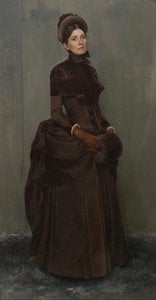
Girl Reading

Discover Frank Duveneck's 'Girl Reading,' a captivating realism painting from 1876. This evocative work, featuring a young woman lost in her book, showcases the artist’s masterful use of color and detail – a poignant reflection of life and emotion.

Descubre a Frank Duveneck (1848-1919), figura clave del Realismo Americano. Retratos expresivos y escenas cotidianas con la influencia de Frans Hals, capturando la vida con realismo impactante.

Adquiera una imagen digital de alta resolución y optimizada, muy superior a la vista previa en línea.

Cada archivo es preparado meticulosamente por nuestros especialistas internos mediante el uso de herramientas avanzadas y un experto retoque manual. Nos aseguramos de que cada imagen posea una claridad excepcional, una precisión cromática impecable y un detalle minucioso.

El archivo final se entrega por correo electrónico en un plazo de 72 horas, optimizado para su uso inmediato en entornos profesionales, editoriales y de impresión. Esta es la misma calidad en la que confían los estudios de diseño, las editoriales y las galerías de primer nivel.

Imagen Digital

Descarga un archivo de alta resolución para exhibición personal, impresión y proyectos creativos. (Cambiar a Impresión Cambiar a ImpresiónComprar pintura hecha a mano Comprar pintura hecha a mano)

Precio total

$ 24,90

Incluido en cada pedido de imágenes digitales

Entrega digital experta, garantizada.

Al elegir WahooArt.com, no solo está adquiriendo una imagen; está recibiendo una obra de arte digital mejorada profesionalmente, elaborada con precisión y respaldada por una garantía de satisfacción. Esto es todo lo que incluye su pedido, automáticamente:

shipping_icon
Entrega rápida por email

Recibirá su archivo de imagen digital en alta resolución por correo electrónico en un plazo de 72 horas tras realizar su pedido, listo para su uso inmediato.

canvas_icon
Archivo digital optimizado por IA

Su obra de arte se optimiza profesionalmente mediante herramientas avanzadas de IA y edición manual, garantizando el máximo detalle, claridad y precisión cromática.

insurance_icon
Reenvío gratuito de por vida

¿Has borrado o perdido tu archivo por error? No te preocupes: te lo volveremos a enviar en cualquier momento, sin coste adicional.

tax_icon
Sin gastos de importación, siempre

Disfrute de su obra de arte al instante sin aduanas, aranceles ni gastos de envío; las descargas digitales siempre están libres de impuestos.

color_icon
Garantía de fidelidad de color

Garantizamos que su imagen digital refleje los colores originales con la mayor fidelidad posible, mediante el uso de herramientas profesionales y gestión del color.

return_icon
Garantía de satisfacción de 100 días

Si no está satisfecho con su imagen digital, la revisaremos o le reembolsaremos el 100% en un plazo de 100 días, sin preguntas.

guarantee_icon
100% Garantía de devolución de dinero

¿No está satisfecho? Obtenga un reembolso completo dentro de los 100 días posteriores a la recepción de su archivo digital, sin preguntas.

discount_icon
Descuentos por pedidos grandes

Compra 3 imágenes, ahorra 10% - Compra 5, ahorra 15% - Compra 10+, ahorra 20%. Ideal para proyectos creativos, galerías y agencias.

Datos clave

  • Medium: Oil on canvas
  • Artistic style: Impressionistic realism
  • Year: 1876
  • Movement: Realism, Impressionism
  • Notable elements: Loose brushstrokes
  • Influences:
    • Schmitt
    • Duveneck

Test de arte

Cada pregunta tiene una única respuesta correcta.

Pregunta 1:
What is the primary artistic style evident in Frank Duveneck’s ‘Girl Reading’?
Pregunta 2:
The young woman in the painting is wearing a distinctive red dress. What does this color choice likely symbolize?
Pregunta 3:
In what century was ‘Girl Reading’ painted?
Pregunta 4:
Frank Duveneck's life was marked by tragedy. What significant event early in his life profoundly impacted his artistic development?
Pregunta 5:
The dark background in ‘Girl Reading’ serves what purpose?

A Moment of Quiet Reflection: Frank Duveneck’s “Girl Reading”

Frank Duveneck's "Girl Reading," painted in 1876, isn’t merely a portrait; it’s a carefully constructed tableau of domesticity and intellectual pursuit. The painting immediately draws the viewer into a scene of serene contemplation – a young woman lost within the pages of her book, bathed in a soft, diffused light that speaks to both intimacy and a certain melancholy. Duveneck, a remarkably prolific artist whose life was tragically cut short at the age of 71, masterfully captures this quiet moment, imbuing it with an emotional resonance that transcends its simple subject matter.

The composition is deceptively straightforward. The girl, dressed in a vibrant crimson gown – a bold and striking color choice for the era – sits poised on what appears to be a small stool or bench. Her posture suggests both comfort and concentration; her hand rests lightly upon the book, while her gaze is utterly absorbed by its contents. The dark shawl draped across her shoulders and the matching hat contribute to a sense of understated elegance and perhaps a touch of reserve. The background, rendered in muted browns and greens, serves as a subtle counterpoint to the girl’s vivid attire, directing the eye back to her central figure.

Impressionistic Realism: A Delicate Balance

Duveneck's style is often described as “impressionistic realism,” a term that perfectly encapsulates his approach. He skillfully blends elements of both movements – the loose brushstrokes and emphasis on capturing fleeting moments characteristic of Impressionism, with the meticulous detail and accurate representation favored by Realists. Notice how he uses broken color to create an atmospheric effect, particularly in the dappled light filtering through an unseen window. The paint isn’t blended smoothly; instead, it's applied in short, visible strokes that give the scene a sense of immediacy and vitality. This technique allows him to convey not just what he *sees*, but also how he *feels* about what he sees – a subtle emotional layering that elevates the painting beyond a simple likeness.

The artist’s use of light is particularly noteworthy. It's not harsh or dramatic, but rather soft and diffused, creating a sense of warmth and intimacy. This gentle illumination highlights the girl’s face and hands, drawing attention to her engagement with the book. The shadows are equally deliberate, adding depth and dimension to the scene and subtly hinting at the quiet solitude of the moment.

A Window into 19th-Century Life

"Girl Reading" offers a poignant glimpse into the domestic life of mid-19th century America. The painting reflects a time when education, particularly for women, was increasingly valued, though still often limited. The girl’s act of reading represents a burgeoning intellectual curiosity and a desire for knowledge – a subtle assertion of agency within a society that frequently confined women to traditional roles. Furthermore, the setting itself—a simple interior space—suggests a life centered around family and home, values deeply rooted in the era.

Considering Duveneck’s own biography adds another layer of meaning. His early life was marked by profound loss – the death of his father at a young age and the subsequent remarriage of his mother. These experiences undoubtedly shaped his artistic vision, imbuing his work with a sense of melancholy and perhaps a yearning for stability and connection. “Girl Reading,” therefore, can be interpreted as an exploration of these themes—a quiet meditation on loss, memory, and the solace found in intellectual pursuits.

Symbolism and Emotional Resonance

Beyond its historical context, "Girl Reading" is rich with symbolic meaning. The book itself represents knowledge, wisdom, and escape – a portal to other worlds and ideas. The girl’s posture suggests introspection and a desire for self-discovery. The crimson dress, while vibrant, also carries connotations of passion and perhaps even vulnerability. Duveneck masterfully uses color and composition to create an atmosphere of quiet contemplation, inviting the viewer to share in the girl's moment of solitude.

Ultimately, “Girl Reading” is a remarkably evocative work that transcends its simple subject matter. It’s a testament to Duveneck’s artistic skill and his ability to capture not just the physical appearance of his subjects, but also their inner lives. It remains a powerful reminder of the enduring appeal of quiet moments, intellectual pursuits, and the beauty found in the everyday.


Biografía del artista

Primeros años y formación

Frank Duveneck, cuyo nombre de nacimiento era Frank Decker, nació el 9 de octubre de 1848 en Covington, Kentucky. Su padre, Bernhard Decker, un inmigrante alemán, falleció cuando Frank tenía solo un año de edad, y su madre se casó más tarde con Joseph "Squire" Duveneck. Esta herencia influiría significativamente en el estilo artístico de Duveneck. A los 15 años, Duveneck comenzó a estudiar arte bajo la tutela del pintor local Johann Schmitt y fue aprendiz de una empresa alemana de decoradores de iglesias. Esta temprana exposición sentó las bases para su éxito futuro.

Evolución artística y obras notables

En 1869, Duveneck viajó a Múnich para estudiar con Wilhelm von Diez y Wilhelm Leibl en la Real Academia de Múnich. Este período marcó un cambio fundamental en su estilo, adoptando un enfoque oscuro, realista y directo de la pintura. Algunas de las obras más celebradas de Duveneck incluyen:
  • Lady with Fan (1873), que muestra su deuda con la paleta oscura y el pincelado cortante de Frans Hals.
  • The Whistling Boy (1872), otro ejemplo de su estilo temprano y expresivo.
  • The Cobbler's Apprentice (1877), óleo sobre lienzo, actualmente en el Taft Museum of Art en Cincinnati, Ohio.

Enseñanza y legado

En 1878, Duveneck abrió una escuela en Múnich y más tarde en Polling, Baviera. Sus alumnos, conocidos como los "chicos de Duveneck", incluyeron a John Twachtman, Otto Bacher, Julius Rolshoven y John White Alexander. Después de regresar a América, Duveneck enseñó en la Academia de Arte de Cincinnati. Entre sus alumnos notables se encontraron Ida Holterhoff Holloway, John Christen Johansen, M. Jean McLane, Edward Charles Volkert, Russel Wright, Charles Mills, Herman y Bessie Wessel.

Vida posterior y fallecimiento

Duveneck falleció el 3 de enero de 1919 en Covington, Kentucky. Su obra se puede encontrar en varios museos, incluyendo el Museo Metropolitano de Arte en Nueva York, la Galería Nacional de Arte en Washington, D.C., y el Museo de Arte de Cincinnati.

Influencias e importancia histórica

Duveneck fue influenciado por artistas como Frans Hals y Gustave Courbet, adoptando su realismo directo y pinceladas expresivas. Su estilo oscuro y su enfoque en la representación de la vida cotidiana lo convirtieron en una figura clave del realismo americano. Su enseñanza tuvo un impacto significativo en el desarrollo de varios artistas importantes, consolidando su legado como un mentor influyente y un artista innovador que ayudó a moldear el panorama artístico estadounidense del siglo XIX. Su capacidad para capturar la esencia humana con pinceladas audaces y una paleta rica lo distingue como uno de los pintores más importantes de su época.
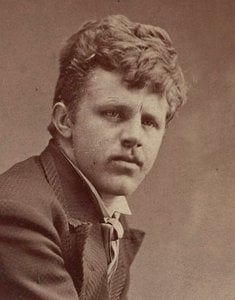
Frank Duveneck

Frank Duveneck

1848 - 1919 , Estados Unidos de América

Breves datos

  • Artistas Que Influyeron:
    • Frans Hals
    • Gustave Courbet
  • Fecha De Fallecimiento: 3 de enero de 1919
  • Fecha De Nacimiento: 9 de octubre de 1848
  • Influenciado A Artistas:
    • John Twachtman
    • Otto Bacher
  • Lugar De Nacimiento: Covington, Estados Unidos
  • Movimiento Artístico: Realismo americano
  • Nacionalidad: Estadounidense
  • Nombre Completo: Frank Duveneck
  • Obras Notables:
    • Lady with Fan (1873)
    • The Whistling Boy (1872)
    • The Cobbler's Apprentice (1877)