Vista previa Vista previa en RA Cambiar a formato impreso Ver versión en imagen digital Compartir
Ver detalles Guía Añadir a favoritos Descargar Ver artículos similares Radiografía Presentación de diapositivas Estadísticas

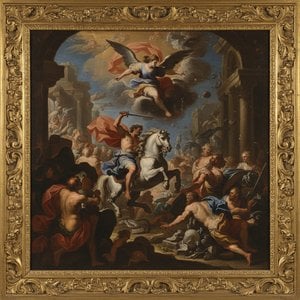
Acis, Galatea, and Polyphemus

François Perrier's "Acis, Galatea, and Polyphemus" (1645) is a dramatic Baroque masterpiece depicting a mythological scene of love, loss, and revenge. Explore the rich details and symbolism in this iconic painting.

François Perrier: pintor y grabador francés (1594-1649). Introdujo el estilo barroco romano en Francia, conocido por sus grabados de escultura clásica y decoraciones de techos. ¡Explora su legado!

Reproducción al óleo hecha a mano

Óleo sobre lienzo pintado a mano en el tamaño y marco de su elección, realizado por encargo por nuestros artistas. ( Cambiar a formato impreso Ver versión en imagen digital)

P118B $10
P118H $10
P118W $10
P438Z $10
P508JH $12
P508YH $12
P805H $10
P805Z $10
P919BZ $10
P919G $10
P919XJ $10
P959ZH $10
P968JZ $12
W106C $8
W218G $10
W218JH $8
W218Y $10
W307PJ $10
W316G $10
W316PJ $8
W316Y $10
W398PJ $8
W4111J $10
W500HY $15
W500JH $15
W692G $12
W849H $8
W940BG $15
W953PJ $8

Estándar
personalizado
CM
INCH

Elija entre nuestros tamaños predefinidos que respetan las proporciones originales de la obra.

ancho
altura

Puede ingresar sus propias dimensiones para adaptarse a un marco o espacio específico. Si el tamaño seleccionado no coincide con las proporciones de la imagen original, recortaremos la obra o extenderemos la pintura con elementos adicionales pintados a mano. Se le enviará una maqueta digital para su aprobación antes de comenzar la producción.
Tenga en cuenta que la vista previa en pantalla no refleja el recorte o la extensión reales. Solo la maqueta mostrará con precisión la composición final.
Si bien existen tamaños personalizados, recomendamos seleccionar una dimensión de la lista predefinida para preservar las proporciones originales.

Ejemplos de lo que se puede personalizar: Reemplace el rostro con una foto del cliente; Agregue una mascota (por ejemplo, cambie un gato por un perro); Incluya un mensaje oculto en el fondo; Cambie el paisaje o los elementos del fondo.
Tras realizar el pedido, el equipo de WahooArt.com enviará un correo electrónico al cliente para solicitar instrucciones y proporcionarle una vista previa del boceto.

Envío a todo el mundo () en 3-4 semanas en lugar de las 5 semanas estándar. (23 septiembre). Sin comprometer la calidad.

why_choose_icon
Envío exprés gratuito a todo el mundo
why_choose_icon
Lienzo de lino de alta calidad
why_choose_icon
Seguro de envío completo
why_choose_icon
Garantía de reembolso de impuestos aduaneros
why_choose_icon
Garantía de fidelidad cromática exacta
why_choose_icon
Política de devolución de 100 días (solo por defectos)
why_choose_icon
Garantía de devolución del 100% del dinero
why_choose_icon
Oferta por volumen

Precio total

$ 272

reproduction

Acis, Galatea, and Polyphemus

Técnica de reproducción

Tamaño de la reproducción

-

Precio total

$ 272

Datos clave

  • Influences: Roman Baroque
  • Year: 1645
  • Medium: Oil on canvas
  • Artist: François Perrier
  • Location: Musée du Louvre, Paris
  • Style: Baroque

The Dramatic Narrative of François Perrier’s “Acis, Galatea, and Polyphemus”

François Perrier's "Acis, Galatea, and Polyphemus," painted in 1645, isn’t merely a depiction of a classical myth; it’s a visceral plunge into the heart of Baroque drama. This monumental canvas, measuring nearly four by six feet, immediately commands attention with its dynamic composition and intensely emotional palette. Perrier masterfully transports the audience to a rugged, storm-wracked landscape – a crucial element that elevates the scene beyond a simple mythological illustration. The rocky terrain, rendered with meticulous detail, suggests both vulnerability and resilience, mirroring the precarious fate of Acis and the looming threat posed by the monstrous Polyphemus.

The central figures—Acis, lying tragically at Galatea’s feet; Galatea herself, radiating a poignant blend of grief and protective tenderness; and the towering, enraged Polyphemus—are sculpted with an almost sculptural quality. Perrier's skill lies not just in capturing their individual forms but in conveying their psychological states through subtle shifts in expression and gesture. Note particularly the downward gaze of Polyphemus, laden with remorse and a hint of bewildered rage, contrasting sharply with Galatea’s sorrowful yet resolute posture. The artist’s use of chiaroscuro—the dramatic interplay of light and shadow—further intensifies this emotional impact, drawing our eyes to the focal points of the scene while simultaneously shrouding the background in an atmosphere of foreboding.

Baroque Grandeur: Style, Technique, and Influence

“Acis, Galatea, and Polyphemus” is a quintessential example of the Roman Baroque style, deeply influenced by the works of artists like Guido Reni and Carlo Saraceni. Perrier’s approach aligns with the period's emphasis on theatricality, emotional intensity, and dramatic movement. The painting showcases a remarkable mastery of technique—particularly in his handling of color and texture. He employs rich, saturated hues – deep reds, blues, and greens – to create a sense of opulent drama, while simultaneously utilizing subtle gradations of tone to model the figures with astonishing realism. The brushwork is loose and expressive, contributing to the overall dynamism of the composition. It’s important to note that Perrier was not just a painter; he was also a celebrated printmaker, and his meticulous study of antique sculptures profoundly shaped his artistic vision—a legacy evident in the idealized forms and classical references throughout this work.

Furthermore, Perrier's work represents a pivotal moment in art history. He played a crucial role in introducing the grandeur and dynamism of the Roman Baroque to Parisian ateliers, effectively bridging the gap between Italian Renaissance ideals and French artistic sensibilities. His groundbreaking series of prints after antique sculptures had an immeasurable impact on European art production for decades to come, influencing generations of artists with his meticulous draftsmanship and profound understanding of classical form.

Mythological Symbolism and Emotional Resonance

Beyond its aesthetic merits, “Acis, Galatea, and Polyphemus” is rich in mythological symbolism. The story itself—a tale of love, betrayal, and revenge—resonates with universal themes of passion, loss, and the destructive consequences of unchecked rage. Acis, a mortal man, represents vulnerability and mortality, while Galatea embodies grace, compassion, and enduring strength. Polyphemus, the one-eyed giant, symbolizes primal instinct, uncontrolled aggression, and the dangers of isolation. The scene’s dramatic climax—Polyphemus's brutal act of violence against Acis—serves as a potent reminder of the fragility of human life and the ever-present threat of darkness.

The painting’s emotional impact is undeniable. It evokes a sense of profound sorrow, mingled with admiration for Galatea’s unwavering devotion and a chilling awareness of Polyphemus's monstrous nature. Perrier skillfully captures the psychological turmoil experienced by all three characters, creating an artwork that continues to resonate with viewers centuries after its creation. The scene’s inherent drama—the juxtaposition of beauty and brutality, tenderness and rage—makes it a timeless masterpiece of Baroque art.

A Legacy Enduring: Reproduction and Appreciation

Reproductions of “Acis, Galatea, and Polyphemus” offer an accessible way to experience the power and artistry of this remarkable painting. When selecting a reproduction, consider the quality of materials used—a fine-art print on archival paper will ensure that the colors remain vibrant for years to come. This iconic scene continues to inspire interior designers seeking to infuse their spaces with drama and emotion, while art collectors appreciate its historical significance and artistic merit. The painting’s enduring appeal lies in its ability to transport us to another time and place—a world of mythic grandeur, intense emotions, and unforgettable imagery.


Biografía del artista

François Perrier: The Architect of Roman Baroque in France

François Perrier (1594 – 1649) stands as a pivotal figure in the artistic landscape of seventeenth-century France, credited with introducing the grandeur and dynamism of the Roman Baroque into Parisian ateliers. More than just a painter, he was a meticulous draftsman and printmaker whose legacy extends far beyond his canvases—primarily through his groundbreaking collections of prints after antique sculptures that profoundly impacted European art production for decades to come. This article delves into Perrier’s life, artistic endeavors, influences, and enduring significance within the broader context of Baroque aesthetics.

Early Life and Artistic Formation

Born in Pontarlier, France, François Perrier's formative years coincided with a period of significant intellectual ferment fueled by humanist scholarship and rediscovery of classical antiquity. His training initially centered around Fontainebleau, where he absorbed the stylistic precepts championed by Francesco Francia and Jean Fouquet—artists who epitomized the prevailing Mannerist tendencies prevalent at the time. This exposure instilled in him a deep appreciation for meticulous detail and expressive handling of pigment, qualities that would characterize his subsequent artistic output. Notably, Perrier’s father was a Huguenot minister, shaping his worldview and fostering an environment conducive to intellectual curiosity. He demonstrated exceptional talent from a young age, mastering drawing techniques and honing his observational skills—preparing him for the challenges of pursuing a career in art.

Rome: Embracing Academic Baroque

Between 1620 and 1625, Perrier embarked on a transformative journey to Rome—a pilgrimage for aspiring artists seeking inspiration from the epicenter of artistic innovation. There, he encountered Giovanni Lanfranco, a leading proponent of academic baroque classicism, whose influence profoundly shaped Perrier’s stylistic sensibilities. Lanfranco's emphasis on idealized forms and harmonious compositions served as a crucial catalyst in shaping Perrier’s approach to painting—particularly evident in his monumental frescoes adorning the dome of Saint Andrew’s Basilica. This immersive experience solidified Perrier’s commitment to mastering the techniques of illusionistic painting, mirroring the ambitious grandeur of Roman Baroque architecture. He diligently studied the works of Michelangelo and Raphael, absorbing their mastery of perspective and anatomical accuracy—skills that would become indispensable tools in his artistic arsenal.

The Dome of Saint Andrew's and Artistic Collaboration

Perrier’s involvement in the decoration of Saint Andrew’s Basilica represents a landmark achievement in architectural history and exemplifies his artistic prowess. Collaborating closely with Giovanni Lanfranco and Alessandro Galli Bibiena, he spearheaded the creation of one of Rome’s earliest examples of Baroque ceiling fresco—a breathtaking spectacle of color, perspective, and sculptural illusionism. This project showcased Perrier's ability to synthesize classical ideals with innovative visual strategies, establishing him as a visionary artist at the forefront of his time. Furthermore, his partnership with Charles Le Brun fostered an environment for artistic experimentation and cemented Le Brun’s position as a prominent figure in the burgeoning Parisian Baroque scene. The basilica’s dome became a testament to Perrier's dedication to elevating art beyond mere representation—aiming instead to evoke awe and inspire contemplation within viewers.

Prints After Antique Sculptures: A Legacy of Classical Inspiration

Perhaps Perrier's most enduring contribution to art history lies in his two monumental printmaking projects—Segmenta nobilium signorum et statuarum quae temporis dentem invidium evasere (Paris, 1638) and Icones et segmenta...quae Romae adhuc extant (Paris, 1645). These meticulously crafted engravings after antique sculptures constituted a veritable visual encyclopedia for European artists—providing models of idealized beauty and anatomical precision that served as invaluable references across disciplines. Perrier’s prints weren't merely reproductions; they were interpretations imbued with stylistic refinements characteristic of the Baroque aesthetic—demonstrating his mastery of engraving technique and his profound understanding of classical art principles. He employed innovative printing methods, utilizing mezzotint and etching to achieve unparalleled tonal range and textural detail—a feat that astonished contemporaries and elevated printmaking to new heights of artistic sophistication. These collections profoundly influenced generations of painters, sculptors, and architects, shaping the visual vocabulary of European baroque art for decades to come.

Later Years and Artistic Influence

Returning to Paris in 1630, Perrier established himself within Simon Vouet’s influential circle—a bastion of academic Baroque style. He continued to refine his artistic vision, mentoring Charles Le Brun and fostering a new generation of painters committed to upholding classical ideals while embracing the expressive dynamism of baroque aesthetics. His work on the Galerie de l'amour in Hôtel Lambert alongside Eustache le Sueur exemplifies this stylistic convergence—demonstrating Perrier’s ability to synthesize humanist scholarship with innovative artistic techniques. Finally, he played a crucial role in founding the Académie Royale de peinture et de sculpture in 1648—a cornerstone of French artistic education and institutional reform that ensured the continuation of baroque traditions into the eighteenth century. François Perrier's legacy endures as an architect of Baroque art in France, securing his place among the most influential painters of his era.
François Perrier

François Perrier

1594 - 1649 , Francia

Datos clave

  • Artistic Movement Or Style: Barroco Romano
  • Artists Or Movements Influenced By This Artist: ['Simon Vouet']
  • Artists Who Influenced This Artist: ['Giovanni Lanfranco']
  • Date Of Birth: 1594 Pontarlier Francia
  • Date Of Death: 1649
  • Full Name: François Perrier
  • Nationality: Francés
  • Notable Artworks:
    • Segmenta Nobilium Signorum et Statuarum quae temporis dentem invidium evasere
    • La Sacrificio di Ifigenia
  • Place Of Birth: Pontarlier Francia