


La obra de arte que se muestra en esta página está protegida por las leyes de propiedad intelectual, lo que significa que no podemos crear ni vender legalmente una reproducción idéntica. Esta protección se hace cumplir en virtud de acuerdos internacionales como el Convenio de Berna y por las leyes nacionales, incluidas aquellas establecidas por el Ley de derechos de autor de los EE. UU. - Título 17.
Este método cumple plenamente con las normativas de derechos de autor, ya que no implica la copia ni la duplicación de la obra protegida. En su lugar, se trata de una reinterpretación creativa: una nueva pintura influenciada por la original, pero que no es idéntica a ella.
Impresiones giclée o en lienzo de calidad de museo con producción rápida y opciones de acabado flexibles. ( Comprar pintura hecha a mano Cambiar a imagen digital)





























Elija entre nuestros tamaños predefinidos que respetan las proporciones originales de la obra.

Introduzca el ancho y el alto que necesite para adaptarse a su marco o pared. Una impresión solo puede recortarse, nunca hacerse más grande que la imagen original, por lo que un tamaño con una forma distinta perderá parte de la obra. Le enviaremos una maqueta digital para su aprobación antes de realizar cualquier impresión. La imagen que se muestra en esta página no refleja el recorte real; solo la maqueta lo hace.
Envío a todo el mundo () en 2 semanas en lugar de las 4/5 semanas estándar. (8 noviembre)
Autoportrait
Dimensiones de la reproducción
Francis Bacon’s Self Portrait, painted in 1958, stands as an arresting testament to the artist's profound engagement with existential anxieties and psychological exploration—a cornerstone of Expressionism and a pivotal work within his oeuvre. Measuring 152 x 119 cm on canvas, the painting immediately confronts the viewer with a visceral depiction of introspection and despair.
Composition and Technique Bacon’s masterful use of oil paint creates textured surfaces that convey a palpable sense of unease. The artist is positioned centrally on a bench, his hands clasped over his face—a gesture universally recognized as embodying concealment and vulnerability. Behind him unfolds an abstracted landscape dominated by sweeping lines and amorphous shapes, mirroring the turbulent inner turmoil he sought to capture.
Expressionism and Emotional Depth Bacon’s stylistic approach aligns perfectly with Expressionist principles, prioritizing subjective emotion over objective representation. The distorted facial features—eyes wide with horror, mouth agape—are not merely anatomical inaccuracies but deliberate symbols of anguish and psychological fragmentation. He deliberately eschewed traditional illusionistic techniques to communicate raw feeling.
Comparative Analysis Bacon’s Self Portrait resonates powerfully with other significant pieces from his artistic journey. Notably, Study for a Self Portrait (1963) shares similar thematic concerns—the exploration of psychological distress and the confrontation with mortality—demonstrating Bacon’s consistent preoccupation with these fundamental human experiences.
Museum Collection and Legacy The painting resides within the Smithsonian American Art Museum's collection, alongside other celebrated works by Bacon and influential artists like George Peter Alexander Healy and Benjamin Kopman. This curated assemblage offers a comprehensive panorama of American art history, highlighting stylistic innovations and artistic visions that continue to inspire contemporary audiences.
Artistic Movement Context Bacon’s work is inextricably linked to Expressionism—a movement characterized by bold colors, distorted forms, and an uncompromising commitment to conveying emotional truth. Furthermore, his exploration of light—particularly its absence—echoes the principles championed by luminaries like David Hockney, reflecting a broader artistic dialogue concerning perception and psychological impact.
Concluding Remarks Francis Bacon’s Self Portrait transcends mere visual depiction; it is an invitation to contemplate the complexities of human consciousness and the inescapable confrontation with existential dread. Its enduring power stems from Bacon's ability to distill profound psychological insight into a deceptively simple composition—a masterpiece that secures his place as one of the most transformative figures in 20th-century art.
"Autoportrait" fue realizada en Óleo sobre lienzo y mide 152 x 119 cm en su formato original.
"Autoportrait" fue realizada en 1958, dentro del movimiento Expressionism.
Se recomienda una reproducción de "Autoportrait" de Francis Bacon para Acento cromático, basándose en el tema, la atmósfera y los colores de la obra.


1909 - 1992 , irlanda
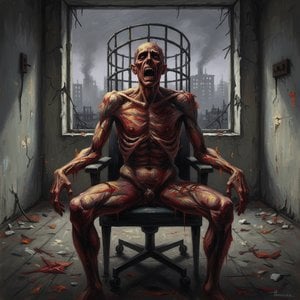
Explore the profound existential anguish of Francis Bacon's art. Discover how trauma shaped his iconic paintings & lasting influence on modern expressionism. A guide for discerning collectors.

Explore la evolución del autorretrato en la historia del arte, desde Rembrandt hasta Gauguin y Léger. Análisis profundo de la introspección artística y su relevancia contemporánea. Descubra el legado de los maestros.

Explore the captivating world of introspective art! Discover how artists across eras – from Rembrandt to Kahlo – used self-portraiture to reveal their inner worlds and emotional depths. A journey through art history & psychology.

Explore the fascinating history of self-portraiture from Renaissance masters like Dürer & Rembrandt to modern interpretations. Discover the psychological insights and artistic techniques behind these iconic works. Expert analysis for art enthusiasts.

Explora las 25 obras maestras de Francis Bacon y su expresionismo visceral. ¡Descubre toda la colección en WahooArt.com!
 Ver en contexto
 Enviar
 Compartir
 Detalles
 Guía
Guía

 Descargar
 Similares
 Radiografía
 Presentación de diapositivas
 Preguntas y respuestas
 Estadísticas

 Ver más









 La opción de vidrio solo está disponible en tamaños inferiores a 110 cm.


