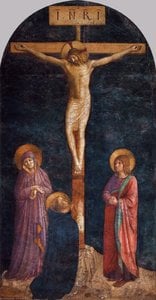
A Glimpse into Paradise: Fra Angelico’s Annunciation (Detail)
This exquisite detail from Fra Angelico's *Annunciation* offers a captivating window into the serene world of Early Renaissance religious art. While presented as a fragment, it encapsulates the artist’s masterful ability to blend spiritual devotion with burgeoning naturalism. The scene unfolds within a densely populated garden – not a wild, untamed space, but one meticulously cultivated and brimming with symbolic life. This particular panel, part of the monumental Prado Altarpiece commissioned for San Domenico in Fiesole, exemplifies Angelico's signature style—a delicate balance between the lingering Byzantine traditions and the emerging Renaissance interest in realism. Notice the flattened perspective, characteristic of earlier Italian painting, yet observe how Angelico subtly suggests depth through layering foliage and varying degrees of detail.
Oil on panel was his preferred medium, allowing for luminous color blending and precise rendering – evident in each meticulously painted leaf and petal. The texture is rich and tactile, inviting close inspection.
Style & Technique: A Bridge Between Worlds
Fra Angelico (Guido di Pietro), born around 1395, was a Dominican friar whose paintings are imbued with a profound sense of piety. This detail exemplifies his signature style – a delicate balance between the Byzantine influence and the Renaissance fascination for naturalism. As Vasari eloquently described, “it is impossible to bestow too much praise on this holy father, who was so humble and modest in all that he did and said.” Angelico’s technique—primarily oil paint on panel—was revolutionary for its time, surpassing the tempera pigments favored by his predecessors. The artist skillfully employed sfumato, a blurring technique pioneered by Leonardo da Vinci, to soften contours and create atmospheric haze, enhancing the sense of depth and luminosity. This subtle blending of colors contributes significantly to the painting’s ethereal quality. Furthermore, Angelico meticulously rendered textures—the velvety surface of petals, the rough bark of trees—demonstrating an unparalleled attention to detail.
Subject & Symbolism: Divine Encounter in a Verdant Setting
The central focus is undoubtedly the angel Gabriel presenting Mary with the news of her divine conception – a pivotal moment recounted in Luke 1.26–39. Two figures dominate the composition, positioned amidst the lush vegetation of the garden. This garden isn’t merely decorative; it's profoundly symbolic. As Giorgio Vasari noted, “the artist’s skill was so remarkable that he achieved an astonishing harmony between form and color.” The abundance of foliage represents Paradise—Eden before the Fall—echoing biblical imagery and conveying a sense of spiritual transcendence. Above them, a radiant light source emanates from heaven, signifying God's grace and illuminating the scene with divine luminescence. Architectural elements – glimpses of structures within the greenery – subtly suggest gateways or portals between earthly existence and the celestial realm. The angel’s outstretched hand holds a lily—a traditional emblem of Mary’s purity and virginity—further reinforcing the painting’s spiritual significance.
Historical Context: Florence in the Early Renaissance
Created around 1430, this work reflects the vibrant intellectual and artistic ferment characteristic of Florence during the Early Renaissance. Fra Angelico's art was deeply rooted in his monastic vocation; he frequently painted frescoes within monasteries, creating spaces for contemplation and prayer. His commissions often came from influential patrons like the Medici family—who championed humanist ideals alongside religious devotion—driving innovation and elevating artistic standards. The Prado Altarpiece itself stands as a testament to Angelico’s legacy—a monumental achievement that embodies the spirit of its era. It represents a decisive break from Gothic conventions, embracing perspectival realism and luminous color palettes—elements that would define the trajectory of Renaissance art for decades to come.
Emotional Impact & Interior Design Considerations
This detail evokes a palpable sense of serenity, contemplation, and awe. The harmonious color palette—dominated by greens and browns accented with touches of gold and pink—creates an atmosphere conducive to meditation. Consider displaying this reproduction in a quiet study or bedroom to foster inner peace and inspire reflection. Its muted tones complement both traditional and contemporary interior styles seamlessly. Moreover, the painting’s scale lends itself beautifully to smaller spaces, while its rich symbolism adds depth and meaning to any room—serving as a reminder of beauty, faith, and timeless artistic excellence.
Preguntas y respuestas
¿A qué edad creó Fra Angelico "La Anunciación"?
Fra Angelico realizó "La Anunciación" a la edad de 35. El artista nació en 1395 y la obra data de 1430.
¿Qué tan fuerte es el contraste en "La Anunciación" de Fra Angelico?
El nivel de contraste de "La Anunciación" de Fra Angelico es Declaración.
¿Dónde puedo ver una vista previa de "La Anunciación"?
Para previsualizar una reproducción de "La Anunciación" de Fra Angelico, abra la página de Vista previa de la obra.
¿Para qué ocasión se sugiere "La Anunciación" de Fra Angelico como regalo?
Como regalo, se sugiere "La Anunciación" de Fra Angelico para Aniversario. También es adecuado para otras ocasiones.
¿Qué tan armoniosos son los colores de "La Anunciación" de Fra Angelico?
Los colores de "La Anunciación" de Fra Angelico muestran una armonía Armonía equilibrada. La armonía describe cómo se relacionan los colores entre sí.
¿A qué artista se le atribuye "La Anunciación"?
"La Anunciación" se atribuye a Fra Angelico.
¿En qué año se creó "La Anunciación" de Fra Angelico?
La creación de "La Anunciación" de Fra Angelico data de 1430.



 Vista previa
 Encargar reproducción pintada a mano
 Compartir
 Compartir
 Ver detalles
 Guía
Guía

 Descargar
 Ver artículos similares
 Radiografía
 Presentación de diapositivas
 Estadísticas


 Leer más






































 La opción de vidrio solo está disponible en tamaños inferiores a 110 cm.