Asesoría de arte gratuita

x
Encargar reproducción Encargar reproducciónComprar imagen en alta resolución Comprar imagen en alta resolución EnviarEnviar
DetallesDetalles Añadir a favoritos Añadir a favoritos DescargarDescargar SimilaresSimilares RadiografíaRadiografía Presentación de diapositivasPresentación de diapositivas

The worker sitting

Explore 'The Worker Sitting' by Fernand Léger – a Cubist masterpiece! Geometric forms, bold outlines & stylized figures evoke modern life. A unique art investment.

Explore el arte de Fernand Léger (1881-1955), un pionero del Cubismo y 'Tubismo'. Descubre sus audaces pinturas figurativas que celebran la vida moderna, las máquinas y la forma humana. ¡Un precursor del Pop Art!

Giclée / Impresión de arte

Impresión giclée o en lienzo de calidad de museo con producción rápida y opciones de acabado flexibles.

P118B $10
P118H $10
P118W $10
P438Z $10
P508JH $12
P508YH $12
P805H $10
P805Z $10
P919BZ $10
P919G $10
P919XJ $10
P959ZH $10
P968JZ $12
W106C $8
W218G $10
W218JH $8
W218Y $10
W307PJ $10
W316G $10
W316PJ $8
W316Y $10
W398PJ $8
W4111J $10
W500HY $15
W500JH $15
W692G $12
W849H $8
W940BG $15
W953PJ $8

Standard
custom
CM
INCH

Elija entre nuestros tamaños predefinidos que respetan las proporciones originales de la obra.

ancho
altura

Puede introducir sus propias dimensiones para adaptarse a un marco o espacio específico. Si el tamaño seleccionado no coincide con las proporciones de la imagen original, recortaremos la obra de arte o extenderemos la imagen con un borde con efecto espejo o de color sólido. Se enviará una maqueta digital para su aprobación antes de que comience la producción.
Tenga en cuenta que la vista previa en pantalla no refleja el recorte o la extensión real. Solo la maqueta mostrará con precisión la composición final.
Aunque existen tamaños personalizados, recomendamos seleccionar una dimensión de la lista predefinida para preservar las proporciones originales.

Entrega mundial () en 2 semanas en lugar de las 4/5 semanas estándar. (6 julio)

why_choose_icon
Envío exprés gratuito a todo el mundo
why_choose_icon
Lienzo de lino de alta calidad
why_choose_icon
Seguro de envío total
why_choose_icon
Garantía de reembolso de impuestos aduaneros
why_choose_icon
Garantía de fidelidad de color
why_choose_icon
Política de devolución de 60 días (solo por defectos)
why_choose_icon
Garantía de devolución del 100% del dinero
why_choose_icon
Descuento por pedido múltiple

Precio total

-

reproduction

The worker sitting

Giclée / Impresión de arte

Tamaño de la reproducción

-

Precio total final

-

Datos clave

  • Artistic style: Tubism
  • Location: Private Collection
  • Title: The Worker Sitting
  • Artist: Fernand Léger
  • Notable elements or techniques: Geometric abstraction, Bold outlines
  • Influences: Georges Braque
  • Movement: Cubism

Test de arte

Solo hay una respuesta correcta para cada pregunta.

Pregunta 1:
What artistic movement is Fernand Léger’s ‘The Worker Sitting’ primarily associated with?
Pregunta 2:
Describe the dominant visual style of the artwork. Focus on geometric forms and outlining techniques.
Pregunta 3:
What symbolic elements are present in the artwork, contributing to its overall thematic message?
Pregunta 4:
What is the primary color palette used in ‘The Worker Sitting’?
Pregunta 5:
How does Léger’s technique – meticulous outlining with black pigment on a beige background – contribute to the artwork's textural quality?

Descripción de la obra

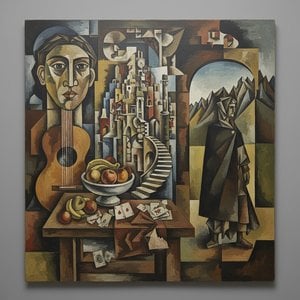
A Fragmented Vision of Rural Labor: Exploring Fernand Léger’s “The Worker Sitting”

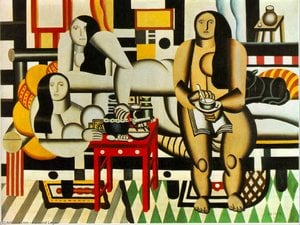
Fernand Léger's "The Worker Sitting" stands as a striking embodiment of Cubist principles applied to the depiction of everyday life—specifically, the quiet dignity of rural toil. Created sometime before 1955, this monumental canvas (200 x 302 cm) transcends mere representation, opting instead for a deliberate fragmentation that captures the essence of modernity while retaining an undeniable connection to Léger’s formative experiences in Normandy. The artwork immediately draws the eye with its bold geometric composition—a mosaic of interlocking rectangular tiles meticulously outlined in black pigment against a creamy beige background. This technique isn't merely stylistic; it speaks to Léger’s fascination with industrial forms and his desire to translate their dynamism into a visual language accessible to all.
  • Style & Context: Léger firmly positioned himself within the burgeoning Cubist movement, rejecting Impressionism’s fleeting impressions in favor of analyzing objects from multiple viewpoints simultaneously. However, unlike Picasso or Braque who primarily focused on still lifes and portraits, Léger turned his gaze outward, depicting scenes of rural life—a deliberate choice intended to reconcile the mechanized world with the enduring rhythms of nature.
  • Composition & Technique: The artist’s masterful use of tessellation – arranging shapes like tiles – creates a visual illusion of depth and texture. Each tile is rendered in simplified forms, emphasizing geometric precision while subtly hinting at the contours of figures, foliage, and architectural elements. The black outlining contributes to this textural effect, reinforcing the artwork's materiality and grounding it in a tangible reality.
Symbolism & Narrative: Within this seemingly austere landscape resides a rich tapestry of symbolic references. A dove perched prominently amongst stylized trees represents peace—a poignant counterpoint to the industrial age Léger sought to portray. The inclusion of a flower adds an element of organic beauty, suggesting resilience and renewal amidst the geometric rigor of the composition. Collectively, these symbols invite contemplation on themes of community, labor, and harmony between humanity and the natural world. Léger’s intention wasn't simply to depict what he saw; it was to convey a deeper understanding of human experience within its broader context.
  • Emotional Impact: Despite its geometric abstraction, “The Worker Sitting” possesses an undeniable stillness—a meditative quality that encourages viewers to pause and consider the quiet dignity inherent in manual labor. Léger’s masterful manipulation of light creates a diffused glow across the scene, fostering a sense of serenity and inviting introspection.
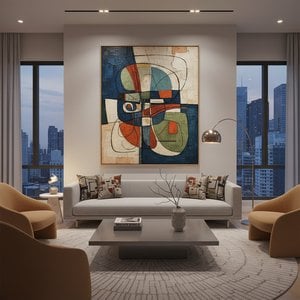
  • Interior Design Considerations: The artwork's bold geometric palette lends itself beautifully to contemporary interior design schemes—particularly those embracing minimalist aesthetics or incorporating earthy tones like beige. Its textured surface adds visual interest and depth, creating a striking focal point within any space.
The enduring appeal of Léger’s “The Worker Sitting” lies in its ability to synthesize seemingly disparate elements—Cubist formalism and pastoral imagery—into a single, powerfully evocative artwork. It serves as a testament to Léger's unwavering belief that art could illuminate the complexities of modern life while honoring the fundamental values of human connection and natural beauty.

Biografía del artista

vida temprana y formación

fernand léger, un pintor, escultor y cineasta francés, nació el 4 de febrero de 1881 en Argentán, Orne, Baja Normandía. Su padre criaba ganado, y Léger inicialmente se formó como arquitecto de 1897 a 1899. Luego se mudó a París en 1900, ganándose la vida como dibujante arquitectónico.

desarrollo artístico

El trabajo temprano de Léger estuvo influenciado por el impresionismo, como se ve en le jardin de ma mère (mi madre's garden) (1905). Después de asistir a la escuela de artes decorativas y la academia Julian, comenzó a trabajar seriamente como pintor a los 25 años. Su estilo evolucionó hacia una forma personal del cubismo, que los críticos denominaron "tubismo" por su énfasis en las formas cilíndricas.

cubismo y el grupo puteaux

En 1910, Léger expuso en el salón de otoño junto a jean metzinger y henri le fauconnier. Se unió al grupo puteaux, también conocido como la sección dorada (la sección de oro), junto con otros artistas como francis picabia y marcel duchamp.

guerra y su influencia en el trabajo de léger

Las experiencias de Léger en la Primera Guerra Mundial impactaron significativamente su obra. Durante su tiempo en el frente, produjo dibujos de piezas de artillería, aviones y soldados compañeros. Su pintura soldier with a pipe (1916) refleja este período.

obra posterior y legado

La obra posterior de Léger, caracterizada por formas mecánicas y elegantes, lo vinculó a la tradición de la pintura figurativa francesa. Sus paisajes animados de 1921 mostraron figuras y animales en formas armoniosas y aerodinámicas. obras clave: museos que exhiben el trabajo de léger:
Fernand Léger

Fernand Léger

1881 - 1955 , Francia

Datos clave

  • Artistas Influenciados Por: ['Pop Art']
  • Artistas Que Influyeron:
    • Cézanne
    • Impresionismo
  • Fecha De Nacimiento: 4 de febrero de 1881
  • Lugar De Nacimiento: Argentan, Francia
  • Movimiento Artístico:
    • Cubismo
    • Tubismo
  • Nacionalidad: Francés
  • Nombre Completo: Fernand Léger
  • Obras Notables:
    • La Mujer Sentada
    • Elemento de Máquina
    • El Gran Desfile
    • Paisajes Animados
Explore obras de arte organizadas por temas, estilos y características.