Vista previa Vista previa en RA Encargar reproducción pintada a mano Ver versión en imagen digital Compartir
Ver detalles Guía Añadir a favoritos Descargar Ver artículos similares Radiografía Presentación de diapositivas Estadísticas

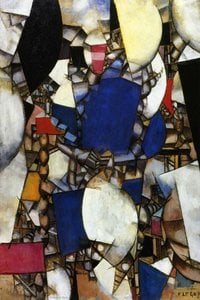
The Staircase

Fernand Léger Fernand Léger was born Joseph Fernand Henri Léger in 1881 amidst the rural landscapes of Argentan, Normandy. He pursued architecture initially but transitioned to painting around 1900, establishing himself in Paris and supporting fellow artists. Argentan France 1881 1914 1955 A painting depicting a staircase filled with people moving upwards. The figures are adorned with helme

Explore el arte de Fernand Léger (1881-1955), un pionero del Cubismo y 'Tubismo'. Descubre sus audaces pinturas figurativas que celebran la vida moderna, las máquinas y la forma humana. ¡Un precursor del Pop Art!

Giclée / Impresión de arte

Impresiones giclée o en lienzo de calidad de museo con producción rápida y opciones de acabado flexibles. ( Encargar reproducción pintada a mano Ver versión en imagen digital)

Corner sample of the P118B picture frame: poliestireno moldeado, 5 cm wide and 3 cm thick
P118B €10
Corner sample of the P118H picture frame: poliestireno moldeado, 5 cm wide and 3 cm thick
P118H €10
Corner sample of the P118W picture frame: poliestireno moldeado, 5 cm wide and 3 cm thick
P118W €10
Corner sample of the P438Z picture frame: poliestireno moldeado, 5.5 cm wide and 3.5 cm thick
P438Z €10
Corner sample of the P508JH picture frame: poliestireno moldeado, 7 cm wide and 3.5 cm thick
P508JH €12
Corner sample of the P508YH picture frame: poliestireno moldeado, 7 cm wide and 3.5 cm thick
P508YH €12
Corner sample of the P805H picture frame: poliestireno moldeado, 5 cm wide and 3.5 cm thick
P805H €10
Corner sample of the P805Z picture frame: poliestireno moldeado, 5 cm wide and 3.5 cm thick
P805Z €10
Corner sample of the P919BZ picture frame: poliestireno moldeado, 7 cm wide and 3.5 cm thick
P919BZ €10
Corner sample of the P919G picture frame: poliestireno moldeado, 7 cm wide and 3.5 cm thick
P919G €10
Corner sample of the P919XJ picture frame: poliestireno moldeado, 7 cm wide and 3.5 cm thick
P919XJ €10
Corner sample of the P959ZH picture frame: poliestireno moldeado, 5 cm wide and 3 cm thick
P959ZH €10
Corner sample of the P968JZ picture frame: poliestireno moldeado, 6 cm wide and 4 cm thick
P968JZ €12
Corner sample of the W106C picture frame: madera maciza, 5 cm wide and 3 cm thick
W106C €8
Corner sample of the W218G picture frame: madera maciza, 5 cm wide and 3 cm thick
W218G €10
Corner sample of the W218JH picture frame: madera maciza, 5 cm wide and 3 cm thick
W218JH €8
Corner sample of the W218Y picture frame: madera maciza, 5 cm wide and 3 cm thick
W218Y €10
Corner sample of the W307PJ picture frame: madera maciza, 6 cm wide and 3 cm thick
W307PJ €10
Corner sample of the W316G picture frame: madera maciza, 6 cm wide and 3 cm thick
W316G €10
Corner sample of the W316PJ picture frame: madera maciza, 6 cm wide and 3 cm thick
W316PJ €8
Corner sample of the W316Y picture frame: madera maciza, 6 cm wide and 3 cm thick
W316Y €10
Corner sample of the W398PJ picture frame: madera maciza, 5 cm wide and 3 cm thick
W398PJ €8
Corner sample of the W4111J picture frame: madera maciza, 6.5 cm wide and 3.5 cm thick
W4111J €10
Corner sample of the W500HY picture frame: madera maciza, 7 cm wide and 5 cm thick
W500HY €15
Corner sample of the W500JH picture frame: madera maciza, 7 cm wide and 5 cm thick
W500JH €15
Corner sample of the W692G picture frame: madera maciza, 8 cm wide and 4 cm thick
W692G €12
Corner sample of the W849H picture frame: madera maciza, 5 cm wide and 3 cm thick
W849H €8
Corner sample of the W940BG picture frame: madera maciza, 7.5 cm wide and 4.5 cm thick
W940BG €15
Corner sample of the W953PJ picture frame: madera maciza, 6 cm wide and 3.5 cm thick
W953PJ €8

Estándar
personalizado
CM
INCH

Elija entre nuestros tamaños predefinidos que respetan las proporciones originales de la obra.

ancho
altura

Introduzca el ancho y el alto que necesite para adaptarse a su marco o pared. Una impresión solo puede recortarse, nunca hacerse más grande que la imagen original, por lo que un tamaño con una forma distinta perderá parte de la obra. Le enviaremos una maqueta digital para su aprobación antes de realizar cualquier impresión. La imagen que se muestra en esta página no refleja el recorte real; solo la maqueta lo hace.

Envío a todo el mundo () en 2 semanas en lugar de las 4/5 semanas estándar. (19 octubre)

Envío exprés gratuito a todo el mundo
Lienzo de lino de alta calidad
Seguro de envío completo
Garantía de reembolso de impuestos aduaneros
Garantía de fidelidad cromática exacta
Política de devolución de 100 días (solo por defectos)
Garantía de devolución del 100% del dinero
Oferta por volumen

Precio total

€ 59

The Staircase

Giclée / Impresión de arte

Tamaño de la reproducción

-

Precio total

€ 59

Fernand Léger’s Staircase: A Symphony of Form and Movement

The painting “Staircase” by Fernand Léger, completed in 1914, isn't merely an image of ascending steps; it’s a profound exploration of the relationship between human experience and industrial progress. Léger, already establishing himself as a champion of geometric abstraction alongside artists like Piet Mondrian and Kazimir Malevich, sought to distill the frenetic energy of the burgeoning machine age into a visual form that transcended literal representation. This ambition is brilliantly realized in “Staircase,” where Léger abandons traditional perspective and employs bold, interlocking planes of color—primarily reds, yellows, and blues—to convey a sense of relentless upward movement.
  • Style: Léger’s style can be characterized as Constructivist, albeit infused with a distinctly lyrical quality. He rejects illusionistic painting altogether, prioritizing the structural integrity of his compositions over any attempt to create an illusion of depth.
  • Technique: Léger meticulously applied pigment onto canvas using a palette knife—a technique he championed—creating textured surfaces that resemble fractured blocks of color. This method deliberately disrupts conventional artistic conventions and emphasizes the materiality of the artwork itself.
The historical context surrounding “Staircase” is crucial to understanding its significance. Created during the height of World War I, Léger’s painting reflects a broader cultural preoccupation with technological innovation and its impact on human society. The staircase itself serves as a powerful symbol—representing aspiration, progress, but also perhaps the arduous climb towards overcoming obstacles. However, Léger doesn't portray the staircase as simply a pathway to achievement; instead, he presents it as an embodiment of dynamism and interconnectedness. Each step is treated as an independent geometric form that contributes to the overall visual rhythm of the composition.
  • Symbolism: The fractured planes of color—particularly the reds—evoke associations with both passion and danger, mirroring the anxieties of wartime Europe. Simultaneously, Léger’s deliberate simplification of forms speaks to a desire to capture the essence of reality without succumbing to sentimentalism.
Ultimately, “Staircase” resonates deeply with viewers due to its ability to evoke a visceral emotional response. The painting's energetic movement and bold color palette compel us to confront the complexities of modernity—its triumphs and tribulations—while simultaneously celebrating the transformative power of artistic innovation. Léger’s masterpiece remains an enduring testament to his unwavering belief that art could serve as both a reflection of its time and a catalyst for envisioning a brighter future, cementing his place among the most influential artists of the early 20th century.

Preguntas y respuestas

¿Es Fernand Léger, creador de "The Staircase", conocido bajo otros nombres?

Fernand Léger aparece bajo los nombres alternativos Joseph Fernand Henri Léger.

¿Cómo se describe la paleta de "The Staircase" de Fernand Léger?

"The Staircase" de Fernand Léger utiliza una paleta de colores Tonos tierra. La paleta resume el carácter cromático general de la obra.

¿A qué artista se le atribuye "The Staircase"?

El artista detrás de "The Staircase" es Fernand Léger. La obra está catalogada bajo el nombre de Fernand Léger.


Biografía del artista

vida temprana y formación

fernand léger, un pintor, escultor y cineasta francés, nació el 4 de febrero de 1881 en Argentán, Orne, Baja Normandía. Su padre criaba ganado, y Léger inicialmente se formó como arquitecto de 1897 a 1899. Luego se mudó a París en 1900, ganándose la vida como dibujante arquitectónico.

desarrollo artístico

El trabajo temprano de Léger estuvo influenciado por el impresionismo, como se ve en le jardin de ma mère (mi madre's garden) (1905). Después de asistir a la escuela de artes decorativas y la academia Julian, comenzó a trabajar seriamente como pintor a los 25 años. Su estilo evolucionó hacia una forma personal del cubismo, que los críticos denominaron "tubismo" por su énfasis en las formas cilíndricas.

cubismo y el grupo puteaux

En 1910, Léger expuso en el salón de otoño junto a jean metzinger y henri le fauconnier. Se unió al grupo puteaux, también conocido como la sección dorada (la sección de oro), junto con otros artistas como francis picabia y marcel duchamp.

guerra y su influencia en el trabajo de léger

Las experiencias de Léger en la Primera Guerra Mundial impactaron significativamente su obra. Durante su tiempo en el frente, produjo dibujos de piezas de artillería, aviones y soldados compañeros. Su pintura soldier with a pipe (1916) refleja este período.

obra posterior y legado

La obra posterior de Léger, caracterizada por formas mecánicas y elegantes, lo vinculó a la tradición de la pintura figurativa francesa. Sus paisajes animados de 1921 mostraron figuras y animales en formas armoniosas y aerodinámicas. obras clave: museos que exhiben el trabajo de léger:

Fernand Léger

Fernand Léger

1881 - 1955 , Francia

Datos clave

  • Artistas Influenciados Por: ['Pop Art']
  • Artistas Que Influyeron:
    • Cézanne
    • Impresionismo
  • Fecha De Nacimiento: 4 de febrero de 1881
  • Lugar De Nacimiento: Argentan, Francia
  • Movimiento Artístico:
    • Cubismo
    • Tubismo
  • Nacionalidad: Francés
  • Nombre Completo: Fernand Léger
  • Obras Notables:
    • La Mujer Sentada
    • Elemento de Máquina
    • El Gran Desfile
    • Paisajes Animados
Explore obras de arte organizadas por temas, estilos y características.