Vista previa Vista previa en RA Cambiar a formato impreso Encargar reproducción pintada a mano Compartir
Ver detalles Guía Añadir a favoritos Descargar Ver artículos similares Radiografía Presentación de diapositivas Estadísticas

The men in the city

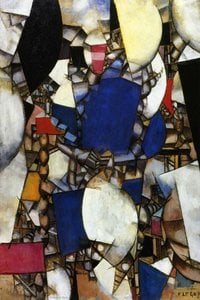
Experience Fernand Léger’s "The Men in the City," a vibrant modernist masterpiece showcasing geometric forms and urban life. This iconic Cubist painting captures social interaction with bold colors, perfect for your art collection.

Explore el arte de Fernand Léger (1881-1955), un pionero del Cubismo y 'Tubismo'. Descubre sus audaces pinturas figurativas que celebran la vida moderna, las máquinas y la forma humana. ¡Un precursor del Pop Art!

Adquiera una imagen digital de alta resolución y optimizada, muy superior a la vista previa en línea.

Cada archivo es preparado meticulosamente por nuestros especialistas internos mediante el uso de herramientas avanzadas y un experto retoque manual. Nos aseguramos de que cada imagen posea una claridad excepcional, una precisión cromática impecable y un detalle minucioso.

El archivo final se entrega por correo electrónico en un plazo de 72 horas, optimizado para su uso inmediato en entornos profesionales, editoriales y de impresión. Esta es la misma calidad en la que confían los estudios de diseño, las editoriales y las galerías de primer nivel.

Imagen Digital

Descarga un archivo de alta resolución para exhibición personal, impresión y proyectos creativos. ( Cambiar a formato impreso Encargar reproducción pintada a mano)

Precio total

$ 24,90

Incluido en cada pedido de imágenes digitales

Entrega digital experta, garantizada.

Al elegir WahooArt.com, no solo está adquiriendo una imagen; está recibiendo una obra de arte digital mejorada profesionalmente, elaborada con precisión y respaldada por una garantía de satisfacción. Esto es todo lo que incluye su pedido, automáticamente:

shipping_icon
Entrega inmediata por email

Recibirá su archivo de imagen digital en alta resolución por correo electrónico en un plazo de 72 horas tras realizar su pedido, listo para su uso inmediato.

canvas_icon
Archivo digital optimizado por IA

Su obra de arte se optimiza profesionalmente mediante herramientas avanzadas de IA y edición manual, garantizando el máximo detalle, claridad y precisión cromática.

insurance_icon
Reenvío gratuito de por vida

¿Has borrado o perdido tu archivo por error? No te preocupes: te lo volveremos a enviar en cualquier momento, sin coste adicional.

tax_icon
Sin gastos de importación, siempre

Disfrute de su obra de arte al instante sin aduanas, aranceles ni gastos de envío; las descargas digitales siempre están libres de impuestos.

color_icon
Garantía de precisión de color

Garantizamos que su imagen digital refleje los colores originales con la mayor fidelidad posible, mediante el uso de herramientas profesionales y gestión del color.

return_icon
Garantía de satisfacción de 100 días

Si no está satisfecho con su imagen digital, la revisaremos o le reembolsaremos el 100% en un plazo de 100 días, sin preguntas.

guarantee_icon
100% Garantía de devolución de dinero

¿No está satisfecho? Obtenga un reembolso completo dentro de los 100 días posteriores a la recepción de su archivo digital, sin preguntas.

discount_icon
Descuentos por volumen

Compra 3 imágenes, ahorra 10% - Compra 5, ahorra 15% - Compra 10+, ahorra 20%. Ideal para proyectos creativos, galerías y agencias.

Datos clave

  • Artistic style: Abstract, Machine Age
  • Influences:
    • Cézanne
    • Picasso
  • Subject or theme: Urban life, social interaction
  • Artist: Fernand Léger
  • Notable elements: Geometric forms, bird
  • Medium: Oil on Canvas
  • Location: Private Collection

Fernand Léger’s “The Men in the City”: A Symphony of Form and Urban Life

Fernand Léger's "The Men in the City," painted around 1916, is more than just a depiction of two figures; it’s a vibrant declaration of modernity itself. Emerging from the fertile artistic landscape of early 20th-century Paris, Léger was a key figure in bridging the gap between representational art and the burgeoning abstract movements. This work exemplifies his unique approach – a bold synthesis of Cubist fragmentation with an undeniable fascination for industrial forms and the dynamism of urban life. The painting immediately draws the eye to its geometric composition: the figures are rendered as blocky, almost machine-like shapes, their bodies simplified into angular planes that echo the structures surrounding them. This deliberate distortion wasn’t a rejection of realism but rather a new way of perceiving and representing the world – one shaped by the rise of industry and the increasingly dominant role of technology.

A Cubist Vision Rooted in Rural Experience

Léger's artistic journey began with a profound connection to his rural upbringing near Argentan, Normandy. This early exposure to the physicality of agricultural labor – the rhythms of the land, the textures of wood and stone – profoundly influenced his later work. He initially studied architecture, a discipline that instilled in him an appreciation for structure and form. However, it was his encounter with Post-Impressionist painters like Cézanne and Gauguin, coupled with the revolutionary ideas circulating within the Cubist movement, that truly ignited his artistic vision. Cubism, championed by Picasso and Braque, offered a radical new way of seeing – breaking down objects into their constituent parts and reassembling them in abstract compositions. Léger adopted this technique but infused it with his own distinctive vocabulary, prioritizing the visual impact of geometric shapes over strict representational accuracy.

Symbolism Within the Geometric Landscape

Beyond its formal qualities, “The Men in the City” is rich in symbolic meaning. The two figures, rendered as almost identical blocks, could be interpreted as representing humanity itself – reduced to essential forms within the overwhelming context of the modern city. The umbrella held by one man becomes a poignant detail, suggesting protection and perhaps a yearning for refuge amidst the chaos of urban life. The inclusion of the bird adds an unexpected layer of symbolism; often associated with freedom and spirituality, it subtly contrasts with the rigid geometry of the scene, hinting at a desire for transcendence within a mechanized world. The overall atmosphere is one of quiet observation, inviting the viewer to contemplate their own place in this rapidly changing landscape.

Technique and Color: A Bold Palette

Léger’s technique involved applying paint in thick, layered strokes, creating a tactile surface that emphasizes the three-dimensional quality of his forms. His color palette is deliberately restrained – primarily consisting of earthy tones like ochre, brown, and gray, punctuated by occasional bursts of vibrant blue and red. These bold colors aren't used for decorative effect but rather to accentuate the geometric shapes and create visual impact. The artist’s meticulous attention to detail—the precise rendering of each plane and angle—demonstrates a remarkable command of his medium and a deep understanding of the principles of Cubist composition. The result is a powerfully expressive work that captures both the beauty and the alienation of modern urban life.


Biografía del artista

vida temprana y formación

fernand léger, un pintor, escultor y cineasta francés, nació el 4 de febrero de 1881 en Argentán, Orne, Baja Normandía. Su padre criaba ganado, y Léger inicialmente se formó como arquitecto de 1897 a 1899. Luego se mudó a París en 1900, ganándose la vida como dibujante arquitectónico.

desarrollo artístico

El trabajo temprano de Léger estuvo influenciado por el impresionismo, como se ve en le jardin de ma mère (mi madre's garden) (1905). Después de asistir a la escuela de artes decorativas y la academia Julian, comenzó a trabajar seriamente como pintor a los 25 años. Su estilo evolucionó hacia una forma personal del cubismo, que los críticos denominaron "tubismo" por su énfasis en las formas cilíndricas.

cubismo y el grupo puteaux

En 1910, Léger expuso en el salón de otoño junto a jean metzinger y henri le fauconnier. Se unió al grupo puteaux, también conocido como la sección dorada (la sección de oro), junto con otros artistas como francis picabia y marcel duchamp.

guerra y su influencia en el trabajo de léger

Las experiencias de Léger en la Primera Guerra Mundial impactaron significativamente su obra. Durante su tiempo en el frente, produjo dibujos de piezas de artillería, aviones y soldados compañeros. Su pintura soldier with a pipe (1916) refleja este período.

obra posterior y legado

La obra posterior de Léger, caracterizada por formas mecánicas y elegantes, lo vinculó a la tradición de la pintura figurativa francesa. Sus paisajes animados de 1921 mostraron figuras y animales en formas armoniosas y aerodinámicas. obras clave: museos que exhiben el trabajo de léger:
Fernand Léger

Fernand Léger

1881 - 1955 , Francia

Datos clave

  • Artistas Influenciados Por: ['Pop Art']
  • Artistas Que Influyeron:
    • Cézanne
    • Impresionismo
  • Fecha De Nacimiento: 4 de febrero de 1881
  • Lugar De Nacimiento: Argentan, Francia
  • Movimiento Artístico:
    • Cubismo
    • Tubismo
  • Nacionalidad: Francés
  • Nombre Completo: Fernand Léger
  • Obras Notables:
    • La Mujer Sentada
    • Elemento de Máquina
    • El Gran Desfile
    • Paisajes Animados