Asesoría de arte gratuita

x
Encargar reproducción Encargar reproducciónComprar imagen en alta resolución Comprar imagen en alta resolución EnviarEnviar
DetallesDetalles Añadir a favoritos Añadir a favoritos DescargarDescargar SimilaresSimilares RadiografíaRadiografía Presentación de diapositivasPresentación de diapositivas

The flower polychrome

Vibrant Orphism by Fernand Léger explodes with dynamic circles of orange, blue, and yellow – a bold symphony of color reflecting the machine age. Discover this iconic 1936 painting and bring its energy into your space.

Explore el arte de Fernand Léger (1881-1955), un pionero del Cubismo y 'Tubismo'. Descubre sus audaces pinturas figurativas que celebran la vida moderna, las máquinas y la forma humana. ¡Un precursor del Pop Art!

Giclée / Impresión de arte

Impresión giclée o en lienzo de calidad de museo con producción rápida y opciones de acabado flexibles.

P118B $10
P118H $10
P118W $10
P438Z $10
P508JH $12
P508YH $12
P805H $10
P805Z $10
P919BZ $10
P919G $10
P919XJ $10
P959ZH $10
P968JZ $12
W106C $8
W218G $10
W218JH $8
W218Y $10
W307PJ $10
W316G $10
W316PJ $8
W316Y $10
W398PJ $8
W4111J $10
W500HY $15
W500JH $15
W692G $12
W849H $8
W940BG $15
W953PJ $8

Standard
custom
CM
INCH

Elija entre nuestros tamaños predefinidos que respetan las proporciones originales de la obra.

ancho
altura

Puede introducir sus propias dimensiones para adaptarse a un marco o espacio específico. Si el tamaño seleccionado no coincide con las proporciones de la imagen original, recortaremos la obra de arte o extenderemos la imagen con un borde con efecto espejo o de color sólido. Se enviará una maqueta digital para su aprobación antes de que comience la producción.
Tenga en cuenta que la vista previa en pantalla no refleja el recorte o la extensión real. Solo la maqueta mostrará con precisión la composición final.
Aunque existen tamaños personalizados, recomendamos seleccionar una dimensión de la lista predefinida para preservar las proporciones originales.

Entrega mundial () en 2 semanas en lugar de las 4/5 semanas estándar. (6 julio)

why_choose_icon
Envío exprés gratuito a todo el mundo
why_choose_icon
Lienzo de lino de alta calidad
why_choose_icon
Seguro de envío total
why_choose_icon
Garantía de reembolso de impuestos aduaneros
why_choose_icon
Garantía de fidelidad de color
why_choose_icon
Política de devolución de 60 días (solo por defectos)
why_choose_icon
Garantía de devolución del 100% del dinero
why_choose_icon
Descuento por pedido múltiple

Precio total

-

reproduction

The flower polychrome

Giclée / Impresión de arte

Tamaño de la reproducción

-

Precio total final

-

Datos clave

  • Artistic style: Geometric abstraction
  • Movement: Orphism
  • Subject or theme: Floral Composition
  • Title: The flower polychrome
  • Medium: Painting
  • Year: 1936
  • Influences: Cubism

Descripción de la obra

A Symphony of Circles and Color: Exploring Fernand Léger’s “The Flower”

Fernand Léger's "The Flower," painted in 1936, isn’t merely a depiction of botanical beauty; it’s an audacious declaration of Orphism – a movement that sought to liberate painting from representational constraints and embrace the expressive potential of geometric abstraction. Born Joseph Fernand Henri Léger in Argentan, Normandy, in 1881, Léger's formative years instilled within him a profound appreciation for materiality and form, experiences that would profoundly influence his artistic trajectory. Initially drawn to architecture, he swiftly transitioned to painting upon arriving in Paris around 1900, establishing himself as a vital participant in the burgeoning Parisian avant-garde scene.

The Essence of Orphism

Orphism, spearheaded by André Breton and Jean Metzinger, represented a radical departure from Impressionism and Cubism. Rejecting illusionistic perspective and striving for pure color and shape—hence “orphaned” from recognizable imagery—artists like Léger aimed to distill the visual experience into its most fundamental elements. This stylistic choice wasn’t simply aesthetic; it reflected a broader intellectual preoccupation with the impact of industrialization on human perception and emotion. Léger believed that geometric forms could convey feelings and ideas more effectively than traditional depictions, mirroring the rhythms and patterns of machines and urban landscapes.


Decoding the Visual Language

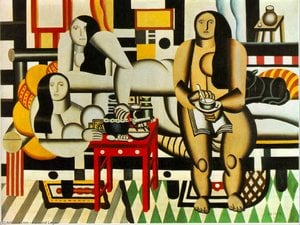
“The Flower” exemplifies Léger’s masterful manipulation of color and shape. Dominating the canvas is a vibrant array of hues—orange, blue, yellow, and white—applied in bold, overlapping circles that pulsate with energy. These circles aren't merely decorative; they function as visual metaphors for dynamism and repetition – qualities central to Léger’s vision of modernity. The prominent clock positioned on the right side adds a subtle layer of complexity, hinting at time’s relentless march and perhaps suggesting an awareness of the passage of history alongside the embrace of new forms.

Symbolism Beyond Representation

While seemingly devoid of recognizable botanical detail, “The Flower” speaks volumes about Léger's artistic intentions. The repetition of circles symbolizes unity and harmony—a counterpoint to the fragmentation inherent in Cubist explorations. Furthermore, Léger’s deliberate simplification aligns with a broader philosophical stance advocating for an engagement with the world that prioritizes intuition over observation. He sought to evoke emotion through pure visual sensation, mirroring the transformative power of industrial progress on human consciousness.

A Legacy of Geometric Abstraction

“The Flower” stands as a testament to Léger’s enduring contribution to modern art history. It solidified Orphism's position as a significant movement and cemented Léger’s reputation as one of the foremost champions of geometric abstraction. Today, reproductions of this captivating artwork continue to inspire designers and collectors alike, offering a glimpse into a visionary artist’s exploration of form, color, and emotion—a timeless reminder that beauty can reside in the purest expression of visual language.

Biografía del artista

vida temprana y formación

fernand léger, un pintor, escultor y cineasta francés, nació el 4 de febrero de 1881 en Argentán, Orne, Baja Normandía. Su padre criaba ganado, y Léger inicialmente se formó como arquitecto de 1897 a 1899. Luego se mudó a París en 1900, ganándose la vida como dibujante arquitectónico.

desarrollo artístico

El trabajo temprano de Léger estuvo influenciado por el impresionismo, como se ve en le jardin de ma mère (mi madre's garden) (1905). Después de asistir a la escuela de artes decorativas y la academia Julian, comenzó a trabajar seriamente como pintor a los 25 años. Su estilo evolucionó hacia una forma personal del cubismo, que los críticos denominaron "tubismo" por su énfasis en las formas cilíndricas.

cubismo y el grupo puteaux

En 1910, Léger expuso en el salón de otoño junto a jean metzinger y henri le fauconnier. Se unió al grupo puteaux, también conocido como la sección dorada (la sección de oro), junto con otros artistas como francis picabia y marcel duchamp.

guerra y su influencia en el trabajo de léger

Las experiencias de Léger en la Primera Guerra Mundial impactaron significativamente su obra. Durante su tiempo en el frente, produjo dibujos de piezas de artillería, aviones y soldados compañeros. Su pintura soldier with a pipe (1916) refleja este período.

obra posterior y legado

La obra posterior de Léger, caracterizada por formas mecánicas y elegantes, lo vinculó a la tradición de la pintura figurativa francesa. Sus paisajes animados de 1921 mostraron figuras y animales en formas armoniosas y aerodinámicas. obras clave: museos que exhiben el trabajo de léger:
Fernand Léger

Fernand Léger

1881 - 1955 , Francia

Datos clave

  • Artistas Influenciados Por: ['Pop Art']
  • Artistas Que Influyeron:
    • Cézanne
    • Impresionismo
  • Fecha De Nacimiento: 4 de febrero de 1881
  • Lugar De Nacimiento: Argentan, Francia
  • Movimiento Artístico:
    • Cubismo
    • Tubismo
  • Nacionalidad: Francés
  • Nombre Completo: Fernand Léger
  • Obras Notables:
    • La Mujer Sentada
    • Elemento de Máquina
    • El Gran Desfile
    • Paisajes Animados
Explore obras de arte organizadas por temas, estilos y características.