x
Ver en contextoVer en contexto Vista previa en RAVista previa en RA Comprar impresión Comprar impresiónComprar imagen Comprar imagen EnviarEnviar
DetallesDetalles Añadir a favoritos Añadir a favoritos DescargarDescargar SimilaresSimilares RadiografíaRadiografía Presentación de diapositivasPresentación de diapositivas

Group in the field

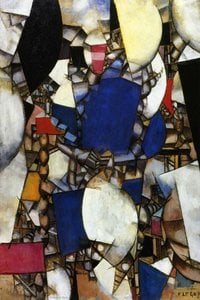
This artwork showcases Fernand Léger's masterful Cubist style, utilizing simplified forms, geometric shapes (cylinders, cones), and a monochromatic palette to depict a rural scene featuring figures engaged in activity. Influenced by Art Deco’s graphic quality, it reflects Léger’s fascination with industrial progress and captures the essence of human experience.

Explore el arte de Fernand Léger (1881-1955), un pionero del Cubismo y 'Tubismo'. Descubre sus audaces pinturas figurativas que celebran la vida moderna, las máquinas y la forma humana. ¡Un precursor del Pop Art!

Reproducción al óleo hecha a mano

Óleo sobre lienzo pintado a mano en el tamaño y marco de su elección, realizado por encargo por nuestros artistas. (Comprar impresión Comprar impresiónComprar imagen Comprar imagen)

Estándar
a medida
CM
INCH

Elija entre nuestros tamaños predefinidos que respetan las proporciones originales de la obra.

ancho
altura

Puede ingresar sus propias dimensiones para adaptarse a un marco o espacio específico. Si el tamaño seleccionado no coincide con las proporciones de la imagen original, recortaremos la obra o extenderemos la pintura con elementos adicionales pintados a mano. Se le enviará una maqueta digital para su aprobación antes de comenzar la producción.
Tenga en cuenta que la vista previa en pantalla no refleja el recorte o la extensión reales. Solo la maqueta mostrará con precisión la composición final.
Si bien existen tamaños personalizados, recomendamos seleccionar una dimensión de la lista predefinida para preservar las proporciones originales.

Ejemplos de lo que se puede personalizar: Reemplace el rostro con una foto del cliente; Agregue una mascota (por ejemplo, cambie un gato por un perro); Incluya un mensaje oculto en el fondo; Cambie el paisaje o los elementos del fondo.
Tras realizar el pedido, el equipo de WahooArt.com enviará un correo electrónico al cliente para solicitar instrucciones y proporcionarle una vista previa del boceto.

Envío a todo el mundo () en 3-4 semanas en lugar de las 5 semanas estándar. (4 septiembre). Sin comprometer la calidad.

why_choose_icon
Envío exprés gratuito a todo el mundo
why_choose_icon
Lienzo de lino de alta calidad
why_choose_icon
Seguro de envío total
why_choose_icon
Garantía de reembolso de impuestos aduaneros
why_choose_icon
Garantía de fidelidad cromática exacta
why_choose_icon
Política de devolución de 60 días (solo por defectos)
why_choose_icon
Garantía de devolución del 100% del dinero
why_choose_icon
Descuento por cantidad

Precio total

$ 372

reproduction

Group in the field

Técnica de reproducción

Dimensiones de la reproducción

-

Precio total final

$ 372

Datos clave

  • Artist: Fernand Léger
  • Artistic style: Tubism
  • Title: Group in the field
  • Medium: Drawing/Painting
  • Notable elements or techniques: Bold outlines, geometric shapes (cylinders)
  • Influences: Industrialization

Test de arte

Cada pregunta tiene una única respuesta correcta.

Pregunta 1:
What artistic movement is Fernand Léger’s ‘Group in the field’ primarily associated with?
Pregunta 2:
Describe the dominant color palette used in this artwork.
Pregunta 3:
What technique did Léger employ to create the artwork?
Pregunta 4:
The composition of ‘Group in the field’ is characterized by:
Pregunta 5:
What stylistic influence can be seen in Léger's use of geometric shapes?

Group in the Field: A Cubist Vision of Modern Life

Fernand Léger’s “Group in the Field,” completed in 1928, stands as a cornerstone of Cubism and exemplifies Léger's distinctive approach to capturing the dynamism of the industrial age. More than just a depiction of rural scenery—though it undeniably incorporates elements of the French countryside—the painting delves into profound questions about humanity’s relationship with technology and its evolving perception of space and form. Léger, deeply influenced by Piet Mondrian and Kazimir Malevich, sought to transcend traditional representation, prioritizing geometric abstraction as a vehicle for expressing emotional resonance. The artwork immediately captivates the viewer with its bold palette—primarily black, white, and shades of grey—a deliberate choice that underscores Léger’s commitment to minimizing coloristic illusion. This monochromatic scheme serves not to diminish visual impact but rather to heighten the emphasis on sculptural form and textural qualities. Thick, assertive black outlines delineate figures and objects alike, establishing a graphic quality reminiscent of Art Deco while simultaneously reinforcing the Cubist fragmentation inherent in the composition. These lines aren’t merely delineators; they actively sculpt the image, creating a sense of solidity and presence despite the stylized depiction. The compositional arrangement is deliberately unsettling yet undeniably compelling. Léger eschews conventional perspective, opting instead for overlapping planes and distorted viewpoints that convey movement and instability—a characteristic trait of Cubism's exploration of spatial ambiguity. A central wagon or cart dominates the foreground, populated by several figures engaged in an activity whose precise nature remains elusive. These figures are rendered as simplified geometric volumes—cylinders, cones, and rectangles—reflecting Léger’s fascination with tubular forms and industrial machinery. The artist’s intention wasn't to portray a realistic scene but rather to distill the essence of human experience into abstracted shapes that communicate energy and transformation. Beyond its formal innovations, “Group in the Field” carries symbolic weight. Léger’s use of geometric abstraction can be interpreted as a commentary on the dehumanizing effects of industrialization—the flattening of organic forms into rigid structures—yet simultaneously celebrates the potential for human creativity to adapt and thrive within this new environment. The painting's muted color palette contributes to its contemplative mood, inviting viewers to contemplate the complexities of modern life and humanity’s place within it. Léger’s masterful technique—primarily drawing or painting with ink on paper—further enhances the artwork’s impact, conveying a sense of immediacy and spontaneity that belies its intellectual rigor. It's a testament to Léger's ability to fuse artistic vision with technical precision, resulting in an enduring masterpiece of Cubist abstraction.

  • Artist: Fernand Léger
  • Born Year: 1881
  • Death Year: 1955
  • Birth City: Argentan
  • Birth Country: France

Additional Research:

Explore Fernand Leger’s ‘untitled (8475)’ – a powerful Expressionist portrait bursting with dynamic lines & vibrant color fields. A unique, raw artwork evoking emotion and movement. Discover its captivating style!


Biografía del artista

vida temprana y formación

fernand léger, un pintor, escultor y cineasta francés, nació el 4 de febrero de 1881 en Argentán, Orne, Baja Normandía. Su padre criaba ganado, y Léger inicialmente se formó como arquitecto de 1897 a 1899. Luego se mudó a París en 1900, ganándose la vida como dibujante arquitectónico.

desarrollo artístico

El trabajo temprano de Léger estuvo influenciado por el impresionismo, como se ve en le jardin de ma mère (mi madre's garden) (1905). Después de asistir a la escuela de artes decorativas y la academia Julian, comenzó a trabajar seriamente como pintor a los 25 años. Su estilo evolucionó hacia una forma personal del cubismo, que los críticos denominaron "tubismo" por su énfasis en las formas cilíndricas.

cubismo y el grupo puteaux

En 1910, Léger expuso en el salón de otoño junto a jean metzinger y henri le fauconnier. Se unió al grupo puteaux, también conocido como la sección dorada (la sección de oro), junto con otros artistas como francis picabia y marcel duchamp.

guerra y su influencia en el trabajo de léger

Las experiencias de Léger en la Primera Guerra Mundial impactaron significativamente su obra. Durante su tiempo en el frente, produjo dibujos de piezas de artillería, aviones y soldados compañeros. Su pintura soldier with a pipe (1916) refleja este período.

obra posterior y legado

La obra posterior de Léger, caracterizada por formas mecánicas y elegantes, lo vinculó a la tradición de la pintura figurativa francesa. Sus paisajes animados de 1921 mostraron figuras y animales en formas armoniosas y aerodinámicas. obras clave: museos que exhiben el trabajo de léger:
Fernand Léger

Fernand Léger

1881 - 1955 , Francia

Datos clave

  • Artistas Influenciados Por: ['Pop Art']
  • Artistas Que Influyeron:
    • Cézanne
    • Impresionismo
  • Fecha De Nacimiento: 4 de febrero de 1881
  • Lugar De Nacimiento: Argentan, Francia
  • Movimiento Artístico:
    • Cubismo
    • Tubismo
  • Nacionalidad: Francés
  • Nombre Completo: Fernand Léger
  • Obras Notables:
    • La Mujer Sentada
    • Elemento de Máquina
    • El Gran Desfile
    • Paisajes Animados
Explore obras de arte organizadas por temas, estilos y características.