Vista previa Vista previa en RA Encargar reproducción pintada a mano Ver versión en imagen digital Compartir
Ver detalles Guía Añadir a favoritos Descargar Ver artículos similares Radiografía Presentación de diapositivas Estadísticas

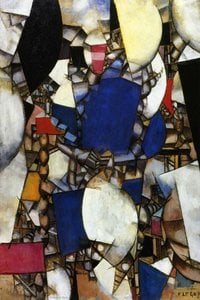
El tipógrafo

Explora la obra maestra cubista de Fernand Léger: una vibrante cabeza entrelazada con elementos industriales como coches y relojes, capturando la energía de la era de las máquinas para tu hogar.

Explore el arte de Fernand Léger (1881-1955), un pionero del Cubismo y 'Tubismo'. Descubre sus audaces pinturas figurativas que celebran la vida moderna, las máquinas y la forma humana. ¡Un precursor del Pop Art!

Giclée / Impresión de arte

Impresiones giclée o en lienzo de calidad de museo con producción rápida y opciones de acabado flexibles. ( Encargar reproducción pintada a mano Ver versión en imagen digital)

Corner sample of the P118B picture frame: poliestireno moldeado, 5 cm wide and 3 cm thick
P118B €10
Corner sample of the P118H picture frame: poliestireno moldeado, 5 cm wide and 3 cm thick
P118H €10
Corner sample of the P118W picture frame: poliestireno moldeado, 5 cm wide and 3 cm thick
P118W €10
Corner sample of the P438Z picture frame: poliestireno moldeado, 5.5 cm wide and 3.5 cm thick
P438Z €10
Corner sample of the P508JH picture frame: poliestireno moldeado, 7 cm wide and 3.5 cm thick
P508JH €12
Corner sample of the P508YH picture frame: poliestireno moldeado, 7 cm wide and 3.5 cm thick
P508YH €12
Corner sample of the P805H picture frame: poliestireno moldeado, 5 cm wide and 3.5 cm thick
P805H €10
Corner sample of the P805Z picture frame: poliestireno moldeado, 5 cm wide and 3.5 cm thick
P805Z €10
Corner sample of the P919BZ picture frame: poliestireno moldeado, 7 cm wide and 3.5 cm thick
P919BZ €10
Corner sample of the P919G picture frame: poliestireno moldeado, 7 cm wide and 3.5 cm thick
P919G €10
Corner sample of the P919XJ picture frame: poliestireno moldeado, 7 cm wide and 3.5 cm thick
P919XJ €10
Corner sample of the P959ZH picture frame: poliestireno moldeado, 5 cm wide and 3 cm thick
P959ZH €10
Corner sample of the P968JZ picture frame: poliestireno moldeado, 6 cm wide and 4 cm thick
P968JZ €12
Corner sample of the W106C picture frame: madera maciza, 5 cm wide and 3 cm thick
W106C €8
Corner sample of the W218G picture frame: madera maciza, 5 cm wide and 3 cm thick
W218G €10
Corner sample of the W218JH picture frame: madera maciza, 5 cm wide and 3 cm thick
W218JH €8
Corner sample of the W218Y picture frame: madera maciza, 5 cm wide and 3 cm thick
W218Y €10
Corner sample of the W307PJ picture frame: madera maciza, 6 cm wide and 3 cm thick
W307PJ €10
Corner sample of the W316G picture frame: madera maciza, 6 cm wide and 3 cm thick
W316G €10
Corner sample of the W316PJ picture frame: madera maciza, 6 cm wide and 3 cm thick
W316PJ €8
Corner sample of the W316Y picture frame: madera maciza, 6 cm wide and 3 cm thick
W316Y €10
Corner sample of the W398PJ picture frame: madera maciza, 5 cm wide and 3 cm thick
W398PJ €8
Corner sample of the W4111J picture frame: madera maciza, 6.5 cm wide and 3.5 cm thick
W4111J €10
Corner sample of the W500HY picture frame: madera maciza, 7 cm wide and 5 cm thick
W500HY €15
Corner sample of the W500JH picture frame: madera maciza, 7 cm wide and 5 cm thick
W500JH €15
Corner sample of the W692G picture frame: madera maciza, 8 cm wide and 4 cm thick
W692G €12
Corner sample of the W849H picture frame: madera maciza, 5 cm wide and 3 cm thick
W849H €8
Corner sample of the W940BG picture frame: madera maciza, 7.5 cm wide and 4.5 cm thick
W940BG €15
Corner sample of the W953PJ picture frame: madera maciza, 6 cm wide and 3.5 cm thick
W953PJ €8

Estándar
personalizado
CM
INCH

Elija entre nuestros tamaños predefinidos que respetan las proporciones originales de la obra.

ancho
altura

Puede introducir sus propias dimensiones para adaptarse a un marco o espacio específico. Si el tamaño seleccionado no coincide con las proporciones de la imagen original, recortaremos la obra de arte o extenderemos la imagen con un borde con efecto espejo o de color sólido. Se enviará una maqueta digital para su aprobación antes de que comience la producción.
Tenga en cuenta que la vista previa en pantalla no refleja el recorte o la extensión real. Solo la maqueta mostrará con precisión la composición final.
Aunque existen tamaños personalizados, recomendamos seleccionar una dimensión de la lista predefinida para preservar las proporciones originales.

Envío a todo el mundo () en 2 semanas en lugar de las 4/5 semanas estándar. (13 octubre)

Envío exprés gratuito a todo el mundo
Lienzo de lino de alta calidad
Seguro de envío completo
Garantía de reembolso de impuestos aduaneros
Garantía de fidelidad cromática exacta
Política de devolución de 100 días (solo por defectos)
Garantía de devolución del 100% del dinero
Oferta por volumen

Precio total

€ 59

El tipógrafo

Giclée / Impresión de arte

Tamaño de la reproducción

-

Precio total

€ 59

Datos clave

  • Artist: Fernand Léger
  • Location: Private Collection
  • Medium: Oil on canvas
  • Dimensions: 130 x 97 cm
  • Notable elements or techniques: Geometric abstraction
  • Year: 1919

A Pioneer of Geometric Abstraction: Exploring Fernand Léger’s “The Typographer”

Fernand Léger's "The Typographer," painted in 1919, isn’t merely a depiction of an object; it’s a declaration of artistic intent—a bold assertion that abstraction could simultaneously honor the tangible realities of the burgeoning industrial era. This striking canvas captures a head rendered in fragmented geometric shapes – cubes, cylinders, and planes – overlaid with vibrant hues of red, yellow, and blue. The inclusion of recognizable elements like a car and a clock serves as an ingenious counterpoint to the dominant visual language, grounding the abstract forms within the familiar contours of everyday life.
  • Style: Léger’s work exemplifies Cubism, specifically Analytical Cubism, pioneered by Picasso and Braque. Unlike Impressionists who sought to capture fleeting moments of light and color, Cubists dissected objects into their constituent parts, presenting multiple perspectives simultaneously on a single canvas.
  • Technique: Léger employed a meticulous layering technique, applying thin washes of pigment over a textured surface created with burlap or similar materials. This method ensured that the underlying structure remained visible, contributing to the painting’s sculptural quality and emphasizing its materiality.
The historical context surrounding “The Typographer” is crucial to understanding Léger's artistic vision. Created during the height of the First World War and immediately following the Russian Revolution, France was undergoing a profound transformation driven by technological advancements and societal upheaval. Léger responded to this period with an unwavering fascination for machines – their precision, their power, and their transformative influence on human existence. The repetition of geometric forms echoes the rhythmic patterns found in factory production lines, reflecting Léger’s belief that art should engage with the realities of modern life. Symbolism: Beyond its formal exploration of geometry and perspective, “The Typographer” carries symbolic weight. The head itself represents humanity—albeit abstracted—facing the challenges posed by industrialization. The juxtaposed objects – the car and the clock – symbolize progress and time, respectively, highlighting the artist’s preoccupation with capturing the spirit of a rapidly changing world. Léger deliberately avoids sentimental representation, opting instead for an emotionally resonant visual language that conveys both optimism and unease. Emotional Impact: “The Typographer” transcends mere aesthetic pleasure; it compels viewers to contemplate the relationship between art and technology. The painting’s bold colors and fractured forms generate a sense of dynamism and disorientation, mirroring the anxieties and aspirations of the era. Léger's intention wasn’t simply to depict what he saw but to express how he *felt* about the world around him—a feeling characterized by both wonder and apprehension. It remains an enduring testament to the transformative power of abstraction as a vehicle for conveying complex ideas and emotions.

Preguntas y respuestas

¿En qué año y bajo qué movimiento se realizó "El tipógrafo"?

"El tipógrafo" de Fernand Léger data de 1919 y pertenece al Síntesis cubista.

¿Qué atmósfera transmite "El tipógrafo"?

"El tipógrafo" de Fernand Léger se describe con un sentimiento Vibrante. Esta clasificación puede ayudar a combinar la obra con un entorno.

¿Los colores de "El tipógrafo" de Fernand Léger son intensos o tenues?

El color de "El tipógrafo" presenta una saturación de Saturación suave y equilibrada y una intensidad de Equilibrado.

¿Qué tamaño de reproducción se sugiere para "El tipógrafo" de Fernand Léger?

Se sugiere una reproducción de Gran formato para "El tipógrafo" de Fernand Léger. El tamaño puede ajustarse manteniendo las proporciones.

¿A qué edad creó Fernand Léger "El tipógrafo"?

Cuando se creó "El tipógrafo" en 1919, Fernand Léger —nacido/a en 1881— tenía 38 años.

¿Qué comparte "El tipógrafo" con el resto de la obra de Fernand Léger?

"El tipógrafo" pertenece a la obra Síntesis cubista de Fernand Léger, cuyos temas recurrentes incluyen inspiración futurista, transformación industrial, representación mecánica, síntesis de la visión moderna.

¿Qué tipo de obra de arte es "El tipógrafo" de Fernand Léger?

"El tipógrafo" de Fernand Léger está clasificada como Arte de pared. La categoría describe el tipo de obra de arte que es el original.

¿Puedo pedir una reproducción al óleo de "El tipógrafo"?

Las copias pintadas a mano de "El tipógrafo" de Fernand Léger se venden en este sitio web: una reproducción al óleo pintada a mano sobre lienzo de lino, las cuales pueden solicitarse desde esta página.


Biografía del artista

vida temprana y formación

fernand léger, un pintor, escultor y cineasta francés, nació el 4 de febrero de 1881 en Argentán, Orne, Baja Normandía. Su padre criaba ganado, y Léger inicialmente se formó como arquitecto de 1897 a 1899. Luego se mudó a París en 1900, ganándose la vida como dibujante arquitectónico.

desarrollo artístico

El trabajo temprano de Léger estuvo influenciado por el impresionismo, como se ve en le jardin de ma mère (mi madre's garden) (1905). Después de asistir a la escuela de artes decorativas y la academia Julian, comenzó a trabajar seriamente como pintor a los 25 años. Su estilo evolucionó hacia una forma personal del cubismo, que los críticos denominaron "tubismo" por su énfasis en las formas cilíndricas.

cubismo y el grupo puteaux

En 1910, Léger expuso en el salón de otoño junto a jean metzinger y henri le fauconnier. Se unió al grupo puteaux, también conocido como la sección dorada (la sección de oro), junto con otros artistas como francis picabia y marcel duchamp.

guerra y su influencia en el trabajo de léger

Las experiencias de Léger en la Primera Guerra Mundial impactaron significativamente su obra. Durante su tiempo en el frente, produjo dibujos de piezas de artillería, aviones y soldados compañeros. Su pintura soldier with a pipe (1916) refleja este período.

obra posterior y legado

La obra posterior de Léger, caracterizada por formas mecánicas y elegantes, lo vinculó a la tradición de la pintura figurativa francesa. Sus paisajes animados de 1921 mostraron figuras y animales en formas armoniosas y aerodinámicas. obras clave: museos que exhiben el trabajo de léger:
Fernand Léger

Fernand Léger

1881 - 1955 , Francia

Datos clave

  • Artistas Influenciados Por: ['Pop Art']
  • Artistas Que Influyeron:
    • Cézanne
    • Impresionismo
  • Fecha De Nacimiento: 4 de febrero de 1881
  • Lugar De Nacimiento: Argentan, Francia
  • Movimiento Artístico:
    • Cubismo
    • Tubismo
  • Nacionalidad: Francés
  • Nombre Completo: Fernand Léger
  • Obras Notables:
    • La Mujer Sentada
    • Elemento de Máquina
    • El Gran Desfile
    • Paisajes Animados
Explore obras de arte organizadas por temas, estilos y características.