Asesoría de arte gratuita

x
Encargar reproducción Encargar reproducciónComprar imagen en alta resolución Comprar imagen en alta resolución EnviarEnviar
DetallesDetalles Añadir a favoritos Añadir a favoritos DescargarDescargar SimilaresSimilares Rayos XRayos X Presentación de diapositivasPresentación de diapositivas

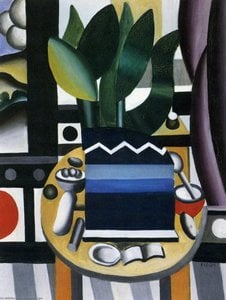
Composición al jarro

Descubre 'Composición al jarro' de Fernand Léger: una obra maestra del Purismo que celebra la belleza industrial con formas geométricas y colores vibrantes, reflejo del espíritu artístico de principios del siglo XX.

Explore el arte de Fernand Léger (1881-1955), un pionero del Cubismo y 'Tubismo'. Descubre sus audaces pinturas figurativas que celebran la vida moderna, las máquinas y la forma humana. ¡Un precursor del Pop Art!

Giclée / Impresión de arte

Impresión giclée o en lienzo de calidad de museo con producción rápida y opciones de acabado flexibles.

P118B $10
P118H $10
P118W $10
P438Z $10
P508JH $12
P508YH $12
P805H $10
P805Z $10
P919BZ $10
P919G $10
P919XJ $10
P959ZH $10
P968JZ $12
W106C $8
W218G $10
W218JH $8
W218Y $10
W307PJ $10
W316G $10
W316PJ $8
W316Y $10
W398PJ $8
W4111J $10
W500HY $15
W500JH $15
W692G $12
W849H $8
W940BG $15
W953PJ $8

Standard
custom
CM
INCH

Elija entre nuestros tamaños predefinidos que respetan las proporciones originales de la obra.

ancho
altura

Puede introducir sus propias dimensiones para adaptarse a un marco o espacio específico. Si el tamaño seleccionado no coincide con las proporciones de la imagen original, recortaremos la obra de arte o extenderemos la imagen con un borde con efecto espejo o de color sólido. Se enviará una maqueta digital para su aprobación antes de que comience la producción.
Tenga en cuenta que la vista previa en pantalla no refleja el recorte o la extensión real. Solo la maqueta mostrará con precisión la composición final.
Aunque existen tamaños personalizados, recomendamos seleccionar una dimensión de la lista predefinida para preservar las proporciones originales.

Entrega mundial () en 2 semanas en lugar de las 4/5 semanas estándar. (3 julio)

why_choose_icon
Envío exprés gratuito a todo el mundo
why_choose_icon
Lienzo de lino de alta calidad
why_choose_icon
Seguro de envío total
why_choose_icon
Garantía de reembolso de impuestos aduaneros
why_choose_icon
Garantía de fidelidad de color
why_choose_icon
Política de devolución de 60 días (solo por defectos)
why_choose_icon
Garantía de devolución del 100% del dinero
why_choose_icon
Descuento por pedido múltiple

Precio total

-

reproduction

Composición al jarro

Giclée / Impresión de arte

Tamaño de la reproducción

-

Precio total final

-

Datos clave

  • Artistic style: Purism
  • Title: Composition at pitcher
  • Year: 1918
  • Subject or theme: Still life
  • Artist: Fernand Léger

Test de arte

Solo hay una respuesta correcta para cada pregunta.

Pregunta 1:
In what year was Fernand Léger’s ‘Composition at pitcher’ created?
Pregunta 2:
The image description mentions a prominent color in the painting. What is it?
Pregunta 3:
Fernand Léger initially trained as what before pursuing art?
Pregunta 4:
What artistic style is ‘Composition at pitcher’ associated with, according to research?
Pregunta 5:
Léger's early work was influenced by which artist, as seen in 'Le Jardin de ma mère'?

Descripción de la obra

Composition at pitcher: A Quiet Symphony of Industry

Fernand Léger’s *Composition at pitcher*, painted in 1918, transcends the conventional boundaries of still life; it embodies a profound aesthetic vision—one that harmoniously blends the beauty of the industrial world with an enduring human spirit. This deceptively simple arrangement – a luminous blue vase dominating the canvas before a backdrop suggestive of trees – is imbued with layers of meaning and artistic innovation. Léger’s masterful execution captures not merely objects but rather the essence of a transformative era, reflecting his unwavering belief in art's capacity to engage with the dynamism of modern life. ### The Birth of Tubism and a Rejection of Tradition Léger’s artistic journey began with an initial fascination for Impressionism, recognizing its ability to convey fleeting moments of light and color. However, he swiftly moved beyond this stylistic approach, embracing Cézanne's structured perspective as a springboard for his own distinctive vision. Yet, it was his engagement with Cubism that truly cemented Léger’s artistic identity. Unlike Picasso or Braque who fragmented forms into multiple viewpoints, Léger developed “Tubism,” a revolutionary style characterized by simplified cylindrical shapes and bold primary colors. *Composition at pitcher* exemplifies this approach; the vase and other elements aren't dissected into countless facets but rendered with robust solidity, their contours clearly defined and possessing an almost monumental presence. This deliberate emphasis on form speaks to Léger’s fascination with machinery – a world he perceived not as sterile or alienating but brimming with inherent beauty and movement—a sentiment powerfully expressed in his art. He sought to create visual language accessible to all, mirroring the energy of the burgeoning industrial age rather than retreating into academic formalism. ### Symbolism Within Simplicity: A Reflection of Wartime Anxiety Created during the final year of World War I, *Composition at pitcher* carries a subtle undercurrent of historical significance. Léger’s artistic impulse was fueled by the pervasive anxieties of the time—the devastation wrought by conflict and the urgent need for new forms of expression. The painting's modest size – 28 x 26 cm – invites contemplation, drawing viewers into Léger’s meticulously crafted world. Consider the deliberate choice of color: the dominant blue evokes tranquility yet simultaneously hints at the depths of the ocean—a visual metaphor perhaps for resilience and enduring beauty amidst chaos. Furthermore, the inclusion of trees represents a connection to nature—a counterpoint to the industrial landscape—suggesting an aspiration for harmony between humanity and its environment. Léger’s masterful use of texture contributes to this emotional resonance; the matte surface of the painting encourages tactile engagement, mirroring the physicality of everyday life during wartime. ### A Legacy of Innovation: Tubism's Enduring Influence *Composition at pitcher* stands as a testament to Léger’s pioneering spirit and his unwavering commitment to artistic experimentation. His Tubist style—characterized by its geometric forms and vibrant hues—anticipated developments in later art movements, notably Pop Art, demonstrating the enduring relevance of Léger’s vision. This artwork continues to inspire artists and designers alike, reminding us that beauty can be found even within seemingly austere environments and that innovation stems from a willingness to challenge conventional artistic norms. It remains a poignant reminder of an artist who dared to celebrate modernity while retaining a profound appreciation for human emotion—a legacy etched in the enduring image of *Composition at pitcher*.

Biografía del artista

vida temprana y formación

fernand léger, un pintor, escultor y cineasta francés, nació el 4 de febrero de 1881 en Argentán, Orne, Baja Normandía. Su padre criaba ganado, y Léger inicialmente se formó como arquitecto de 1897 a 1899. Luego se mudó a París en 1900, ganándose la vida como dibujante arquitectónico.

desarrollo artístico

El trabajo temprano de Léger estuvo influenciado por el impresionismo, como se ve en le jardin de ma mère (mi madre's garden) (1905). Después de asistir a la escuela de artes decorativas y la academia Julian, comenzó a trabajar seriamente como pintor a los 25 años. Su estilo evolucionó hacia una forma personal del cubismo, que los críticos denominaron "tubismo" por su énfasis en las formas cilíndricas.

cubismo y el grupo puteaux

En 1910, Léger expuso en el salón de otoño junto a jean metzinger y henri le fauconnier. Se unió al grupo puteaux, también conocido como la sección dorada (la sección de oro), junto con otros artistas como francis picabia y marcel duchamp.

guerra y su influencia en el trabajo de léger

Las experiencias de Léger en la Primera Guerra Mundial impactaron significativamente su obra. Durante su tiempo en el frente, produjo dibujos de piezas de artillería, aviones y soldados compañeros. Su pintura soldier with a pipe (1916) refleja este período.

obra posterior y legado

La obra posterior de Léger, caracterizada por formas mecánicas y elegantes, lo vinculó a la tradición de la pintura figurativa francesa. Sus paisajes animados de 1921 mostraron figuras y animales en formas armoniosas y aerodinámicas. obras clave: museos que exhiben el trabajo de léger:
Fernand Léger

Fernand Léger

1881 - 1955 , Francia

Datos clave

  • Artistas Influenciados Por: ['Pop Art']
  • Artistas Que Influyeron:
    • Cézanne
    • Impresionismo
  • Fecha De Nacimiento: 4 de febrero de 1881
  • Lugar De Nacimiento: Argentan, Francia
  • Movimiento Artístico:
    • Cubismo
    • Tubismo
  • Nacionalidad: Francés
  • Nombre Completo: Fernand Léger
  • Obras Notables:
    • La Mujer Sentada
    • Elemento de Máquina
    • El Gran Desfile
    • Paisajes Animados
Explore obras de arte organizadas por temas, estilos y características.