Asesoría de arte gratuita

x
Encargar reproducción Encargar reproducciónComprar imagen en alta resolución Comprar imagen en alta resolución EnviarEnviar
DetailsDetails Añadir a favoritos Añadir a favoritos DescargarDescargar SimilaresSimilares X-RayX-Ray Presentación de diapositivasPresentación de diapositivas

Abstract Composition

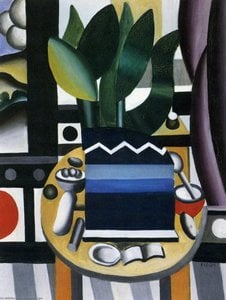
Composition by Fernand Léger - National Gallery of Art Provenance: Claude Schaefer [1913-2010], Montevideo, Uruguay; sold 1950 to Lessing J. Rosenwald; [1] gift 1950/1951 to the National Gallery of Art. [1] In *Recollections of a Collector*, 1976, p. 56-57, Rosenwald described being approached by a young man in South America who offered to sell his father’s collection of prints that he had.

Explore el arte de Fernand Léger (1881-1955), un pionero del Cubismo y 'Tubismo'. Descubre sus audaces pinturas figurativas que celebran la vida moderna, las máquinas y la forma humana. ¡Un precursor del Pop Art!

Giclée / Impresión de arte

Impresión giclée o en lienzo de calidad de museo con producción rápida y opciones de acabado flexibles.

P118B $10
P118H $10
P118W $10
P438Z $10
P508JH $12
P508YH $12
P805H $10
P805Z $10
P919BZ $10
P919G $10
P919XJ $10
P959ZH $10
P968JZ $12
W106C $8
W218G $10
W218JH $8
W218Y $10
W307PJ $10
W316G $10
W316PJ $8
W316Y $10
W398PJ $8
W4111J $10
W500HY $15
W500JH $15
W692G $12
W849H $8
W940BG $15
W953PJ $8

Standard
custom
CM
INCH

Elija entre nuestros tamaños predefinidos que respetan las proporciones originales de la obra.

ancho
altura

Puede introducir sus propias dimensiones para adaptarse a un marco o espacio específico. Si el tamaño seleccionado no coincide con las proporciones de la imagen original, recortaremos la obra de arte o extenderemos la imagen con un borde con efecto espejo o de color sólido. Se enviará una maqueta digital para su aprobación antes de que comience la producción.
Tenga en cuenta que la vista previa en pantalla no refleja el recorte o la extensión real. Solo la maqueta mostrará con precisión la composición final.
Aunque existen tamaños personalizados, recomendamos seleccionar una dimensión de la lista predefinida para preservar las proporciones originales.

Entrega mundial () en 2 semanas en lugar de las 4/5 semanas estándar. (2 julio)

why_choose_icon
Envío exprés gratuito a todo el mundo
why_choose_icon
Lienzo de lino de alta calidad
why_choose_icon
Seguro de envío total
why_choose_icon
Garantía de reembolso de impuestos aduaneros
why_choose_icon
Garantía de fidelidad de color
why_choose_icon
Política de devolución de 60 días (solo por defectos)
why_choose_icon
Garantía de devolución del 100% del dinero
why_choose_icon
Descuento por pedido múltiple

Precio total

-

reproduction

Abstract Composition

Giclée / Impresión de arte

Tamaño de la reproducción

-

Precio total final

-

Datos clave

  • Influences: Futurism
  • Artist: Fernand Léger
  • Location: National Gallery of Art, Washington D.C.
  • Title: Composition
  • Notable elements or techniques: Dynamic geometric shapes; Bold color palette
  • Medium: Oil on canvas
  • Dimensions: 76.2 × 60.4 cm

Test de arte

Solo hay una respuesta correcta para cada pregunta.

Pregunta 1:
What artistic movement is Fernand Léger primarily associated with?
Pregunta 2:
The painting prominently features shapes like a large circle and oval. What does this suggest about Léger's artistic intention?
Pregunta 3:
In what year was Fernand Léger's Composition by Fernand Léger created?
Pregunta 4:
What is the primary technique employed in this artwork?
Pregunta 5:
Where is Fernand Léger's Composition by Fernand Léger currently housed?

Descripción de la obra

A Symphony in Steel and Hue: Exploring Fernand Léger’s “Composition”

Fernand Léger's "Composition," painted in 1952, isn’t merely an abstract painting; it’s a crystallized embodiment of the anxieties and aspirations surrounding the burgeoning industrial revolution. Born Joseph Fernand Henri Léger in Argentan, Normandy, in 1881, Léger possessed an innate fascination with form—a preoccupation that would propel him from humble beginnings to become one of the most influential figures in European modernism. His early life amongst the fields instilled a profound appreciation for physicality and texture, which would later inform his groundbreaking approach to artistic representation. The painting itself is dominated by a striking palette – blues, yellows, oranges, reds, whites, and blacks—arranged in a dynamic interplay of geometric shapes. A prominent circle occupies the central space, radiating outwards like a beacon of order amidst apparent chaos. Surrounding it are oval forms and smaller circles, creating an intricate network that echoes the rhythmic patterns found in machinery and urban landscapes. Triangles and rectangles punctuate the composition, adding further layers of visual complexity. Léger deliberately eschewed illusionistic realism, opting instead for a style he termed “machine painting,” inspired by the burgeoning industrial age and fueled by his observations of factories and locomotives. “Machine painting” wasn’t simply about depicting machines; it was about conveying their essence—their relentless movement, their repetitive processes, their transformative power. Léger sought to capture not just what machines *looked* like but how they *felt*, translating the sensory experience of industrial environments into visual terms. This technique involved applying thick layers of paint – often built up in multiple passes – creating a textured surface that mimics the roughness and solidity of metal structures. The bold colors weren’t chosen arbitrarily; Léger believed they could communicate emotions directly, mirroring the vibrancy and energy of the machine age. Historically, “Composition” emerged during a period of intense debate about the role of art in society. Artists like Léger were grappling with questions of how to represent the rapidly changing world around them without resorting to traditional conventions. They recognized that art needed to engage with the realities of modern life—its technological advancements, its social upheavals, its psychological complexities. Léger’s work stands as a defiant assertion of artistic autonomy in the face of prevailing intellectual currents, demonstrating that beauty and innovation could coexist even within the context of industrial progress. Ultimately, “Composition” resonates deeply with viewers because it taps into universal themes of order versus chaos, stability versus dynamism, and tradition versus modernity. The circle’s central position symbolizes aspiration and unity—a desire to impose harmony upon a turbulent environment. Yet, the painting's energetic composition reminds us that change is inevitable, and that embracing new perspectives can lead to transformative insights. It serves as an enduring testament to Léger’s visionary genius and his unwavering commitment to capturing the spirit of his time – a spirit that continues to inspire artists and collectors alike.

Obras similares


Biografía del artista

vida temprana y formación

fernand léger, un pintor, escultor y cineasta francés, nació el 4 de febrero de 1881 en Argentán, Orne, Baja Normandía. Su padre criaba ganado, y Léger inicialmente se formó como arquitecto de 1897 a 1899. Luego se mudó a París en 1900, ganándose la vida como dibujante arquitectónico.

desarrollo artístico

El trabajo temprano de Léger estuvo influenciado por el impresionismo, como se ve en le jardin de ma mère (mi madre's garden) (1905). Después de asistir a la escuela de artes decorativas y la academia Julian, comenzó a trabajar seriamente como pintor a los 25 años. Su estilo evolucionó hacia una forma personal del cubismo, que los críticos denominaron "tubismo" por su énfasis en las formas cilíndricas.

cubismo y el grupo puteaux

En 1910, Léger expuso en el salón de otoño junto a jean metzinger y henri le fauconnier. Se unió al grupo puteaux, también conocido como la sección dorada (la sección de oro), junto con otros artistas como francis picabia y marcel duchamp.

guerra y su influencia en el trabajo de léger

Las experiencias de Léger en la Primera Guerra Mundial impactaron significativamente su obra. Durante su tiempo en el frente, produjo dibujos de piezas de artillería, aviones y soldados compañeros. Su pintura soldier with a pipe (1916) refleja este período.

obra posterior y legado

La obra posterior de Léger, caracterizada por formas mecánicas y elegantes, lo vinculó a la tradición de la pintura figurativa francesa. Sus paisajes animados de 1921 mostraron figuras y animales en formas armoniosas y aerodinámicas. obras clave: museos que exhiben el trabajo de léger:
Fernand Léger

Fernand Léger

1881 - 1955 , Francia

Datos clave

  • Artistas Influenciados Por: ['Pop Art']
  • Artistas Que Influyeron:
    • Cézanne
    • Impresionismo
  • Fecha De Nacimiento: 4 de febrero de 1881
  • Lugar De Nacimiento: Argentan, Francia
  • Movimiento Artístico:
    • Cubismo
    • Tubismo
  • Nacionalidad: Francés
  • Nombre Completo: Fernand Léger
  • Obras Notables:
    • La Mujer Sentada
    • Elemento de Máquina
    • El Gran Desfile
    • Paisajes Animados
Explore obras de arte organizadas por temas, estilos y características.