Asesoría de arte gratuita

x
Comprar impresión Comprar impresiónComprar imagen en alta resolución Comprar imagen en alta resolución EnviarEnviar
DetallesDetalles Añadir a favoritos Añadir a favoritos DescargarDescargar SimilaresSimilares Rayos XRayos X Presentación de diapositivasPresentación de diapositivas

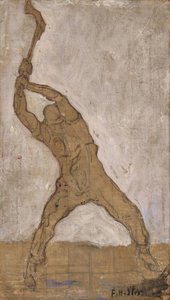
Lumberjack, study

Ferdinand Hodler’s ‘Lumberjack, study’ (1910) – a striking black & white drawing of a determined man wielding an axe. Explore Hodler's unique style and this powerful work.

Descubre a Ferdinand Hodler (1853-1918), pintor suizo y precursor del expresionismo, conocido por su 'paralelismo' y evocadoras obras sobre la vida, la muerte y la naturaleza. Explora su legado.

Reproducción al óleo hecha a mano

Óleo sobre lienzo pintado a mano en el tamaño y marco de su elección, realizado por encargo por nuestros artistas.

P118B $10
P118H $10
P118W $10
P438Z $10
P508JH $12
P508YH $12
P805H $10
P805Z $10
P919BZ $10
P919G $10
P919XJ $10
P959ZH $10
P968JZ $12
W106C $8
W218G $10
W218JH $8
W218Y $10
W307PJ $10
W316G $10
W316PJ $8
W316Y $10
W398PJ $8
W4111J $10
W500HY $15
W500JH $15
W692G $12
W849H $8
W940BG $15
W953PJ $8

Standard
custom
CM
INCH

Elija entre nuestros tamaños predefinidos que respetan las proporciones originales de la obra.

ancho
altura

Puede ingresar sus propias dimensiones para adaptarse a un marco o espacio específico. Si el tamaño seleccionado no coincide con las proporciones de la imagen original, recortaremos la obra o extenderemos la pintura con elementos adicionales pintados a mano. Se le enviará una maqueta digital para su aprobación antes de comenzar la producción.
Tenga en cuenta que la vista previa en pantalla no refleja el recorte o la extensión reales. Solo la maqueta mostrará con precisión la composición final.
Si bien existen tamaños personalizados, recomendamos seleccionar una dimensión de la lista predefinida para preservar las proporciones originales.

Ejemplos de lo que se puede personalizar: Reemplace el rostro con una foto del cliente; Agregue una mascota (por ejemplo, cambie un gato por un perro); Incluya un mensaje oculto en el fondo; Cambie el paisaje o los elementos del fondo.
Tras realizar el pedido, el equipo de WahooArt.com enviará un correo electrónico al cliente para solicitar instrucciones y proporcionarle una vista previa del boceto.

Entrega mundial () en 3-4 semanas en lugar de las 5 semanas estándar. (3 julio). Sin compromisos con la calidad.

why_choose_icon
Envío exprés gratuito a todo el mundo
why_choose_icon
Lienzo de lino de alta calidad
why_choose_icon
Seguro de envío total
why_choose_icon
Garantía de reembolso de impuestos aduaneros
why_choose_icon
Garantía de fidelidad de color
why_choose_icon
Política de devolución de 60 días (solo por defectos)
why_choose_icon
Garantía de devolución del 100% del dinero
why_choose_icon
Descuento por pedido múltiple

Precio total

-

reproduction

Lumberjack, study

Técnica de reproducción

Tamaño de la reproducción

-

Precio total final

-

Datos clave

  • Title: Lumberjack, study
  • Medium: Drawing
  • Year: 1910
  • Movement: Symbolism
  • Artist: Ferdinand Hodler
  • Influences: Nature
  • Dimensions: 43 x 44 cm

Test de arte

Solo hay una respuesta correcta para cada pregunta.

Pregunta 1:
What artistic movement is Ferdinand Hodler primarily associated with?
Pregunta 2:
The image depicts a lumberjack in what action?
Pregunta 3:
In what year was the artwork 'Lumberjack, study' created?
Pregunta 4:
What is the primary medium used in this artwork?
Pregunta 5:
According to the provided information, what is a key theme explored by Ferdinand Hodler in his art?

Descripción de la obra

The Raw Essence of Labor: Ferdinand Hodler’s “Lumberjack, Study”

Ferdinand Hodler's "Lumberjack, Study," painted in 1910, isn’t merely a depiction of a man wielding an axe; it’s a profound meditation on the human condition, rendered with the characteristic Symbolist precision that defined the artist’s career. Born in Bern, Switzerland, Hodler’s life was deeply intertwined with themes of loss and mortality – experiences he channeled into his art through a lens of quiet observation and evocative symbolism. This particular work, executed during a period of intense artistic experimentation for Hodler, captures a moment of potent physicality alongside an underlying sense of melancholy, inviting the viewer to contemplate the dignity and inherent struggle within everyday labor.

  • Subject Matter: The central figure is a powerfully built lumberjack, poised in the act of swinging his axe. The focus isn’t on heroic action, but rather on the concentrated effort and raw physicality of the task at hand.
  • Style & Technique: Hodler employs a distinctive “parallelism” technique – a simultaneous depiction of multiple viewpoints within a single composition. Here, we see the lumberjack from several angles simultaneously, creating a sense of dynamism and capturing the essence of his movement. The brushstrokes are loose and expressive, contributing to the work’s immediate impact.

A Window into Symbolist Thought

Hodler was a key figure in the Swiss Symbolist movement, an artistic current that sought to express inner emotions and ideas rather than simply representing external reality. Symbolism rejected academic realism, favoring suggestive imagery and evocative color palettes. In “Lumberjack, Study,” this is evident in the muted tones of the landscape – a hazy sky and indistinct trees – which serve not as literal representations but as symbolic anchors for the figure’s emotional state. The darkness surrounding the lumberjack hints at the hardships and uncertainties of his life, while the upward swing of the axe can be interpreted as an aspiration towards something beyond the immediate toil.

The choice of a lumberjack as subject is itself significant. It represents a connection to the land, to physical labor, and to a fundamental human need for survival – themes that resonated deeply with Symbolist artists grappling with questions of identity and purpose in a rapidly changing world.

Historical Context & The Bernese Landscape

Bern, Hodler’s birthplace, provided a constant source of inspiration. The rolling hills and forests surrounding the city were frequently depicted in his work, imbued with a sense of timelessness and spiritual resonance. “Lumberjack, Study” reflects this connection to the landscape, grounding the figure within a recognizable yet subtly idealized Bernese setting. The painting was created during a period of significant social change in Switzerland – the rise of industrialization and urbanization were challenging traditional ways of life. Hodler’s work can be seen as both a reflection of these changes and a nostalgic yearning for simpler times.

Emotional Resonance & A Legacy of Quiet Intensity

Despite its seemingly straightforward subject matter, “Lumberjack, Study” possesses a remarkable emotional depth. The lumberjack's face is largely obscured, inviting the viewer to project their own feelings and interpretations onto the figure. There’s a palpable sense of solitude and resilience in his posture – a quiet dignity born from hard work and perhaps, a touch of melancholy. Hodler masterfully captures this complex interplay of strength and vulnerability, creating an image that continues to resonate with viewers today. Reproductions of this powerful study offer a glimpse into the soul of a remarkable artist and a poignant reflection on the human experience.

Obras similares


Biografía del artista

Primeros años y formación artística

Ferdinand Hodler, pintor suizo, nació el 14 de marzo de 1853 en Berna, Suiza. Sus primeras obras se caracterizaron por retratos, paisajes y pinturas de género en un estilo realista. Sin embargo, posteriormente adoptó una forma personal de simbolismo, que él denominó "paralelismo".

Evolución del estilo de Hodler

A medida que avanzaba la carrera de Hodler, su obra evolucionó para combinar influencias de varios géneros, incluyendo el simbolismo y el art nouveau. En 1890, completó Noche, una pintura que marcó su transición hacia la imaginería simbolista. Esta pieza, que presenta varias figuras reclinadas, fue inicialmente recibida con controversia pero finalmente obtuvo atención favorable en París.

Obras destacadas y colecciones

  • El Día (1893), una pintura histórica a gran escala, es un ejemplo notable del trabajo de Hodler. Esta pieza, expuesta en el Kunsthaus Zúrich, demuestra su mezcla única de simbolismo y realismo.
  • El Museo Kunsthaus Zúrich, Suiza, cuenta con una impresionante colección de obras de Hodler, incluyendo Verdad II (1897), que puede ser vista en [https://WahooArt.com/art.nsf/o/a@d3b4gt](https://WahooArt.com/art.nsf/o/a@d3b4gt).

Legado e influencia

La adopción del simbolismo por parte de Hodler y el desarrollo del "paralelismo" han tenido un impacto duradero en el mundo del arte. Su trabajo puede verse como un precursor del expresionismo, con su énfasis en figuras fuertemente coloreadas y geométricas.
  • La biografía de Ferdinand Hodler está disponible en WahooArt, proporcionando una visión profunda de su vida y evolución artística.
  • La historia del desnudo en el arte, que ha sido un tema de interés a lo largo de la carrera de Hodler, puede explorarse más a fondo en [https://en.wikipedia.org/wiki/history_of_the_nude_in_art](https://en.wikipedia.org/wiki/history_of_the_nude_in_art).

Fechas clave

  • 1853: Nació en Berna, Suiza
  • 1890: Completó Noche, marcando su transición hacia la imaginería simbolista
  • 1918: Falleció el 19 de mayo
Lecturas recomendadas: Para una comprensión más profunda del trabajo de Hodler y del contexto en el que lo creó, explore los siguientes enlaces:
Ferdinand Hodler

Ferdinand Hodler

1853 - 1918 , Suiza

Datos clave

  • Artistas Que Influyeron:
    • Alexandre Calame
    • Gustave Courbet
    • Hans Holbein
  • Fecha De Muerte: 19 de mayo de 1918
  • Fecha De Nacimiento: 14 de marzo de 1853
  • Influencia En Artistas: ['Expresionismo']
  • Lugar De Nacimiento: Bern, Suiza
  • Movimiento Artístico: Simbolismo, Art Nouveau
  • Nacionalidad: Suizo
  • Nombre Completo: Ferdinand Hodler
  • Obras Notables:
    • La noche
    • El día
    • Verdad II
Explore obras de arte organizadas por temas, estilos y características.