Vista previa Vista previa en RA Encargar reproducción pintada a mano Ver versión en imagen digital Compartir
Ver detalles Guía Añadir a favoritos Descargar Ver artículos similares Radiografía Presentación de diapositivas Estadísticas

Roots

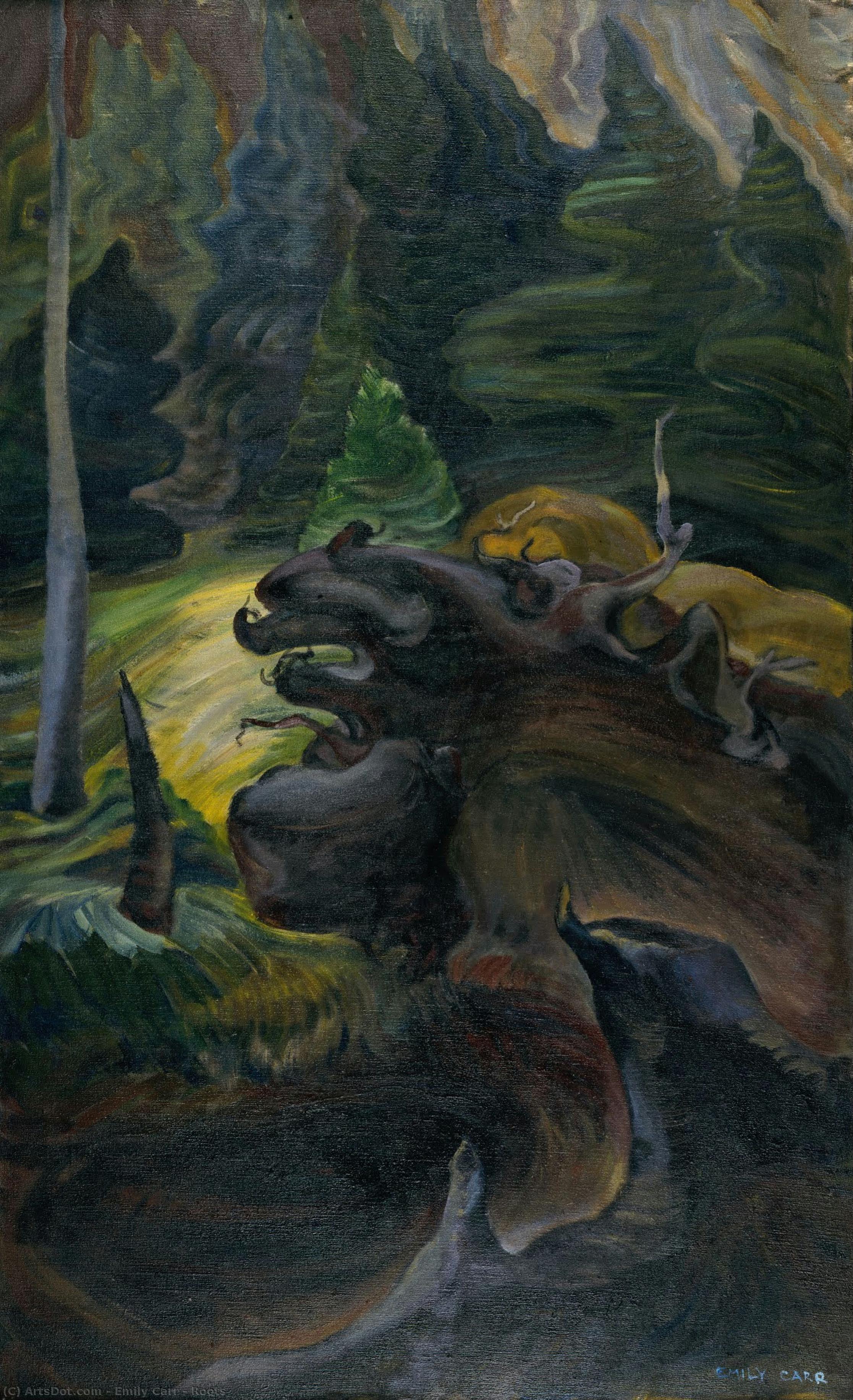
Emily Carr's 'Roots' captures a mystical forest scene with horned creatures and a lone figure, blending Indigenous themes with her signature style. A captivating exploration of nature and mystery.

Descubre a Emily Carr (1871-1945), pionera del arte moderno canadiense. Explora sus poderosas pinturas de paisajes y culturas indígenas de BC, fusionando postimpresionismo con una visión única. ¡Un ícono canadiense!

Giclée / Impresión de arte

Impresiones giclée o en lienzo de calidad de museo con producción rápida y opciones de acabado flexibles. ( Encargar reproducción pintada a mano Ver versión en imagen digital)

Corner sample of the P118B picture frame: poliestireno moldeado, 5 cm wide and 3 cm thick
P118B €10
Corner sample of the P118H picture frame: poliestireno moldeado, 5 cm wide and 3 cm thick
P118H €10
Corner sample of the P118W picture frame: poliestireno moldeado, 5 cm wide and 3 cm thick
P118W €10
Corner sample of the P438Z picture frame: poliestireno moldeado, 5.5 cm wide and 3.5 cm thick
P438Z €10
Corner sample of the P508JH picture frame: poliestireno moldeado, 7 cm wide and 3.5 cm thick
P508JH €12
Corner sample of the P508YH picture frame: poliestireno moldeado, 7 cm wide and 3.5 cm thick
P508YH €12
Corner sample of the P805H picture frame: poliestireno moldeado, 5 cm wide and 3.5 cm thick
P805H €10
Corner sample of the P805Z picture frame: poliestireno moldeado, 5 cm wide and 3.5 cm thick
P805Z €10
Corner sample of the P919BZ picture frame: poliestireno moldeado, 7 cm wide and 3.5 cm thick
P919BZ €10
Corner sample of the P919G picture frame: poliestireno moldeado, 7 cm wide and 3.5 cm thick
P919G €10
Corner sample of the P919XJ picture frame: poliestireno moldeado, 7 cm wide and 3.5 cm thick
P919XJ €10
Corner sample of the P959ZH picture frame: poliestireno moldeado, 5 cm wide and 3 cm thick
P959ZH €10
Corner sample of the P968JZ picture frame: poliestireno moldeado, 6 cm wide and 4 cm thick
P968JZ €12
Corner sample of the W106C picture frame: madera maciza, 5 cm wide and 3 cm thick
W106C €8
Corner sample of the W218G picture frame: madera maciza, 5 cm wide and 3 cm thick
W218G €10
Corner sample of the W218JH picture frame: madera maciza, 5 cm wide and 3 cm thick
W218JH €8
Corner sample of the W218Y picture frame: madera maciza, 5 cm wide and 3 cm thick
W218Y €10
Corner sample of the W307PJ picture frame: madera maciza, 6 cm wide and 3 cm thick
W307PJ €10
Corner sample of the W316G picture frame: madera maciza, 6 cm wide and 3 cm thick
W316G €10
Corner sample of the W316PJ picture frame: madera maciza, 6 cm wide and 3 cm thick
W316PJ €8
Corner sample of the W316Y picture frame: madera maciza, 6 cm wide and 3 cm thick
W316Y €10
Corner sample of the W398PJ picture frame: madera maciza, 5 cm wide and 3 cm thick
W398PJ €8
Corner sample of the W4111J picture frame: madera maciza, 6.5 cm wide and 3.5 cm thick
W4111J €10
Corner sample of the W500HY picture frame: madera maciza, 7 cm wide and 5 cm thick
W500HY €15
Corner sample of the W500JH picture frame: madera maciza, 7 cm wide and 5 cm thick
W500JH €15
Corner sample of the W692G picture frame: madera maciza, 8 cm wide and 4 cm thick
W692G €12
Corner sample of the W849H picture frame: madera maciza, 5 cm wide and 3 cm thick
W849H €8
Corner sample of the W940BG picture frame: madera maciza, 7.5 cm wide and 4.5 cm thick
W940BG €15
Corner sample of the W953PJ picture frame: madera maciza, 6 cm wide and 3.5 cm thick
W953PJ €8

Estándar
personalizado
CM
INCH

Elija entre nuestros tamaños predefinidos que respetan las proporciones originales de la obra.

ancho
altura

Introduzca el ancho y el alto que necesite para adaptarse a su marco o pared. Una impresión solo puede recortarse, nunca hacerse más grande que la imagen original, por lo que un tamaño con una forma distinta perderá parte de la obra. Le enviaremos una maqueta digital para su aprobación antes de realizar cualquier impresión. La imagen que se muestra en esta página no refleja el recorte real; solo la maqueta lo hace.

Envío a todo el mundo () en 2 semanas en lugar de las 4/5 semanas estándar. (23 octubre)

Envío exprés gratuito a todo el mundo
Lienzo de lino de alta calidad
Seguro de envío completo
Garantía de reembolso de impuestos aduaneros
Garantía de fidelidad cromática exacta
Política de devolución de 100 días (solo por defectos)
Garantía de devolución del 100% del dinero
Oferta por volumen

Precio total

€ 60

Roots

Giclée / Impresión de arte

Tamaño de la reproducción

-

Precio total

€ 60

Datos clave

  • Dimensions: 61 x 110 cm
  • Movement: Post-Impressionism
  • Artistic style: Modernist, Landscape
  • Notable elements or techniques: Black and white depiction
  • Medium: Painting

Cuestionario de arte

Cada pregunta tiene una única respuesta correcta.

Pregunta 1:
What is the primary subject matter depicted in Emily Carr’s ‘Roots’?
Pregunta 2:
According to the provided information, what is Emily Carr primarily known for?
Pregunta 3:
What is the approximate size of ‘Roots’?
Pregunta 4:
In what year was Emily Carr born?
Pregunta 5:
The image description suggests the painting evokes a sense of what?

The Canvas as a Portal: Unveiling “Roots” by Emily Carr

Emily Carr's "Roots," painted circa 1929, isn’t merely a depiction of two magnificent horned creatures amidst the dense foliage of British Columbia; it’s a profound meditation on connection – to the land, to ancient spirits, and perhaps, to something deeply within ourselves. The painting immediately draws the viewer into a shadowed realm, a twilight forest where light filters through the canopy in dappled patterns, creating an atmosphere thick with mystery and reverence. Carr masterfully employs a muted palette of browns, greens, and greys, punctuated by flashes of ochre and umber, lending the scene a timeless quality that transcends its specific time and place. The composition is deliberately unbalanced, drawing our eye to the central figures – these imposing beasts – while the human element, partially obscured on the right, feels almost secondary, an observer rather than a participant in this primal drama.

A Post-Impressionist Tapestry: Technique and Style

Carr’s style firmly resides within the realm of Post-Impressionism, yet she transcends simple imitation. She builds upon the Impressionists' focus on capturing fleeting moments of light and color, but imbues her work with a heightened sense of emotional intensity and symbolic weight. The brushstrokes are thick and expressive, particularly evident in the rendering of the animals’ fur – each strand meticulously applied to convey texture and movement. Carr utilizes a technique reminiscent of Japanese woodblock prints, employing strong outlines and flattened planes of color to define the forms against the richly textured background. This deliberate simplification allows her to focus on conveying mood and atmosphere rather than photographic realism. The layering of paint creates an almost sculptural quality, giving the canvas a tangible presence that invites close examination.

  • Medium: Oil on Canvas
  • Size: 61 x 110 cm (approximately 24 x 43.5 inches)
  • Brushwork: Thick, expressive, and layered – a hallmark of Carr’s distinctive style.

Echoes of Indigenous Lore and the Spirit of the Land

“Roots” is deeply rooted in Carr's lifelong fascination with First Nations culture and spirituality. The horned creatures themselves are often interpreted as representations of Thunderbird, powerful spirits associated with storms, rain, and protection within Nuu-chah-nulth cosmology. Their presence evokes a sense of ancient power and the enduring connection between humanity and the natural world. The partially visible human figure suggests an attempt to understand or perhaps appease these forces – a recognition of our place within this intricate web of life. Carr’s meticulous documentation of totem poles, as evidenced in her extensive writings and other paintings, reveals a profound respect for Indigenous traditions and a desire to bridge the gap between Western art and First Nations storytelling. The painting can be seen as an attempt to capture not just the visual appearance of these creatures but also the spiritual significance they held for the people who revered them.

Symbolism and Emotional Resonance: A Journey into the Heart of the Forest

Beyond its immediate visual appeal, “Roots” resonates with a profound emotional depth. The darkened forest creates a sense of both vulnerability and awe, inviting us to contemplate our own relationship to nature and the mysteries that lie hidden within it. The animals’ gaze – directed off-camera – suggests a narrative beyond what is immediately visible, prompting questions about their purpose and their connection to the human observer. Carr's work consistently explores themes of isolation, spirituality, and the search for meaning in a rapidly changing world. “Roots” serves as a poignant reminder of the enduring power of the natural landscape and the importance of preserving its cultural heritage. It’s a painting that stays with you long after you’ve turned away, prompting reflection on our place within the grand scheme of things.

Preguntas y respuestas

¿Se encuentra "Roots" en el país de su creador?

Sí, la obra se encuentra en el país de origen del artista. El país de nacimiento de Emily Carr es Canadá, y el museo que alberga el original de "Roots" se encuentra en Canadá.

¿A qué estilo pertenece "Roots"?

"Roots" es una obra de Post-Impressionism. El movimiento indica la tradición artística de la que forma parte la obra.

¿Cuáles son las dimensiones de la obra original "Roots" de Emily Carr?

"Roots" mide 61 x 110 cm en su formato original. Las dimensiones originales son una referencia útil al elegir el tamaño de una reproducción.


Biografía del artista

Primeros años e influencias

  • Nacimiento: 13 de diciembre de 1871, Victoria, Columbia Británica
  • Fallecimiento: 2 de marzo de 1945, Victoria, Columbia Británica
  • Antecedentes familiares: Emily Carr era la segunda más joven de nueve hijos nacidos de Richard y Emily (Saunders) Carr. Su padre fue un inmigrante inglés que estableció un negocio exitoso en Victoria.

  • Inclinaciones artísticas tempranas: Animada por su padre, Emily demostró talento artístico desde una edad temprana. Recibió instrucción artística temprana y mostró un gran interés en representar el mundo natural que la rodeaba.
  • Educación: Estudió en el San Francisco Art Institute (1890-1892) y en la Westminster School of Art de Londres (1899). Estas experiencias la expusieron a varios estilos artísticos, pero finalmente desarrolló una visión única.
  • Influencias tempranas: Los paisajes de Columbia Británica, particularmente Vancouver Island, influyeron profundamente en el trabajo temprano de Carr. También se sintió atraída por el arte y la cultura de los pueblos indígenas que habitaban la región.

Desarrollo artístico y estilo

  • Comienzos postimpresionistas: Inicialmente, el estilo de Carr tendía hacia el Postimpresionismo, influenciado por artistas europeos. Sin embargo, gradualmente se alejó de la representación convencional para desarrollar un enfoque más expresivo y personal.
  • Enfoque en la cultura indígena: Un punto de inflexión importante en su carrera fue su exploración de las aldeas y el arte de los pueblos indígenas. Buscó capturar la esencia espiritual y la riqueza cultural de estas comunidades en sus pinturas.
  • Aceptación del modernismo: Carr se convirtió en una de las primeras pintoras canadienses en adoptar el Modernismo, caracterizado por colores audaces, pinceladas dinámicas y una ruptura con el realismo tradicional.
  • Estilo único: Su estilo se caracteriza por su intensidad emocional, paleta de colores vibrantes y uso distintivo de la textura. A menudo empleaba técnicas de empaste grueso para crear una sensación de movimiento y energía en sus pinturas.

Obras importantes y exposiciones

  • Pinturas notables: Tanoo (acuarela), A Haida Village (óleo), The Indian Church (óleo) son algunas de sus obras más celebradas, que muestran su mezcla única de técnicas modernistas y temas indígenas.
  • Exposiciones: Carr participó en varias exposiciones a lo largo de su carrera, incluida la "Exposición de arte de los pueblos modernos y primeros de las Primeras Naciones de la Costa Noroeste Canadiense" en la Galería Nacional de Canadá.
  • Klee Wyck (1941): Su autobiografía, Klee Wyck, ganó el Premio Literario del Gobernador General para no ficción, lo que demuestra su talento como escritora y cronista de la vida en Columbia Británica.

Legado y significado histórico

  • "Madre del arte canadiense moderno": Emily Carr es ampliamente considerada una pionera del arte canadiense moderno, allanando el camino para las futuras generaciones de artistas.
  • Reconocimiento de la cultura indígena: Su trabajo ayudó a crear conciencia sobre la cultura y las tradiciones artísticas de los pueblos indígenas en Canadá.
  • Influencia en artistas posteriores: Inspiró a numerosos artistas canadienses con su visión única y su compromiso inquebrantable con su oficio. Pegi Nicol Macleod es un ejemplo.
  • Icono nacional: El legado de Carr se extiende más allá de su obra, ya que se ha convertido en un símbolo de independencia artística, exploración cultural y la belleza del paisaje de Columbia Británica. Un planeta menor, 5688 Kleewyck, fue nombrado en honor a su nombre anglicizado nativo.
Emily Carr

Emily Carr

1871 - 1945 , Canadá

Datos clave

  • Artistas Que Influyeron:
    • Van Gogh
    • Monet
    • Pissarro
    • Matisse
  • Fecha De Fallecimiento: 2 de marzo de 1945
  • Fecha De Nacimiento: 13 de diciembre de 1871
  • Influenciados Por Ella:
    • Nicol Macleod
    • Sophia Pemberton
  • Lugar De Nacimiento: Victoria, Canadá
  • Movimiento Artístico: Modernismo, Postimpresionismo
  • Nacionalidad: Canadiense
  • Nombre Completo: Emily Carr
  • Obras Notables:
    • Tanoo
    • A Haida Village
    • The Indian Church
Explore obras de arte organizadas por temas, estilos y características.


































