Ver en contextoVer en contexto Vista previa en RAVista previa en RA Cambiar a Impresión Cambiar a ImpresiónCambiar a imagen digital Cambiar a imagen digital EnviarEnviar
DetallesDetalles Añadir a favoritos Añadir a favoritos DescargarDescargar SimilaresSimilares RadiografíaRadiografía Presentación de diapositivasPresentación de diapositivas EstadísticasEstadísticas

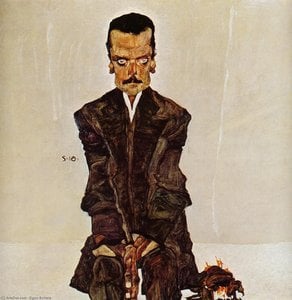
untitled (8956)

Egon Schiele's 'Untitled (8956)' captures a stark white building with red doors and scattered books, reflecting the artist’s exploration of mortality & anxiety through intense lines and haunting imagery.

Descubre el arte expresionista emocionalmente cargado de Egon Schiele (1890-1918): retratos audaces, temas psicológicos y líneas únicas. Explora reproducciones en WahooArt.

Reproducción al óleo hecha a mano

Óleo sobre lienzo pintado a mano en el tamaño y marco de su elección, realizado por encargo por nuestros artistas. (Cambiar a Impresión Cambiar a ImpresiónCambiar a imagen digital Cambiar a imagen digital)

P118B $10
P118H $10
P118W $10
P438Z $10
P508JH $12
P508YH $12
P805H $10
P805Z $10
P919BZ $10
P919G $10
P919XJ $10
P959ZH $10
P968JZ $12
W106C $8
W218G $10
W218JH $8
W218Y $10
W307PJ $10
W316G $10
W316PJ $8
W316Y $10
W398PJ $8
W4111J $10
W500HY $15
W500JH $15
W692G $12
W849H $8
W940BG $15
W953PJ $8

Estándar
a medida
CM
INCH

Elija entre nuestros tamaños predefinidos que respetan las proporciones originales de la obra.

ancho
altura

Puede ingresar sus propias dimensiones para adaptarse a un marco o espacio específico. Si el tamaño seleccionado no coincide con las proporciones de la imagen original, recortaremos la obra o extenderemos la pintura con elementos adicionales pintados a mano. Se le enviará una maqueta digital para su aprobación antes de comenzar la producción.
Tenga en cuenta que la vista previa en pantalla no refleja el recorte o la extensión reales. Solo la maqueta mostrará con precisión la composición final.
Si bien existen tamaños personalizados, recomendamos seleccionar una dimensión de la lista predefinida para preservar las proporciones originales.

Ejemplos de lo que se puede personalizar: Reemplace el rostro con una foto del cliente; Agregue una mascota (por ejemplo, cambie un gato por un perro); Incluya un mensaje oculto en el fondo; Cambie el paisaje o los elementos del fondo.
Tras realizar el pedido, el equipo de WahooArt.com enviará un correo electrónico al cliente para solicitar instrucciones y proporcionarle una vista previa del boceto.

Envío a todo el mundo () en 3-4 semanas en lugar de las 5 semanas estándar. (10 septiembre). Sin comprometer la calidad.

why_choose_icon
Envío exprés gratuito a todo el mundo
why_choose_icon
Lienzo de lino de alta calidad
why_choose_icon
Seguro de envío total
why_choose_icon
Garantía de reembolso de impuestos aduaneros
why_choose_icon
Garantía de fidelidad cromática exacta
why_choose_icon
Política de devolución de 100 días (solo por defectos)
why_choose_icon
Garantía de devolución del 100% del dinero
why_choose_icon
Descuento por cantidad

Precio total

$ 272

reproduction

untitled (8956)

Técnica de reproducción

Dimensiones de la reproducción

-

Precio total final

$ 272

Datos clave

  • Artistic style: Bold lines, intense
  • Artist: Egon Schiele
  • Notable elements: Books, red door
  • Movement: Expressionism
  • Influences: Klimt

Test de arte

Cada pregunta tiene una única respuesta correcta.

Pregunta 1:
Based on the image description, what is the most striking feature of the building depicted?
Pregunta 2:
Egon Schiele was primarily associated with which artistic movement?
Pregunta 3:
The presence of books in the painting likely symbolizes:
Pregunta 4:
Considering Egon Schiele’s biography, which personal experience most profoundly influenced his artistic themes?
Pregunta 5:
What is a key characteristic of Egon Schiele's artistic style, evident in the image?

Unveiling the Enigma: An Exploration of Schiele’s “Untitled (8956)”

Egon Schiele's "Untitled (8956)" presents a deceptively simple yet profoundly unsettling vision – a monumental white building punctuated by a vibrant red door, scattered with books that seem to defy gravity and logic. This work, created during a turbulent period in the artist’s life, embodies the core tenets of Schiele’s oeuvre: a raw exploration of human vulnerability, mortality, and the inherent tension between order and chaos. The photograph reveals a structure dominated by its stark white facade, an almost clinical expanse broken only by the insistent presence of windows – apertures that simultaneously invite and repel, suggesting both exposure and concealment. The red door, a bold stroke against the pallor, acts as a focal point, drawing the eye and hinting at an entrance to something unknown, perhaps even dangerous.

  • Subject Matter: The painting’s subject is ambiguous, resisting easy categorization. It isn't a specific architectural landmark but rather a distilled representation of human experience – a building, like life itself, susceptible to decay and disruption.
  • Color Palette: The restrained palette—primarily white and red—amplifies the emotional impact. White represents purity, innocence, or perhaps even death, while the red is a visceral symbol of passion, danger, and the inevitable forces of destruction.

The Weight of Symbolism – Mortality and Disquiet

Schiele’s work is deeply rooted in the anxieties of his time, reflecting the pervasive sense of disillusionment following World War I and the shadow cast by the artist's own personal struggles. The scattered books are particularly significant. They can be interpreted as symbols of knowledge, wisdom, or perhaps even the burden of consciousness – objects that ultimately cannot shield us from our fate. Their placement, some precariously balanced on the building’s upper reaches, suggests a precariousness, an instability mirroring Schiele's own emotional state and the fragility of human existence. The artist frequently explored themes of death and decay in his work, often depicting skeletal figures or distorted forms, reflecting a preoccupation with mortality that was intensified by his father’s early death from syphilis.

  • Recurring Motifs: The presence of books aligns with Schiele's broader interest in representing the human form and its relationship to knowledge and experience.
  • Emotional Resonance: The overall effect is one of quiet unease, a sense that something is fundamentally wrong within this seemingly ordered space.

Technique and Style – A Masterclass in Expression

"Untitled (8956)" exemplifies Schiele’s distinctive artistic style—characterized by elongated figures, angular lines, and a deliberate lack of polish. His technique involved rapid brushstrokes and a layering of thin washes of oil paint, creating a textured surface that adds to the painting's unsettling quality. The meticulous detail in rendering the building’s facade contrasts sharply with the distorted forms of the books, further emphasizing the work’s inherent tension. Schiele was a master of line – using it not merely to define form but also to convey emotion and psychological state. The almost obsessive attention to detail, combined with his expressive use of color and composition, creates a powerful visual experience that draws the viewer into the heart of the painting's emotional core.

Historical Context and Legacy

Created in 1918, shortly before Schiele’s untimely death at the age of 28, “Untitled (8956)” stands as a poignant testament to his artistic genius. Schiele was a key figure in the Vienna Secession movement, which sought to break away from traditional academic art and embrace new forms of expression. His work is considered alongside other Expressionist artists of the time, sharing a common concern with exploring the darker aspects of human experience. Today, Schiele’s paintings are highly prized for their emotional intensity, technical skill, and profound psychological insights. A reproduction of “Untitled (8956)” offers an opportunity to engage with one of the most significant figures in 20th-century art – a work that continues to resonate with viewers today due to its timeless exploration of mortality, vulnerability, and the human condition.


Biografía del artista

Egon Schiele: Vida y Legado

Primeros Años e Influencias

  • Nacido el 12 de junio de 1890 en Tulln an der Donau, Baja Austria, Egon Schiele experimentó una infancia moldeada tanto por la inclinación artística como por las dificultades personales.
  • Su padre, Adolf Schiele, era jefe de estación, instando en el joven Egon una fascinación por los trenes – un motivo que aparecería sutilmente más tarde en su obra.

  • El temprana fallecimiento de su padre a causa de sífilis cuando Schiele tenía 14 años lo impactó profundamente, llevando a su crianza por parte de su tío materno, Leopold Czihaczek.
  • Czihaczek brindó apoyo pero también ejerció una influencia controladora, que contribuyó al complejo paisaje emocional reflejado en el arte de Schiele.

Trayectoria Artística y Desarrollo

  • La formación artística de Schiele comenzó en la Kunstgewerbeschule (Escuela de Artes y Oficios) en Viena, pero pronto se trasladó a la Akademie der bildenden Künste (Academia de Bellas Artes).
  • Pronto se sintió decepcionado con el enfoque conservador de la Academia, encontrándola sofocante para su visión expresiva. Finalmente, abandonó la formación formal.
  • Las influencias tempranas incluyeron a Gustav Klimt, una figura destacada en la Sezión Vienesa, cuyo estilo decorativo y exploración del simbolismo resonaron con Schiele. Sin embargo, Schiele pronto desarrolló un estilo distintivamente individual.
  • Sus primeras obras a menudo presentaban retratos y autorretratos inquietantes, caracterizados por figuras distorsionadas y una intensa emotividad.

Características y Temas Clave

  • El arte de Schiele es reconocido por su honestidad cruda y profundidad psicológica. Exploró sin miedo temas de sexualidad, muerte, ansiedad e aislamiento.
  • Su estilo distintivo presenta figuras alargadas, poses contorsionadas y líneas expresivas que transmiten una sensación de vulnerabilidad y tormento emocional.
  • Autorretratos constituyen una parte significativa de su obra, ofreciendo atisbos íntimos en su mundo interior.
  • También creó numerosos retratos de otros, a menudo representando a las personas con un realismo sin tapujos e insight psicológico.
  • La pintura de paisajes jugó un papel en su trabajo, demostrando su dominio de la forma y el color, aunque fue menos central que sus obras figurativas.

Logros Importantes y Reconocimiento

  • A pesar de enfrentar censura y desafíos legales (incluyendo una breve prisión por supuestamente corromper a menores con su arte), Schiele ganó reconocimiento en los círculos vanguardistas de Viena.
  • Co-fundó el Neues Wiener Kunstgruppe (Nuevo Grupo de Arte Vienés) en 1909, mostrando su obra junto con otros artistas progresistas.
  • Obras significativas incluyen Autorretrato con Physalis, Pareja Abraza y Paisaje de Campo (Kreuzberg cerca de Krumau).
  • Para el tiempo de su prematura muerte, Schiele se había establecido como una figura destacada en el Expresionismo Austríaco.

Significado Histórico y Legado

  • Egon Schiele murió en 1918 durante la pandemia de gripe española a los 28 años, truncando una prometedora carrera.
  • Su obra influyó profundamente en las generaciones posteriores de artistas, particularmente aquellos interesados ​​en explorar temas psicológicos y desafiar las normas artísticas convencionales.
  • El enfoque audaz de Schiele en la forma y el tema sigue resonando con el público actual, convirtiéndolo en una de las figuras más importantes e influyentes del arte del siglo XX temprano.
  • Sus pinturas se conservan ahora en importantes colecciones de museos en todo el mundo, y las reproducciones de su obra están ampliamente disponibles, asegurando que su legado artístico perdure.
Egon Schiele

Egon Schiele

1890 - 1918 , Croacia

Datos clave

  • Artistas Que Influyeron: ['Gustav Klimt']
  • Fecha De Muerte: 1918
  • Fecha De Nacimiento: 12 de junio de 1890
  • Influenciado A Artistas: ['Generaciones posteriores']
  • Lugar De Nacimiento: Viena, Croacia
  • Movimiento Artístico: Expresionismo
  • Nacionalidad: Austriaco
  • Nombre Completo: Egon Schiele
  • Obras Notables:
    • Autorretrato con Physalis
    • Pareja Abraza
    • Paisaje de Campo (Kreuzberg)
Explore obras de arte organizadas por temas, estilos y características.