Ver en contexto Vista previa en RA Comprar pintura hecha a mano Cambiar a imagen digital Enviar
Detalles Guía Añadir a favoritos Descargar Similares Radiografía Presentación de diapositivas Q&A Estadísticas

untitled (4294)

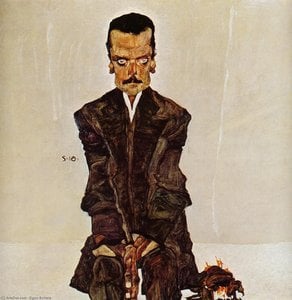
Experience Egon Schiele's haunting 'Untitled (4294)' – a raw expressionist portrait of a woman, exploring themes of mortality and the human form. Discover its story & Schiele’s legacy at WahooArt.

Descubre el arte expresionista emocionalmente cargado de Egon Schiele (1890-1918): retratos audaces, temas psicológicos y líneas únicas. Explora reproducciones en WahooArt.

Giclée / Impresión de arte

Impresiones giclée o en lienzo de calidad de museo con producción rápida y opciones de acabado flexibles. ( Comprar pintura hecha a mano Cambiar a imagen digital)

Corner sample of the P118B picture frame: poliestireno moldeado, 5 cm wide and 3 cm thick
P118B €10
Corner sample of the P118H picture frame: poliestireno moldeado, 5 cm wide and 3 cm thick
P118H €10
Corner sample of the P118W picture frame: poliestireno moldeado, 5 cm wide and 3 cm thick
P118W €10
Corner sample of the P438Z picture frame: poliestireno moldeado, 5.5 cm wide and 3.5 cm thick
P438Z €10
Corner sample of the P508JH picture frame: poliestireno moldeado, 7 cm wide and 3.5 cm thick
P508JH €12
Corner sample of the P508YH picture frame: poliestireno moldeado, 7 cm wide and 3.5 cm thick
P508YH €12
Corner sample of the P805H picture frame: poliestireno moldeado, 5 cm wide and 3.5 cm thick
P805H €10
Corner sample of the P805Z picture frame: poliestireno moldeado, 5 cm wide and 3.5 cm thick
P805Z €10
Corner sample of the P919BZ picture frame: poliestireno moldeado, 7 cm wide and 3.5 cm thick
P919BZ €10
Corner sample of the P919G picture frame: poliestireno moldeado, 7 cm wide and 3.5 cm thick
P919G €10
Corner sample of the P919XJ picture frame: poliestireno moldeado, 7 cm wide and 3.5 cm thick
P919XJ €10
Corner sample of the P959ZH picture frame: poliestireno moldeado, 5 cm wide and 3 cm thick
P959ZH €10
Corner sample of the P968JZ picture frame: poliestireno moldeado, 6 cm wide and 4 cm thick
P968JZ €12
Corner sample of the W106C picture frame: madera maciza, 5 cm wide and 3 cm thick
W106C €8
Corner sample of the W218G picture frame: madera maciza, 5 cm wide and 3 cm thick
W218G €10
Corner sample of the W218JH picture frame: madera maciza, 5 cm wide and 3 cm thick
W218JH €8
Corner sample of the W218Y picture frame: madera maciza, 5 cm wide and 3 cm thick
W218Y €10
Corner sample of the W307PJ picture frame: madera maciza, 6 cm wide and 3 cm thick
W307PJ €10
Corner sample of the W316G picture frame: madera maciza, 6 cm wide and 3 cm thick
W316G €10
Corner sample of the W316PJ picture frame: madera maciza, 6 cm wide and 3 cm thick
W316PJ €8
Corner sample of the W316Y picture frame: madera maciza, 6 cm wide and 3 cm thick
W316Y €10
Corner sample of the W398PJ picture frame: madera maciza, 5 cm wide and 3 cm thick
W398PJ €8
Corner sample of the W4111J picture frame: madera maciza, 6.5 cm wide and 3.5 cm thick
W4111J €10
Corner sample of the W500HY picture frame: madera maciza, 7 cm wide and 5 cm thick
W500HY €15
Corner sample of the W500JH picture frame: madera maciza, 7 cm wide and 5 cm thick
W500JH €15
Corner sample of the W692G picture frame: madera maciza, 8 cm wide and 4 cm thick
W692G €12
Corner sample of the W849H picture frame: madera maciza, 5 cm wide and 3 cm thick
W849H €8
Corner sample of the W940BG picture frame: madera maciza, 7.5 cm wide and 4.5 cm thick
W940BG €15
Corner sample of the W953PJ picture frame: madera maciza, 6 cm wide and 3.5 cm thick
W953PJ €8

Tamaño estándar
a medida
CM
INCH

Elija entre nuestros tamaños predefinidos que respetan las proporciones originales de la obra.

ancho
altura

Introduzca el ancho y el alto que necesite para adaptarse a su marco o pared. Una impresión solo puede recortarse, nunca hacerse más grande que la imagen original, por lo que un tamaño con una forma distinta perderá parte de la obra. Le enviaremos una maqueta digital para su aprobación antes de realizar cualquier impresión. La imagen que se muestra en esta página no refleja el recorte real; solo la maqueta lo hace.

Envío a todo el mundo () en 2 semanas en lugar de las 4/5 semanas estándar. (29 octubre)

Envío exprés gratuito a todo el mundo
Lienzo de lino de alta calidad
Seguro de envío total
Garantía de reembolso de aranceles aduaneros
Garantía de fidelidad cromática exacta
Política de devolución de 100 días (solo por defectos)
Garantía de devolución del 100% del dinero
Descuento por cantidad

Precio total

€ 60

untitled (4294)

Giclée / Impresión de arte

Dimensiones de la reproducción

-

Precio total final

€ 60

Datos clave

  • Medium: Painting
  • Subject or theme: Human form, mortality
  • Artistic style: Expressionist
  • Title: untitled (4294)

Test de conocimientos artísticos

Cada pregunta tiene una única respuesta correcta.

Pregunta 1:
What artistic movement is most closely associated with Egon Schiele’s style as depicted in this painting?
Pregunta 2:
The image description mentions a ‘wall and a chair’ in the background. What does this suggest about the setting of the painting?
Pregunta 3:
Based on Schiele’s biography, what likely influenced his recurring themes of mortality and fragility?
Pregunta 4:
What object does the woman in the painting hold, according to the image description?
Pregunta 5:
Egon Schiele’s work is often characterized by intense emotion and a focus on the human form. Which of the following best describes this approach?

A Portrait of Torment and Beauty

Egon Schiele's "Untitled (4294)" is not merely a depiction of a woman; it’s an unflinching exploration of the human condition, rendered with the raw intensity characteristic of the Expressionist movement. Painted in 1918, just months before his untimely death at the age of 28, this work embodies Schiele's preoccupation with mortality, sexuality, and the psychological complexities of existence – themes that resonated deeply within his intensely personal artistic vision.

The image presents a nude female figure, her form strikingly large and undeniably powerful. Her posture is both vulnerable and defiant, drawing the viewer into an intimate yet unsettling encounter. The artist’s signature elongated lines dominate the composition, creating a sense of dynamism and movement that seems to vibrate off the canvas. Notice how Schiele masterfully utilizes broken brushstrokes and a deliberately uneven surface – techniques designed to convey emotional turmoil rather than smooth realism.

The Language of Line and Form

Schiele’s technique is immediately recognizable. He eschewed traditional academic approaches, favoring instead a highly personal style characterized by distorted perspectives, exaggerated proportions, and an almost obsessive attention to line. The figure's body isn’t idealized; it’s rendered with a deliberate awkwardness, reflecting the artist’s own anxieties about physicality and vulnerability. The use of dark, somber colors – predominantly browns, blacks, and muted reds – further amplifies this sense of unease and impending doom.

Observe how Schiele employs negative space to great effect. The stark simplicity of the background—a bare wall and a chair—serves only to heighten the impact of the central figure. This deliberate reduction in visual information forces the viewer to confront the raw emotion conveyed by the woman’s pose and expression. The object she holds, tentatively identified as either a bird or a fish, adds another layer of ambiguity, perhaps symbolizing fleeting beauty, instinctual desires, or even the fragility of life itself.

Echoes of Mortality and Inner Turmoil

Schiele's life was marked by profound personal tragedy. His father’s death from syphilis at a young age cast a long shadow over his artistic output, fueling an obsession with themes of illness, decay, and the inevitability of mortality. This painting can be interpreted as a visual manifestation of these anxieties – a confrontation with the darker aspects of human existence. The woman's gaze is direct and challenging, suggesting a quiet resilience in the face of overwhelming despair.

Considering Schiele’s biography reveals a man grappling with his own demons, struggling to reconcile his artistic aspirations with the limitations imposed by his personal circumstances. His work often reflects this internal conflict – a tension between beauty and ugliness, life and death, vulnerability and strength. “Untitled (4294)” stands as a poignant testament to this struggle, offering a glimpse into the tormented soul of one of Expressionism’s most compelling figures.

Bringing Schiele's Vision Home

WahooArt offers meticulously crafted hand-painted reproductions of "Untitled (4294)" that capture the essence of Schiele’s artistic genius. Each reproduction is created by skilled artists using traditional techniques, ensuring a faithful representation of the original while retaining its unique emotional power. Whether you're an art collector, interior designer seeking to infuse your space with a touch of dramatic intensity, or simply an admirer of Schiele’s evocative style, our reproductions provide a beautiful and authentic way to experience this iconic work.

Explore the full artwork details and available sizes on our website. Discover how you can bring Schiele’s haunting vision into your home today.

Preguntas y respuestas

¿Está "untitled (4294)" disponible como una impresión de bellas artes?

Para obtener una impresión de "untitled (4294)" de Egon Schiele, simplemente pídala en su página de Impresión de arte de bellas artes: una impresión de bellas artes sobre lienzo de algodón o papel de lienzo de archivo.

¿Qué ambiente aportaría "untitled (4294)" a un espacio?

Con su atmósfera Dramatic, se sugiere "untitled (4294)" para Living Room.

¿A qué etapa de la trayectoria de Egon Schiele pertenece "untitled (4294)"?

Dentro de la trayectoria de Egon Schiele, "untitled (4294)" pertenece al Late Period. Esta etapa permite compararla con otras obras del artista.


Biografía del artista

Egon Schiele: Vida y Legado

Primeros Años e Influencias

  • Nacido el 12 de junio de 1890 en Tulln an der Donau, Baja Austria, Egon Schiele experimentó una infancia moldeada tanto por la inclinación artística como por las dificultades personales.
  • Su padre, Adolf Schiele, era jefe de estación, instando en el joven Egon una fascinación por los trenes – un motivo que aparecería sutilmente más tarde en su obra.

  • El temprana fallecimiento de su padre a causa de sífilis cuando Schiele tenía 14 años lo impactó profundamente, llevando a su crianza por parte de su tío materno, Leopold Czihaczek.
  • Czihaczek brindó apoyo pero también ejerció una influencia controladora, que contribuyó al complejo paisaje emocional reflejado en el arte de Schiele.

Trayectoria Artística y Desarrollo

  • La formación artística de Schiele comenzó en la Kunstgewerbeschule (Escuela de Artes y Oficios) en Viena, pero pronto se trasladó a la Akademie der bildenden Künste (Academia de Bellas Artes).
  • Pronto se sintió decepcionado con el enfoque conservador de la Academia, encontrándola sofocante para su visión expresiva. Finalmente, abandonó la formación formal.
  • Las influencias tempranas incluyeron a Gustav Klimt, una figura destacada en la Sezión Vienesa, cuyo estilo decorativo y exploración del simbolismo resonaron con Schiele. Sin embargo, Schiele pronto desarrolló un estilo distintivamente individual.
  • Sus primeras obras a menudo presentaban retratos y autorretratos inquietantes, caracterizados por figuras distorsionadas y una intensa emotividad.

Características y Temas Clave

  • El arte de Schiele es reconocido por su honestidad cruda y profundidad psicológica. Exploró sin miedo temas de sexualidad, muerte, ansiedad e aislamiento.
  • Su estilo distintivo presenta figuras alargadas, poses contorsionadas y líneas expresivas que transmiten una sensación de vulnerabilidad y tormento emocional.
  • Autorretratos constituyen una parte significativa de su obra, ofreciendo atisbos íntimos en su mundo interior.
  • También creó numerosos retratos de otros, a menudo representando a las personas con un realismo sin tapujos e insight psicológico.
  • La pintura de paisajes jugó un papel en su trabajo, demostrando su dominio de la forma y el color, aunque fue menos central que sus obras figurativas.

Logros Importantes y Reconocimiento

  • A pesar de enfrentar censura y desafíos legales (incluyendo una breve prisión por supuestamente corromper a menores con su arte), Schiele ganó reconocimiento en los círculos vanguardistas de Viena.
  • Co-fundó el Neues Wiener Kunstgruppe (Nuevo Grupo de Arte Vienés) en 1909, mostrando su obra junto con otros artistas progresistas.
  • Obras significativas incluyen Autorretrato con Physalis, Pareja Abraza y Paisaje de Campo (Kreuzberg cerca de Krumau).
  • Para el tiempo de su prematura muerte, Schiele se había establecido como una figura destacada en el Expresionismo Austríaco.

Significado Histórico y Legado

  • Egon Schiele murió en 1918 durante la pandemia de gripe española a los 28 años, truncando una prometedora carrera.
  • Su obra influyó profundamente en las generaciones posteriores de artistas, particularmente aquellos interesados ​​en explorar temas psicológicos y desafiar las normas artísticas convencionales.
  • El enfoque audaz de Schiele en la forma y el tema sigue resonando con el público actual, convirtiéndolo en una de las figuras más importantes e influyentes del arte del siglo XX temprano.
  • Sus pinturas se conservan ahora en importantes colecciones de museos en todo el mundo, y las reproducciones de su obra están ampliamente disponibles, asegurando que su legado artístico perdure.
Egon Schiele

Egon Schiele

1890 - 1918 , Croacia

Datos clave

  • Artistas Que Influyeron: ['Gustav Klimt']
  • Fecha De Muerte: 1918
  • Fecha De Nacimiento: 12 de junio de 1890
  • Influenciado A Artistas: ['Generaciones posteriores']
  • Lugar De Nacimiento: Viena, Croacia
  • Movimiento Artístico: Expresionismo
  • Nacionalidad: Austriaco
  • Nombre Completo: Egon Schiele
  • Obras Notables:
    • Autorretrato con Physalis
    • Pareja Abraza
    • Paisaje de Campo (Kreuzberg)
Explore obras de arte organizadas por temas, estilos y características.