Ver en contexto Vista previa en RA Comprar pintura hecha a mano Cambiar a imagen digital Enviar
Detalles Guía Añadir a favoritos Descargar Similares Radiografía Presentación de diapositivas Preguntas y respuestas Descargar presentación Estadísticas

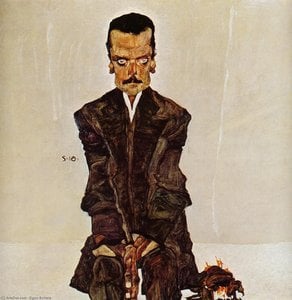
untitled (2235)

Experience Egon Schiele's haunting 'untitled (2235)' – a raw Expressionist portrait of vulnerability and psychological intensity, marked by angular lines & muted tones. Explore its symbolism and artistic techniques.

Descubre el arte expresionista emocionalmente cargado de Egon Schiele (1890-1918): retratos audaces, temas psicológicos y líneas únicas. Explora reproducciones en WahooArt.

Giclée / Impresión de arte

Impresiones giclée o en lienzo de calidad de museo con producción rápida y opciones de acabado flexibles. ( Comprar pintura hecha a mano Cambiar a imagen digital)

Corner sample of the P118B picture frame: poliestireno moldeado, 5 cm wide and 3 cm thick
P118B €10
Corner sample of the P118H picture frame: poliestireno moldeado, 5 cm wide and 3 cm thick
P118H €10
Corner sample of the P118W picture frame: poliestireno moldeado, 5 cm wide and 3 cm thick
P118W €10
Corner sample of the P438Z picture frame: poliestireno moldeado, 5.5 cm wide and 3.5 cm thick
P438Z €10
Corner sample of the P508JH picture frame: poliestireno moldeado, 7 cm wide and 3.5 cm thick
P508JH €12
Corner sample of the P508YH picture frame: poliestireno moldeado, 7 cm wide and 3.5 cm thick
P508YH €12
Corner sample of the P805H picture frame: poliestireno moldeado, 5 cm wide and 3.5 cm thick
P805H €10
Corner sample of the P805Z picture frame: poliestireno moldeado, 5 cm wide and 3.5 cm thick
P805Z €10
Corner sample of the P919BZ picture frame: poliestireno moldeado, 7 cm wide and 3.5 cm thick
P919BZ €10
Corner sample of the P919G picture frame: poliestireno moldeado, 7 cm wide and 3.5 cm thick
P919G €10
Corner sample of the P919XJ picture frame: poliestireno moldeado, 7 cm wide and 3.5 cm thick
P919XJ €10
Corner sample of the P959ZH picture frame: poliestireno moldeado, 5 cm wide and 3 cm thick
P959ZH €10
Corner sample of the P968JZ picture frame: poliestireno moldeado, 6 cm wide and 4 cm thick
P968JZ €12
Corner sample of the W106C picture frame: madera maciza, 5 cm wide and 3 cm thick
W106C €8
Corner sample of the W218G picture frame: madera maciza, 5 cm wide and 3 cm thick
W218G €10
Corner sample of the W218JH picture frame: madera maciza, 5 cm wide and 3 cm thick
W218JH €8
Corner sample of the W218Y picture frame: madera maciza, 5 cm wide and 3 cm thick
W218Y €10
Corner sample of the W307PJ picture frame: madera maciza, 6 cm wide and 3 cm thick
W307PJ €10
Corner sample of the W316G picture frame: madera maciza, 6 cm wide and 3 cm thick
W316G €10
Corner sample of the W316PJ picture frame: madera maciza, 6 cm wide and 3 cm thick
W316PJ €8
Corner sample of the W316Y picture frame: madera maciza, 6 cm wide and 3 cm thick
W316Y €10
Corner sample of the W398PJ picture frame: madera maciza, 5 cm wide and 3 cm thick
W398PJ €8
Corner sample of the W4111J picture frame: madera maciza, 6.5 cm wide and 3.5 cm thick
W4111J €10
Corner sample of the W500HY picture frame: madera maciza, 7 cm wide and 5 cm thick
W500HY €15
Corner sample of the W500JH picture frame: madera maciza, 7 cm wide and 5 cm thick
W500JH €15
Corner sample of the W692G picture frame: madera maciza, 8 cm wide and 4 cm thick
W692G €12
Corner sample of the W849H picture frame: madera maciza, 5 cm wide and 3 cm thick
W849H €8
Corner sample of the W940BG picture frame: madera maciza, 7.5 cm wide and 4.5 cm thick
W940BG €15
Corner sample of the W953PJ picture frame: madera maciza, 6 cm wide and 3.5 cm thick
W953PJ €8

Tamaño estándar
a medida
CM
INCH

Elija entre nuestros tamaños predefinidos que respetan las proporciones originales de la obra.

ancho
altura

Introduzca el ancho y el alto que necesite para adaptarse a su marco o pared. Una impresión solo puede recortarse, nunca hacerse más grande que la imagen original, por lo que un tamaño con una forma distinta perderá parte de la obra. Le enviaremos una maqueta digital para su aprobación antes de realizar cualquier impresión. La imagen que se muestra en esta página no refleja el recorte real; solo la maqueta lo hace.

Envío a todo el mundo () en 2 semanas en lugar de las 4/5 semanas estándar. (8 noviembre)

Envío exprés gratuito a todo el mundo
Lienzo de lino de alta calidad
Seguro de envío total
Garantía de reembolso de aranceles aduaneros
Garantía de fidelidad cromática exacta
Política de devolución de 100 días (solo por defectos)
Garantía de devolución del 100% del dinero
Descuento por cantidad

Precio total

€ 62

untitled (2235)

Giclée / Impresión de arte

Dimensiones de la reproducción

-

Precio total final

€ 62

Datos clave

  • Notable elements: Contorted figure
  • Title: untitled (2235)
  • Movement: Expressionism
  • Subject or theme: Vulnerability, Anxiety

Test de conocimientos artísticos

Cada pregunta tiene una única respuesta correcta.

Pregunta 1:
What is the primary emotion conveyed by the figure’s contorted pose in ‘untitled (2235)’?
Pregunta 2:
Which artistic movement is most closely associated with Egon Schiele’s style as demonstrated in ‘untitled (2235)’?
Pregunta 3:
What is the dominant color palette used in ‘untitled (2235)’?
Pregunta 4:
The use of hatching and cross-hatching in ‘untitled (2235)’ primarily serves to:
Pregunta 5:
Considering Egon Schiele’s biography, what likely influenced his recurring themes of mortality and psychological intensity?

Egon Schiele’s “Untitled (2235)” – A Descent into Psychological Intensity

Egon Schiele's "Untitled (2235)," painted in 1918, stands as a haunting testament to the artist’s profound exploration of human vulnerability and the anxieties simmering beneath the surface of early 20th-century Europe. Created during a period marked by war and societal upheaval, this intensely personal work transcends mere representation, plunging the viewer into a realm of psychological turmoil and raw emotion. It's not simply a depiction of a nude figure; it’s an embodiment of existential questioning rendered in charcoal and graphite with unsettling precision.

The painting immediately commands attention through its stark simplicity and deliberate lack of conventional perspective. A reclining male form dominates the composition, his limbs elongated and twisted into a posture that suggests both surrender and resistance. The background is reduced to a minimal plane, amplifying the figure’s isolation and intensifying the focus on his internal state. This flattening effect, coupled with the almost claustrophobic arrangement, creates a sense of unease—a feeling of being trapped within the subject's experience.

A Symphony of Gray: Color, Line, and Texture

Schiele’s masterful use of color is perhaps the most striking element of this work. The palette is relentlessly monochromatic, dominated by shades of gray, black, white, and muted browns. This deliberate restriction isn't a sign of artistic limitation; rather, it serves to heighten the emotional impact, stripping away any distractions and forcing the viewer to confront the raw essence of the subject’s distress. The lines are equally crucial – harsh, angular, and deliberately broken, they mirror the figure’s fragmented state of mind. Hatching and cross-hatching techniques are employed with meticulous detail, building up tonal variations that suggest volume and texture without resorting to traditional modeling.

The surface itself appears almost tactile, created through the deliberate application of charcoal or graphite. The visible strokes and energetic marks convey a sense of immediacy and spontaneity—as if Schiele were wrestling with his subject in real-time. This directness is characteristic of Expressionism, where the artist’s emotional state is prioritized over objective representation.

Symbolic Weight: Mortality, Vulnerability, and the Male Psyche

Beyond its formal qualities, “Untitled (2235)” resonates with potent symbolism. The nude figure itself represents vulnerability—a stripping away of defenses to reveal a core of exposed emotion. The contorted pose can be interpreted as a struggle against an unseen force, perhaps reflecting the anxieties surrounding war and societal change. Schiele’s recurring fascination with mortality is evident here, not in a morbid way, but as a fundamental aspect of human existence. The painting speaks to the fragility of life and the inevitability of death—themes that were particularly relevant during the turbulent years leading up to World War I.

Considering Schiele’s own life – his early loss of his father, his sister's illness, and his own struggles with mental health – it is clear that this work is deeply autobiographical. The painting can be viewed as a projection of his inner turmoil onto the canvas, offering a glimpse into the artist’s psyche during a period of profound personal crisis.

A Legacy of Intensity: Schiele's Enduring Influence

Egon Schiele was a pivotal figure in the development of Expressionism, and “Untitled (2235)” exemplifies his unique approach to art. His willingness to confront difficult subjects—sexuality, mortality, and psychological distress—challenged conventional artistic norms and paved the way for future generations of artists. Reproductions of this powerful work continue to captivate viewers with their raw emotional intensity and unsettling beauty. It remains a poignant reminder of the complexities of the human condition and the enduring power of art to explore the darkest corners of our inner lives.

Preguntas y respuestas

¿Cómo se puede integrar "untitled (2235)" de Egon Schiele en la decoración del hogar?

Se recomienda "untitled (2235)" de Egon Schiele para Statement, idealmente en un/a Living Room. El uso y el espacio juntos ayudan a determinar dónde encaja mejor una reproducción.

¿Cómo convergen el movimiento y la época en "untitled (2235)" de Egon Schiele?

En "untitled (2235)" de Egon Schiele, el movimiento Expressionistic Modernism se funde con la era Edad Moderna.

¿Cómo se construye la composición cromática de "untitled (2235)" de Egon Schiele?

El análisis cromático de "untitled (2235)" de Egon Schiele presenta un Bold contraste y una Softly Mixed Palette armonía.


Biografía del artista

Egon Schiele: Vida y Legado

Primeros Años e Influencias

  • Nacido el 12 de junio de 1890 en Tulln an der Donau, Baja Austria, Egon Schiele experimentó una infancia moldeada tanto por la inclinación artística como por las dificultades personales.
  • Su padre, Adolf Schiele, era jefe de estación, instando en el joven Egon una fascinación por los trenes – un motivo que aparecería sutilmente más tarde en su obra.
  • El temprana fallecimiento de su padre a causa de sífilis cuando Schiele tenía 14 años lo impactó profundamente, llevando a su crianza por parte de su tío materno, Leopold Czihaczek.
  • Czihaczek brindó apoyo pero también ejerció una influencia controladora, que contribuyó al complejo paisaje emocional reflejado en el arte de Schiele.

Trayectoria Artística y Desarrollo

  • La formación artística de Schiele comenzó en la Kunstgewerbeschule (Escuela de Artes y Oficios) en Viena, pero pronto se trasladó a la Akademie der bildenden Künste (Academia de Bellas Artes).
  • Pronto se sintió decepcionado con el enfoque conservador de la Academia, encontrándola sofocante para su visión expresiva. Finalmente, abandonó la formación formal.
  • Las influencias tempranas incluyeron a Gustav Klimt, una figura destacada en la Sezión Vienesa, cuyo estilo decorativo y exploración del simbolismo resonaron con Schiele. Sin embargo, Schiele pronto desarrolló un estilo distintivamente individual.
  • Sus primeras obras a menudo presentaban retratos y autorretratos inquietantes, caracterizados por figuras distorsionadas y una intensa emotividad.

Características y Temas Clave

  • El arte de Schiele es reconocido por su honestidad cruda y profundidad psicológica. Exploró sin miedo temas de sexualidad, muerte, ansiedad e aislamiento.
  • Su estilo distintivo presenta figuras alargadas, poses contorsionadas y líneas expresivas que transmiten una sensación de vulnerabilidad y tormento emocional.
  • Autorretratos constituyen una parte significativa de su obra, ofreciendo atisbos íntimos en su mundo interior.
  • También creó numerosos retratos de otros, a menudo representando a las personas con un realismo sin tapujos e insight psicológico.
  • La pintura de paisajes jugó un papel en su trabajo, demostrando su dominio de la forma y el color, aunque fue menos central que sus obras figurativas.

Logros Importantes y Reconocimiento

  • A pesar de enfrentar censura y desafíos legales (incluyendo una breve prisión por supuestamente corromper a menores con su arte), Schiele ganó reconocimiento en los círculos vanguardistas de Viena.
  • Co-fundó el Neues Wiener Kunstgruppe (Nuevo Grupo de Arte Vienés) en 1909, mostrando su obra junto con otros artistas progresistas.
  • Obras significativas incluyen Autorretrato con Physalis, Pareja Abraza y Paisaje de Campo (Kreuzberg cerca de Krumau).
  • Para el tiempo de su prematura muerte, Schiele se había establecido como una figura destacada en el Expresionismo Austríaco.

Significado Histórico y Legado

  • Egon Schiele murió en 1918 durante la pandemia de gripe española a los 28 años, truncando una prometedora carrera.
  • Su obra influyó profundamente en las generaciones posteriores de artistas, particularmente aquellos interesados ​​en explorar temas psicológicos y desafiar las normas artísticas convencionales.
  • El enfoque audaz de Schiele en la forma y el tema sigue resonando con el público actual, convirtiéndolo en una de las figuras más importantes e influyentes del arte del siglo XX temprano.
  • Sus pinturas se conservan ahora en importantes colecciones de museos en todo el mundo, y las reproducciones de su obra están ampliamente disponibles, asegurando que su legado artístico perdure.
Egon Schiele

Egon Schiele

1890 - 1918 , Croacia

Datos clave

  • Artistas Que Influyeron: ['Gustav Klimt']
  • Fecha De Muerte: 1918
  • Fecha De Nacimiento: 12 de junio de 1890
  • Influenciado A Artistas: ['Generaciones posteriores']
  • Lugar De Nacimiento: Viena, Croacia
  • Movimiento Artístico: Expresionismo
  • Nacionalidad: Austriaco
  • Nombre Completo: Egon Schiele
  • Obras Notables:
    • Autorretrato con Physalis
    • Pareja Abraza
    • Paisaje de Campo (Kreuzberg)
Explore obras de arte organizadas por temas, estilos y características.