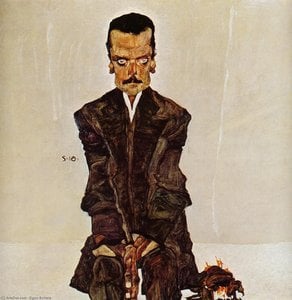
Expressionism
 1919Early Modern
 32.0 x 48.0 cm
 Museo Prefectural de Arte de Aichi
Óleo sobre lienzo pintado a mano en el tamaño y marco de su elección, realizado por encargo por nuestros artistas. ( Comprar impresión Comprar imagen)





























Elija entre nuestros tamaños predefinidos que respetan las proporciones originales de la obra.

Puede ingresar sus propias dimensiones para adaptarse a un marco o espacio específico. Si el tamaño seleccionado no coincide con las proporciones de la imagen original, recortaremos la obra o extenderemos la pintura con elementos adicionales pintados a mano. Se le enviará una maqueta digital para su aprobación antes de comenzar la producción.
Tenga en cuenta que la vista previa en pantalla no refleja el recorte o la extensión reales. Solo la maqueta mostrará con precisión la composición final.
Si bien existen tamaños personalizados, recomendamos seleccionar una dimensión de la lista predefinida para preservar las proporciones originales.
Envío a todo el mundo () en 3-4 semanas en lugar de las 5 semanas estándar. (6 septiembre). Sin comprometer la calidad.


Squatting Woman
Dimensiones de la reproducción
Egon Schiele's “Squatting Woman,” created in 1919, is not merely a depiction of a figure; it’s a raw, intensely psychological portrait born from the artist’s profound exploration of human fragility. This black-and-white drawing, executed with a masterful command of line and shadow, immediately confronts the viewer with an image of arresting vulnerability – a woman in a squatting position that speaks volumes about isolation, introspection, and perhaps even a surrender to unseen forces. The work's power resides not in idealized beauty but in its unflinching portrayal of human emotion, firmly rooted within Schiele’s signature Expressionist style.
Executed entirely in monochrome – shades of black, grey, and white – “Squatting Woman” exemplifies Schiele’s commitment to stripping away superficial beauty and revealing the raw core of human experience. The stark contrast between dark outlines and lighter areas creates a dramatic effect, emphasizing form and volume while simultaneously contributing to the work's unsettling atmosphere. Schiele deliberately distorted the figure’s proportions – elongated limbs, exaggerated features – aligning with the tenets of Expressionism, where subjective emotion takes precedence over objective representation.
Created in 1919, “Squatting Woman” reflects a period of intense personal struggle for Schiele. His early life was marked by tragedy – the death of his father from syphilis at a young age profoundly shaped his artistic vision. This preoccupation with mortality and human vulnerability is powerfully evident in this drawing. The work speaks to themes of sexuality, isolation, and the precariousness of existence—recurring motifs throughout Schiele’s oeuvre. The presence of the background figures adds another layer of complexity, hinting at a narrative or psychological context that invites speculation and deeper engagement.


1890 - 1918 , Croacia

Elevate your most cherished memories with WahooArt’s bespoke service. We transform your personal photos into breathtaking, hand-painted black & white oil masterpieces. Experience museum-quality craftsmanship and timeless elegance for your private collection. Discover the art of legacy.

Explore the profound artistry of black and white photography. From historical mastery to the interplay of light and shadow, discover how monochrome captures timeless emotion and form through a sophisticated lens of art history.

 Ver en contexto
 Enviar
 Compartir
 Detalles

 Descargar
 Similares
 Radiografía
 Presentación de diapositivas
 Ver más







 La opción de vidrio solo está disponible en tamaños inferiores a 110 cm.