Una danza inquietante entre la vida y la mortalidad
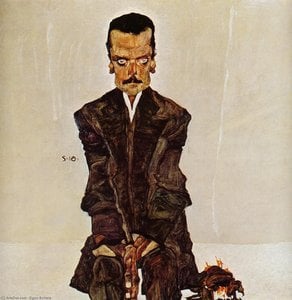
En la obra maestra de una belleza sobrecogedora, "Procesión," creada en 1911, Egon Schiele nos invita a adentrarnos en un paisaje psicológico donde los límites entre la realidad y el tumulto interior se disuelven. Esta pieza fundamental del expresionismo es mucho más que una mera representación de un grupo de figuras; es un descenso inmersivo en las ansiedades de principios del siglo XX. Al contemplar el lienzo, nos impacta de inmediato la tensión contenida en la composición. Schiele posiciona magistralmente a dos mujeres en el primer plano, cuya presencia ancla un entorno que, de otro modo, resultaría fragmentado y surrealista. Una mujer acuna a un bebé dormido, un tierno momento de instinto maternal que se siente extrañamente frágil frente al trasfondo de formas esqueléticas e inquietantes y tonos pesados y sombríos. La pintura captura un profundo sentido de la interacción humana, pero es una interacción impregnada de un silencioso pavor existencial.
El peso emocional de la obra se ve amplificado por el uso revolucionario de la línea y la forma por parte de Schiele. Evitando la perfección pulida del realismo tradicional, emplea líneas audaces, angulares y a menudo dentadas que parecen vibrar con una energía nerviosa. Las figuras se caracterizan por extremidades alargadas y proporciones distorsionadas, un sello distintivo del estilo expresionista diseñado para comunicar un sentimiento puro y sin adulterar en lugar de la precisión anatómica. A través de estas distorsiones deliberadas, Schiele crea una sensación de inestabilidad, reflejando la fragmentación psicológica de sus sujetos. La paleta de colores, dominada por ocres apagados, marrones profundos y tonos terrosos, envuelve la escena en un manto melancólico, asegurando que cada pincelada contribuya a la atmósfera general de sombría reflexión.
Simbolismo y el ciclo de la existencia
Más allá de su impactante impacto visual, "Procesión" es una profunda meditación sobre las etapas de la vida humana y la inevitabilidad del destino. Los estudiosos suelen interpretar las figuras dentro de la obra como representaciones simbólicas de la existencia misma. La presencia del infante sugiere el comienzo de la vida, mientras que los rostros más demacrados y curtidos de las figuras mayores insinúan la progresión hacia la decadencia. Algunos incluso ven una narrativa profundamente personal tejida en la pintura: un reflejo de la propia historia familiar de Schiele, donde las figuras podrían representar a su padre y a su madre, atrapados en un desfile eterno y fantasmal. Esta capa de simbolismo transforma la pintura de una instantánea histórica en una alegoría atemporal de la mortalidad, convirtiéndola en una pieza que resuena profundamente con cualquiera que haya contemplado la naturaleza fugaz del tiempo.
Para el coleccionista exigente o el diseñador de interiores, "Procesión" ofrece una oportunidad única de introducir en un espacio una pieza de conversación de inmensa profundidad intelectual y estética. Una reproducción de alta calidad de esta obra no se limita a decorar una pared; exige atención, proporcionando un punto focal que invita a la contemplación y evoca un sentido de gravedad histórica. Ya sea colocada en un entorno de galería contemporánea o en un estudio clásico, la capacidad de la pintura para equilibrar la emoción pura con una técnica sofisticada la convierte en una elección perdurable para aquellos que aprecian el arte que desafía al alma y enriquece el entorno con su compleja y cautivadora belleza.
Preguntas y respuestas
¿En qué año se creó "Procesión" de Egon Schiele?
"Procesión" de Egon Schiele fue creada en 1911.
¿Quién es el artista detrás de "Procesión"?
"Procesión" se atribuye a Egon Schiele.
¿En qué técnica está ejecutada "Procesión" de Egon Schiele?
"Procesión" está ejecutada en Óleo sobre lienzo.
¿Qué configuración de impresión se sugiere para "Procesión" de Egon Schiele?
Para "Procesión", la configuración de impresión recomendada es un tamaño de Tamaño mediano y una orientación Cuadrado.
¿Dónde puedo encontrar estadísticas sobre "Procesión" de Egon Schiele?
Las estadísticas sobre "Procesión" de Egon Schiele se encuentran en la página de Estadísticas de la obra: visitas mensuales de la obra, visitas a las obras del artista y desgloses por país e idioma de los visitantes recientes.
¿A qué etapa de la evolución de Egon Schiele pertenece "Procesión"?
"Procesión" pertenece al Mature Period de la trayectoria de Egon Schiele. Esta clasificación vincula la obra con el desarrollo del artista.
¿Qué edad tenía Egon Schiele cuando se creó "Procesión"?
Egon Schiele tenía 21 años cuando creó "Procesión" en 1911. La edad se calcula a partir del año de nacimiento del artista, 1890.



 Vista previa
 Cambiar a formato impreso
 Compartir
 Compartir
 Ver detalles
 Guía
Guía

 Descargar
 Ver artículos similares
 Radiografía
 Presentación de diapositivas
 Estadísticas


 Leer más






































 La opción de vidrio solo está disponible en tamaños inferiores a 110 cm.