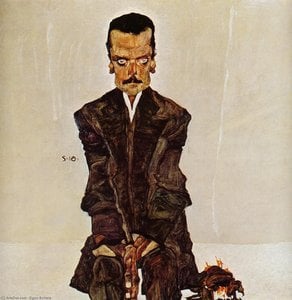
Levitation: A Descent Into Surreal Emotion
Egon Schiele’s ‘Levitation,’ painted in 1915 during the height of Expressionism, isn't merely a depiction of two figures; it’s an invitation to confront profound questions about existence and spirituality. This oil on canvas masterpiece transcends simple observation, plunging viewers into a realm where reality bends to psychological intensity.
- Composition & Movement: Schiele masterfully captures movement through vibrant color palettes and loose brushstrokes. The central figures—one man supporting the other—seem suspended in space, creating an unsettling dynamism that reflects the artist’s preoccupation with anxiety and vulnerability.
- Symbolism & Interpretation: The act of levitation itself symbolizes ascension – a yearning for transcendence beyond earthly limitations. Simultaneously, the prominent clock serves as a stark reminder of time's relentless march, emphasizing mortality and the fleeting nature of human experience.
The painting’s background is populated with stylized plants and flowers—likely representing fertility and rebirth—contrasting sharply with the figures’ pallid skin tones and vacant stares. These elements contribute to a broader narrative exploring themes of isolation, fear, and the confrontation with death – core concerns within Schiele's artistic vision.
The Expressionist Spirit
Egon Schiele was undeniably a pivotal figure in Expressionism, a movement characterized by its rejection of academic conventions and its embrace of raw emotion. Unlike Impressionists who sought to capture fleeting moments of beauty, Schiele aimed to convey inner turmoil—a preoccupation with psychological states that would permeate his entire oeuvre.
‘Levitation’ exemplifies this stylistic approach through its distorted forms, exaggerated facial expressions, and emotionally charged color choices. It stands apart from other paintings of the time by prioritizing subjective experience over objective representation.
Technique & Material Considerations
Schiele employed a technique rooted in thick impasto—applying paint thickly onto the canvas—creating textural surfaces that amplify the painting’s emotional impact. The artist utilized opaque colors, layering them to achieve depth and luminosity while simultaneously conveying a sense of unease.
The meticulous attention to detail—particularly in capturing the subtle nuances of facial expressions—underscores Schiele's commitment to portraying psychological realism. Reproductions strive to faithfully reproduce these qualities, ensuring that collectors experience the same visceral response as those who witnessed the original artwork.
Preservation & Display
‘Levitation’ currently resides in The Leopold Museum in Vienna, Austria—a testament to Schiele's enduring legacy and a beacon for showcasing Austrian modern art. Its careful conservation ensures that future generations can appreciate its artistic merit and contemplate its profound symbolic significance.
When displayed in interior spaces, reproductions of ‘Levitation’ offer an opportunity to infuse environments with a sense of contemplative melancholy—a reflection of Schiele's exploration of human vulnerability and the confrontation with existential anxieties.
Preguntas y respuestas
¿Qué tan fuerte es el contraste en "Levitación" de Egon Schiele?
El nivel de contraste de "Levitación" de Egon Schiele es Suave.
¿Qué estado de ánimo expresa "Levitación" de Egon Schiele dentro de Expressionist Movement?
La emoción Dramático de "Levitación" acompaña a su estilo Expressionist Movement.
¿Qué armonía cromática presenta "Levitación" de Egon Schiele?
Los colores de "Levitación" de Egon Schiele muestran una armonía Paleta unificada. La armonía describe cómo se relacionan los colores entre sí.



 Vista previa
 Cambiar a formato impreso
 Compartir
 Compartir
 Ver detalles
 Guía
Guía

 Descargar
 Ver artículos similares
 Radiografía
 Presentación de diapositivas
 Estadísticas

 Leer más






































 La opción de vidrio solo está disponible en tamaños inferiores a 110 cm.