


x

 Encargar reproducción Comprar imagen en alta resolución
 Enviar
 Details
 Añadir a favoritos
 Descargar
 Similares
 X-Ray
X-Ray
 Presentación de diapositivas
Impresión giclée o en lienzo de calidad de museo con producción rápida y opciones de acabado flexibles.





























Elija entre nuestros tamaños predefinidos que respetan las proporciones originales de la obra.

Puede introducir sus propias dimensiones para adaptarse a un marco o espacio específico. Si el tamaño seleccionado no coincide con las proporciones de la imagen original, recortaremos la obra de arte o extenderemos la imagen con un borde con efecto espejo o de color sólido. Se enviará una maqueta digital para su aprobación antes de que comience la producción.
Tenga en cuenta que la vista previa en pantalla no refleja el recorte o la extensión real. Solo la maqueta mostrará con precisión la composición final.
Aunque existen tamaños personalizados, recomendamos seleccionar una dimensión de la lista predefinida para preservar las proporciones originales.
Entrega mundial () en 2 semanas en lugar de las 4/5 semanas estándar. (2 julio)


Danae
Tamaño de la reproducción
Egon Schiele's "Danae," painted in 1909, is not merely a depiction of a reclining woman; it’s a profoundly unsettling exploration of vulnerability, desire, and the encroaching shadow of mortality – hallmarks of the artist’s intensely personal and emotionally charged style. The painting immediately draws the viewer into a scene of quiet intimacy, yet beneath this surface lies a palpable sense of unease, reflecting Schiele's own struggles with illness, loss, and his deeply ambivalent relationship with the female form.
At first glance, the composition appears deceptively simple. A young woman, identified as Danae from Greek mythology – a figure seduced and ultimately slain by Zeus in the guise of a shower of gold – lies languidly on her side, her head nestled within the lap of an unseen male figure. The setting is ambiguous, suggesting a sheltered outdoor space, perhaps a forest clearing, lending an air of both seclusion and vulnerability to the scene. However, Schiele’s masterful use of line and color immediately elevates the work beyond a straightforward portrait. His lines are not smooth or comforting; they are jagged, restless, and imbued with a nervous energy that mirrors the subject's internal state.
Schiele’s technique is characterized by his distinctive, almost frantic use of line. He employs short, broken strokes to build up form, creating an effect of immediacy and raw emotion. The color palette is muted – predominantly earthy browns, ochres, and a subtle blush of pink – contributing to the painting's somber mood. Yet, within this restrained palette, Schiele introduces flashes of vibrant red in the woman’s garment, drawing attention to her exposed skin and subtly hinting at the source of her vulnerability: the impending threat of unwanted desire.
The figure of Danae herself is rendered with a remarkable sensitivity. Her face is partially obscured, adding to the sense of mystery and suggesting a hidden sadness or resignation. Her body is slightly elongated, almost skeletal in its fragility, emphasizing her physical vulnerability. The way Schiele captures the subtle curves of her limbs and the delicate texture of her skin speaks volumes about his acute observational skills and his ability to convey profound emotion through simple gestures.
"Danae" is deeply rooted in Greek mythology, but Schiele transforms the traditional narrative into something far more personal. The myth of Danae represents betrayal, loss, and ultimately, a tragic fate. Schiele’s painting doesn't glorify the seduction; instead, it focuses on the aftermath – the quiet despair and the lingering sense of violation. It is widely believed that Schiele was inspired by his own difficult relationship with women, particularly his sister Gerti, and this personal turmoil undoubtedly informs the painting’s unsettling atmosphere.
Furthermore, the presence of birds scattered throughout the composition adds another layer of complexity. Birds are often associated with freedom and transcendence in art, but here they seem trapped or watchful, perhaps mirroring Danae's own sense of confinement and vulnerability. They could also be interpreted as symbols of impending doom, foreshadowing her tragic end.
“Danae” is a powerfully evocative work that reveals the depth of Egon Schiele’s artistic vision. It's a testament to his ability to capture not just physical likeness but also the complex emotions and psychological states of his subjects. The painting’s enduring power lies in its unflinching honesty, its willingness to confront uncomfortable truths about desire, vulnerability, and mortality. Reproductions of this haunting masterpiece offer a unique opportunity to experience Schiele's intensely personal style and gain insight into the mind of one of Expressionism’s most tormented and brilliant artists.


1890 - 1918 , Croacia
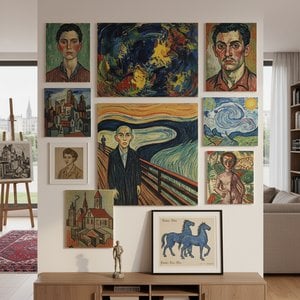
Descubre las 10 obras maestras del Expresionismo que marcaron un hito en la historia del arte. Explora a Munch, Kirchner y Kandinsky en . Reproducciones de arte de museo para transformar tu hogar.
Transforme sus recuerdos en atemporales obras de arte con retratos al óleo personalizados hechos a mano por artistas expertos. Calidad superior, legado emocional y un regalo único. ¡Descubra el valor del arte personalizado!

Explore the captivating world of introspective art! Discover how artists across eras – from Rembrandt to Kahlo – used self-portraiture to reveal their inner worlds and emotional depths. A journey through art history & psychology.
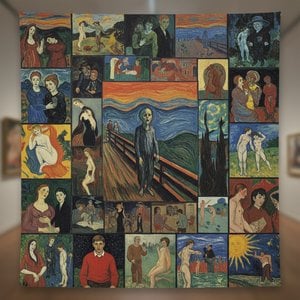
Descubre las 25 obras maestras de Edvard Munch, el genio del expresionismo. Explora 'El Grito' y otros lienzos icónicos que capturan la angustia y belleza humana. Reproducciones de arte exclusivas en WahooArt.com.

Explore the emotionally charged world of Egon Schiele (1890-1918). Discover his Expressionist masterpieces, psychological themes, and lasting impact on modern art. A comprehensive guide for collectors & enthusiasts.


Manténgase al día con las últimas noticias de arte, ofertas exclusivas e ideas de decoración.
Cuéntanos sobre tu proyecto y nuestros expertos en arte te ofrecerán 3 sugerencias de obras personalizadas.
Permítenos seleccionar 3 opciones solo para ti – ¡Gratis!

 Compartir


 Ver más







 La opción de vidrio solo está disponible en tamaños inferiores a 110 cm.


