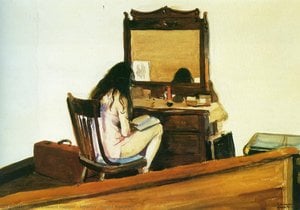
Óleo sobre lienzo pintado a mano en el tamaño y marco de su elección, realizado por encargo por nuestros artistas. ( Comprar impresión Comprar imagen)





























Elija entre nuestros tamaños predefinidos que respetan las proporciones originales de la obra.

Puede ingresar sus propias dimensiones para adaptarse a un marco o espacio específico. Si el tamaño seleccionado no coincide con las proporciones de la imagen original, recortaremos la obra o extenderemos la pintura con elementos adicionales pintados a mano. Se le enviará una maqueta digital para su aprobación antes de comenzar la producción.
Tenga en cuenta que la vista previa en pantalla no refleja el recorte o la extensión reales. Solo la maqueta mostrará con precisión la composición final.
Si bien existen tamaños personalizados, recomendamos seleccionar una dimensión de la lista predefinida para preservar las proporciones originales.
Envío a todo el mundo () en 3-4 semanas en lugar de las 5 semanas estándar. (6 septiembre). Sin comprometer la calidad.


Shakespeare at Dusk
Dimensiones de la reproducción
In the quiet transition between day and night, Edward Hopper’s “Shakespeare at Dusk” captures a moment that feels suspended in time. Painted in 1935, this monochrome masterpiece is far more than a mere depiction of an urban park; it is a profound distillation of the anxieties and aspirations inherent in the mid-century American consciousness. As the light fades, the canvas reveals a world caught in a palpable stillness, where every subtle gesture and elongated shadow speaks volumes about the human experience. For the discerning collector or interior designer, this piece offers a window into a period of deep introspection, making it an evocative centerpiece for any space dedicated to contemplation and quiet elegance.
The composition centers around a solitary statue of Shakespeare, positioned prominently in the foreground. This silent sentinel stands against the backdrop of a darkening urban park, where scattered benches invite the viewer to pause and reflect. In the distance, figures move like ghosts through the twilight, their presence contributing to an atmosphere of understated observation. Hopper’s signature style—characterized by geometric precision and a flattened perspective—is masterfully employed here to sculpt form through light. Through his expert use of chiaroscuro, he manipulates the stark contrast between illuminated surfaces and deep, impenetrable recesses, heightening the emotional resonance of the scene and emphasizing the profound isolation of the subject.
To understand “Shakespeare at Dusk,” one must look toward the historical landscape of the Great Depression. Created during a time of widespread economic and social upheaval, the painting reflects a broader cultural preoccupation with themes of alienation and disillusionment. Hopper rejects the sentimentalism common in much of the era's art, opting instead for a psychologically astute portrayal of modern life—a world increasingly defined by solitude and detachment. The statue itself serves as a potent symbol; its unwavering gaze directs attention inward, prompting viewers to confront their own questions of identity and purpose amidst a changing society.
The setting of dusk is deeply symbolic, representing a state of transition where the fading light mirrors the uncertainty of the era. This sense of "the moment between" creates a cinematic tension that is uniquely Hopperesque. For those looking to incorporate fine art into a curated interior, this reproduction offers more than just aesthetic beauty; it brings a narrative weight and a sophisticated mood. The monochrome palette lends a timeless quality to the work, ensuring it integrates seamlessly into modern, minimalist, or classic decor, providing a focal point that encourages a slower, more mindful engagement with one's surroundings.


1931 - 1967 , Estados Unidos de América

Master the nuances of Giclée printing with our expert guide. Discover how pigment-based inks and museum-grade substrates create fade-resistant, high-fidelity art reproductions designed for discerning collectors seeking unparalleled quality and longevity.

Transform your digital artistry into a prestigious global brand with WahooArt’s premium Giclée prints. Experience museum-quality archival excellence and seamless on-demand fulfillment designed for the modern creative entrepreneur seeking to build a lasting artistic legacy.

 Ver en contexto
 Enviar
 Compartir
 Detalles

 Descargar
 Similares
 Radiografía
 Presentación de diapositivas

 Ver más







 La opción de vidrio solo está disponible en tamaños inferiores a 110 cm.