Vista previa Vista previa en RA Encargar reproducción pintada a mano Ver versión en imagen digital Compartir
Ver detalles Guía Añadir a favoritos Descargar Ver artículos similares Radiografía Presentación de diapositivas Estadísticas

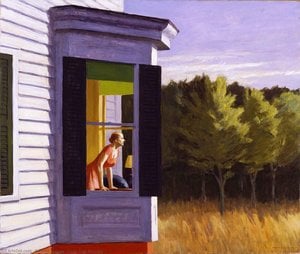
Lighthouse at Two Lights

Edward Hopper’s "Lighthouse at Two Lights" captures the poignant solitude of American Modernism with its masterful use of light and shadow, depicting a timeless coastal scene in 1929. Discover this iconic artwork and bring home a piece of art history.

Explore las icónicas pinturas realistas americanas de Edward Hopper (1882-1967). Conocido por sus evocadoras escenas urbanas y rurales, su maestrosa utilización de la luz y sus temas de soledad y vida moderna. Descubre 'House by the Railroad' y más en WahooArt.

La obra de arte que se muestra en esta página está protegida por las leyes de propiedad intelectual, lo que significa que no podemos crear ni vender legalmente una reproducción idéntica. Esta protección se hace cumplir en virtud de acuerdos internacionales como el Convenio de Berna y por las leyes nacionales, incluidas aquellas establecidas por el Ley de derechos de autor de los EE. UU. - Título 17.

Este método cumple plenamente con las normativas de derechos de autor, ya que no implica la copia ni la duplicación de la obra protegida. En su lugar, se trata de una reinterpretación creativa: una nueva pintura influenciada por la original, pero que no es idéntica a ella.

Giclée / Impresión de arte

Impresiones giclée o en lienzo de calidad de museo con producción rápida y opciones de acabado flexibles. ( Encargar reproducción pintada a mano Ver versión en imagen digital)

Corner sample of the P118B picture frame: moulded polystyrene, 5 cm wide and 3 cm thick
P118B €10
Corner sample of the P118H picture frame: moulded polystyrene, 5 cm wide and 3 cm thick
P118H €10
Corner sample of the P118W picture frame: moulded polystyrene, 5 cm wide and 3 cm thick
P118W €10
Corner sample of the P438Z picture frame: moulded polystyrene, 5.5 cm wide and 3.5 cm thick
P438Z €10
Corner sample of the P508JH picture frame: moulded polystyrene, 7 cm wide and 3.5 cm thick
P508JH €12
Corner sample of the P508YH picture frame: moulded polystyrene, 7 cm wide and 3.5 cm thick
P508YH €12
Corner sample of the P805H picture frame: moulded polystyrene, 5 cm wide and 3.5 cm thick
P805H €10
Corner sample of the P805Z picture frame: moulded polystyrene, 5 cm wide and 3.5 cm thick
P805Z €10
Corner sample of the P919BZ picture frame: moulded polystyrene, 7 cm wide and 3.5 cm thick
P919BZ €10
Corner sample of the P919G picture frame: moulded polystyrene, 7 cm wide and 3.5 cm thick
P919G €10
Corner sample of the P919XJ picture frame: moulded polystyrene, 7 cm wide and 3.5 cm thick
P919XJ €10
Corner sample of the P959ZH picture frame: moulded polystyrene, 5 cm wide and 3 cm thick
P959ZH €10
Corner sample of the P968JZ picture frame: moulded polystyrene, 6 cm wide and 4 cm thick
P968JZ €12
Corner sample of the W106C picture frame: solid wood, 5 cm wide and 3 cm thick
W106C €8
Corner sample of the W218G picture frame: solid wood, 5 cm wide and 3 cm thick
W218G €10
Corner sample of the W218JH picture frame: solid wood, 5 cm wide and 3 cm thick
W218JH €8
Corner sample of the W218Y picture frame: solid wood, 5 cm wide and 3 cm thick
W218Y €10
Corner sample of the W307PJ picture frame: solid wood, 6 cm wide and 3 cm thick
W307PJ €10
Corner sample of the W316G picture frame: solid wood, 6 cm wide and 3 cm thick
W316G €10
Corner sample of the W316PJ picture frame: solid wood, 6 cm wide and 3 cm thick
W316PJ €8
Corner sample of the W316Y picture frame: solid wood, 6 cm wide and 3 cm thick
W316Y €10
Corner sample of the W398PJ picture frame: solid wood, 5 cm wide and 3 cm thick
W398PJ €8
Corner sample of the W4111J picture frame: solid wood, 6.5 cm wide and 3.5 cm thick
W4111J €10
Corner sample of the W500HY picture frame: solid wood, 7 cm wide and 5 cm thick
W500HY €15
Corner sample of the W500JH picture frame: solid wood, 7 cm wide and 5 cm thick
W500JH €15
Corner sample of the W692G picture frame: solid wood, 8 cm wide and 4 cm thick
W692G €12
Corner sample of the W849H picture frame: solid wood, 5 cm wide and 3 cm thick
W849H €8
Corner sample of the W940BG picture frame: solid wood, 7.5 cm wide and 4.5 cm thick
W940BG €15
Corner sample of the W953PJ picture frame: solid wood, 6 cm wide and 3.5 cm thick
W953PJ €8

Estándar
personalizado
CM
INCH

Elija entre nuestros tamaños predefinidos que respetan las proporciones originales de la obra.

ancho
altura

Puede introducir sus propias dimensiones para adaptarse a un marco o espacio específico. Si el tamaño seleccionado no coincide con las proporciones de la imagen original, recortaremos la obra de arte o extenderemos la imagen con un borde con efecto espejo o de color sólido. Se enviará una maqueta digital para su aprobación antes de que comience la producción.
Tenga en cuenta que la vista previa en pantalla no refleja el recorte o la extensión real. Solo la maqueta mostrará con precisión la composición final.
Aunque existen tamaños personalizados, recomendamos seleccionar una dimensión de la lista predefinida para preservar las proporciones originales.

Envío a todo el mundo () en 2 semanas en lugar de las 4/5 semanas estándar. (10 octubre)

Envío exprés gratuito a todo el mundo
Lienzo de lino de alta calidad
Seguro de envío completo
Garantía de reembolso de impuestos aduaneros
Garantía de fidelidad cromática exacta
Política de devolución de 100 días (solo por defectos)
Garantía de devolución del 100% del dinero
Oferta por volumen

Precio total

€ 59

Lighthouse at Two Lights

Giclée / Impresión de arte

Tamaño de la reproducción

-

Precio total

€ 59

Datos clave

  • Artistic style: Solitude; Minimalist composition
  • Notable elements or techniques: Dramatic lighting; Detailed depiction of coastal landscape.
  • Medium: Oil on Canvas
  • Year: 1929
  • Title: Lighthouse at Two Lights
  • Location: Private Collection
  • Movement: American Realism

Cuestionario de arte

Cada pregunta tiene una única respuesta correcta.

Pregunta 1:
What is the primary subject matter of Edward Hopper’s ‘Lighthouse at Two Lights’?
Pregunta 2:
The image description highlights several smaller details within the painting. Which element contributes to the feeling of human connection?
Pregunta 3:
In what artistic movement is ‘Lighthouse at Two Lights’ primarily categorized?
Pregunta 4:
What technique did Hopper employ to convey the mood of isolation and stillness?
Pregunta 5:
Considering Hopper’s broader artistic vision, what overarching theme does ‘Lighthouse at Two Lights’ explore?

Edward Hopper’s Lighthouse at Two Lights: A Study in Quietude and Observation

Edward Hopper's "Lighthouse at Two Lights," completed in 1929, stands as a quintessential emblem of American Modernism—a painting that transcends mere depiction to embody a profound meditation on solitude, perception, and the subtle beauty found within seemingly unremarkable landscapes. More than just capturing a coastal vista, Hopper meticulously crafted an image designed to provoke contemplation, mirroring the pervasive mood of introspection characteristic of his era. This artwork resides in the Art Institute of Chicago’s collection and exemplifies Hopper's signature style: precise realism blended with expressive tonal qualities that convey emotion without resorting to overt sentimentality.

Composition and Technique – The Language of Light

Hopper’s masterful technique is immediately apparent upon viewing “Lighthouse at Two Lights.” Executed in oil on canvas, the painting utilizes a restrained palette dominated by muted blues and browns—colors that evoke the cool hues of twilight and the weathered textures of stone. Hopper's meticulous brushwork contributes to an atmosphere of stillness; short, deliberate strokes build up layers of pigment to create subtle gradations of tone, particularly noticeable in the lighthouse’s illumination and the shadowed recesses of the hillside. The artist skillfully employs chiaroscuro—the dramatic interplay between light and dark—to sculpt form and heighten visual impact, guiding the viewer's eye across the canvas with an understated grace. This technique isn’t merely about accurate representation; it’s about conveying a feeling – a sense of quiet contemplation and melancholy that resonates deeply within the viewer.

Historical Context: The Jazz Age and Existential Uncertainty

“Lighthouse at Two Lights” emerged during the Jazz Age, a period marked by rapid urbanization, social upheaval, and a burgeoning fascination with modernity. Hopper’s artistic sensibilities aligned perfectly with the anxieties of this time—a preoccupation with isolation and alienation that found expression in his oeuvre. The painting reflects the broader cultural currents of its day, capturing the disillusionment felt by many Americans grappling with the complexities of industrial society and questioning traditional values. Furthermore, it speaks to a burgeoning interest in psychology and introspection, mirroring the philosophical explorations of thinkers like Sartre and Camus who wrestled with existential concerns about freedom and responsibility.

Symbolism: Guiding Light Amidst Darkness

Beyond its formal qualities, “Lighthouse at Two Lights” is laden with symbolic significance. The lighthouse itself represents guidance—a beacon of hope amidst uncertainty—but also embodies a certain vulnerability; it stands alone against the vast expanse of the sea, highlighting the human condition’s inherent loneliness. The house nestled in the hillside provides a counterpoint to this solitude, suggesting domestic comfort and stability yet simultaneously emphasizing its detachment from the natural world. Even the solitary bird circling overhead contributes to the painting's overarching theme—a symbol of freedom and observation, mirroring Hopper’s own artistic gaze.

Emotional Impact: A Moment Frozen in Time

Ultimately, “Lighthouse at Two Lights” succeeds in capturing a profound emotional resonance. It doesn’t offer grand narratives or dramatic gestures; instead, it invites the viewer to linger on its surface, absorbing its quiet beauty and contemplating its underlying melancholy. Hopper's ability to convey emotion through visual means—to distill complex psychological states into carefully constructed images—solidifies his place as one of America’s most enduring artists. The painting remains a powerful reminder that even in moments of apparent stillness, there exists an unspoken richness of experience – a testament to Hopper’s profound understanding of the human spirit and his unwavering commitment to portraying it with unflinching honesty.

Preguntas y respuestas

¿Quién creó "Lighthouse at Two Lights"?

El artista detrás de "Lighthouse at Two Lights" es Edward Hopper. La obra está catalogada bajo el nombre de Edward Hopper.

¿Cómo se sitúa históricamente "Lighthouse at Two Lights"?

"Lighthouse at Two Lights" de Edward Hopper pertenece al movimiento Contemporary Realism, dentro del periodo Modern. Juntos le otorgan a la obra su lugar en la historia del arte.

¿En qué movimiento y en qué época se sitúa "Lighthouse at Two Lights" de Edward Hopper?

"Lighthouse at Two Lights" de Edward Hopper se sitúa en el movimiento Contemporary Realism, dentro de la era Edad Moderna de su creador.

¿En qué año se creó "Lighthouse at Two Lights"?

"Lighthouse at Two Lights" de Edward Hopper fue creada en 1929.

¿Cómo se describe la atmósfera de "Lighthouse at Two Lights" de Edward Hopper?

El ambiente general de "Lighthouse at Two Lights" de Edward Hopper es Serene. Esta atmósfera describe la esencia general de la obra.

¿Dónde puedo comprar una reproducción pintada a mano de "Lighthouse at Two Lights" de Edward Hopper?

Las copias pintadas a mano de "Lighthouse at Two Lights" de Edward Hopper se venden en este sitio web: una reproducción al óleo pintada a mano sobre lienzo de lino, las cuales pueden solicitarse desde esta página.

¿Qué tamaño debería elegir para imprimir "Lighthouse at Two Lights" en mi habitación?

En un Living Room, se sugiere imprimir "Lighthouse at Two Lights" en un tamaño de Large.


Biografía del artista

**vida temprana e influencias**

edward hopper, un destacado pintor y grabador realista estadounidense, nació el 22 de julio de 1882 en Upper Nyack, Nueva York. Su familia, de ascendencia mayoritariamente holandesa, proporcionó una crianza cómoda que le permitió perseguir sus inclinaciones artísticas desde temprana edad. - **inspiraciones:** La obra de Hopper fue influenciada por las escrituras de Ralph Waldo Emerson y los maestros impresionistas franceses Édouard Manet y Edgar Degas. - **formación inicial:** Comenzó estudios de arte con un curso por correspondencia en 1899, posteriormente transfiriéndose a la Escuela de Arte y Diseño de Nueva York.

**estilo artístico y temas**

edward hopper's representaciones cuidadosas y con un diseño preciso reflejaban su visión personal de la vida moderna estadounidense. Su obra se puede caracterizar por: - **escenas urbanas y rurales:** Ambos entornos fueron retratados con una mezcla única de realismo y profundidad emocional. - **iluminación:** Un dominio de la luz, a menudo utilizada para evocar sentimientos de aislamiento o contemplación. - **figuras:** A menudo sin rostro o en segundo plano, enfatizando al entorno sobre las figuras.

**obras notables y su significado**

- House by the Railroad (Museo de Arte Moderno, Nueva York, Estados Unidos), un ejemplo de la capacidad de Hopper para evocar una sensación de melancolía a través de una composición simple pero poderosa. - Reclining Nude (50 x 35 cm, Nuevo Realismo, acuarela), que muestra su versatilidad para capturar la forma humana.

**legado e influencia**

- **influencia en artistas futuros:** El estilo único de Hopper ha influido a numerosos artistas, incluyendo Pierre Sanford Ross, conocido por sus escenas urbanas y rurales. - **popularidad perdurable:** Sus obras continúan cautivando al público con sus temas atemporales de soledad y la condición humana.

**explora más en WahooArt**

- [https://WahooArt.com/@/edward-hopper](obras de Edward Hopper) - /es/art/show/art-8xyffg-es/compra arte inspirado por los maestros)
  • Profundiza en el mundo del arte con la extensa colección de WahooArt.
  • Descubre cómo el legado de Edward Hopper continúa inspirando a artistas y amantes del arte.

**referencias**

- [https://WahooArt.com/@/edward-hopper](Wikipedia: Edward Hopper) - [https://en.wikipedia.org/wiki/edward_hopper](Wikipedia: Biografía de Edward Hopper)
Edward Hopper

Edward Hopper

1931 - 1967 , Estados Unidos de América

Datos clave

  • Artistas Influenciados: ['Pierre Sanford Ross']
  • Artistas Que Influyeron:
    • Ralph Waldo Emerson
    • Édouard Manet
    • Edgar Degas
  • Fecha De Muerte: 1967
  • Fecha De Nacimiento: 22 de julio de 1882
  • Lugar De Nacimiento: Upper Nyack, EE. UU.
  • Movimiento Artístico: Realismo americano
  • Nacionalidad: Estadounidense
  • Nombre Completo: Edward Hopper
  • Obras Notables:
    • House by the Railroad
    • Reclining Nude
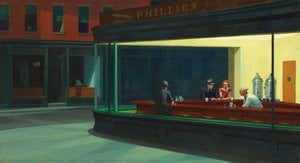
    • Nighthawks
    • Gas
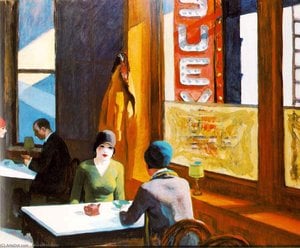
    • Chop Suey
Explore obras de arte organizadas por temas, estilos y características.