Asesoría de arte gratuita

x
Encargar reproducción Encargar reproducciónComprar imagen en alta resolución Comprar imagen en alta resolución EnviarEnviar
DetallesDetalles Añadir a favoritos Añadir a favoritos DescargarDescargar SimilaresSimilares RadiografíaRadiografía Presentación de diapositivasPresentación de diapositivas

el palacio

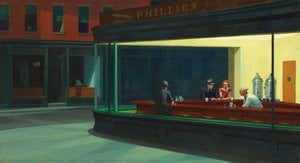
Edward Hopper's "El Palacio" captures urban solitude with striking realism—a black-and-white depiction of a city street, evoking quiet contemplation and the essence of American modern life.

Explore las icónicas pinturas realistas americanas de Edward Hopper (1882-1967). Conocido por sus evocadoras escenas urbanas y rurales, su maestrosa utilización de la luz y sus temas de soledad y vida moderna. Descubre 'House by the Railroad' y más en WahooArt.

Giclée / Impresión de arte

Impresión giclée o en lienzo de calidad de museo con producción rápida y opciones de acabado flexibles.

P118B $10
P118H $10
P118W $10
P438Z $10
P508JH $12
P508YH $12
P805H $10
P805Z $10
P919BZ $10
P919G $10
P919XJ $10
P959ZH $10
P968JZ $12
W106C $8
W218G $10
W218JH $8
W218Y $10
W307PJ $10
W316G $10
W316PJ $8
W316Y $10
W398PJ $8
W4111J $10
W500HY $15
W500JH $15
W692G $12
W849H $8
W940BG $15
W953PJ $8

Standard
custom
CM
INCH

Elija entre nuestros tamaños predefinidos que respetan las proporciones originales de la obra.

ancho
altura

Puede introducir sus propias dimensiones para adaptarse a un marco o espacio específico. Si el tamaño seleccionado no coincide con las proporciones de la imagen original, recortaremos la obra de arte o extenderemos la imagen con un borde con efecto espejo o de color sólido. Se enviará una maqueta digital para su aprobación antes de que comience la producción.
Tenga en cuenta que la vista previa en pantalla no refleja el recorte o la extensión real. Solo la maqueta mostrará con precisión la composición final.
Aunque existen tamaños personalizados, recomendamos seleccionar una dimensión de la lista predefinida para preservar las proporciones originales.

Entrega mundial () en 2 semanas en lugar de las 4/5 semanas estándar. (4 julio)

why_choose_icon
Envío exprés gratuito a todo el mundo
why_choose_icon
Lienzo de lino de alta calidad
why_choose_icon
Seguro de envío total
why_choose_icon
Garantía de reembolso de impuestos aduaneros
why_choose_icon
Garantía de fidelidad de color
why_choose_icon
Política de devolución de 60 días (solo por defectos)
why_choose_icon
Garantía de devolución del 100% del dinero
why_choose_icon
Descuento por pedido múltiple

Precio total

-

reproduction

el palacio

Giclée / Impresión de arte

Tamaño de la reproducción

-

Precio total final

-

Datos clave

  • Medium: Oil on canvas
  • Title: El Palacio
  • Location: Art Institute, Chicago
  • Subject: City street scene
  • Influences: Hemingway
  • Style: Urban realism
  • Notable elements: Signs, urban street

Test de arte

Solo hay una respuesta correcta para cada pregunta.

Pregunta 1:
What is the primary subject depicted in Edward Hopper’s ‘El Palacio’?
Pregunta 2:
The painting ‘El Palacio’ was created in which year?
Pregunta 3:
What is prominently displayed on one of the signs visible in ‘El Palacio’?
Pregunta 4:
Edward Hopper is most known for his paintings that capture which theme?
Pregunta 5:
Based on the image description, what is the overall atmosphere conveyed by ‘El Palacio’?

Descripción de la obra

A Silent Cityscape: Unveiling Edward Hopper's "El Palacio"

Edward Hopper’s 1946 painting, “El Palacio,” isn’t merely a depiction of a city street; it’s a carefully constructed tableau of urban solitude and the quiet anxieties of modern life. Rendered in stark black and white, the image immediately draws the viewer into a scene brimming with understated tension. The composition is dominated by towering buildings on either side, their windows like watchful eyes observing the few figures that populate the street below. The painting’s power lies not in dramatic action or vibrant color—rather, it resides in the subtle details and the palpable sense of detachment that permeates every element.

Hopper masterfully employs light and shadow to create a mood of melancholic introspection. The strong directional lighting emphasizes the textures of the buildings and casts deep shadows, contributing to the painting’s overall feeling of confinement. The open windows invite glimpses into private lives, yet they simultaneously reinforce the sense that these individuals are isolated within their own worlds. The signs visible in the scene—including the prominent “El Palacio”—add a layer of mystery, hinting at a grand establishment and perhaps suggesting a world beyond the immediate view.

The Painter’s Palette: Technique and Style

“El Palacio” exemplifies Hopper's signature style – a blend of realism and psychological insight. He was known for his ability to capture fleeting moments of human experience, often focusing on scenes of loneliness or alienation. Hopper’s technique is characterized by precise observation and meticulous detail. The buildings are rendered with remarkable accuracy, capturing their architectural forms and the subtle variations in surface texture. His use of line is particularly noteworthy; he employs clean, confident lines to define shapes and create a sense of solidity, while simultaneously suggesting movement through the arrangement of elements within the composition.

The painting’s monochromatic palette—a deliberate choice by Hopper—heightens its emotional impact. The absence of color forces the viewer to focus on form, light, and shadow, intensifying the feeling of isolation and emphasizing the starkness of the urban environment. Hopper's approach was rooted in a desire to represent reality as he perceived it, unburdened by sentimentality or romanticism. He sought to capture the essence of American life—its beauty, its challenges, and its inherent loneliness—with unflinching honesty.

Historical Context: The Post-War Landscape

“El Palacio” was created in 1946, a period marked by significant social and cultural shifts following World War II. America was grappling with the aftermath of conflict, experiencing rapid urbanization, and confronting new anxieties about identity and purpose. Hopper’s work resonated deeply with this mood, reflecting the growing sense of alienation and disillusionment that characterized the post-war era. The painting can be seen as a commentary on the changing nature of American society—a world increasingly defined by anonymity, isolation, and the breakdown of traditional social structures.

Interestingly, Hopper himself described the scene as “suggested by a restaurant on Greenwich Avenue where two streets meet.” This anecdote reveals his meticulous approach to composition and his desire to capture not just a literal representation but also an emotional truth. The painting’s enduring appeal lies in its ability to evoke a sense of familiarity—a recognition of the quiet, often overlooked moments that shape our lives.

Symbolism and Emotional Resonance

Beyond its realistic depiction of a city street, “El Palacio” is rich in symbolic meaning. The towering buildings represent the impersonal forces of urban life, while the open windows symbolize both opportunity and isolation. The figures within the scene—their faces obscured by shadow—suggest a sense of anonymity and detachment. Hopper’s masterful use of light and shadow creates a powerful emotional atmosphere, evoking feelings of loneliness, longing, and perhaps even a touch of melancholy.

Ultimately, “El Palacio” is a poignant meditation on the human condition – a reminder that even in the midst of bustling urban environments, we can still experience profound solitude. It’s a painting that invites contemplation and encourages us to consider our own place within the larger narrative of American life.


Biografía del artista

**vida temprana e influencias**

edward hopper, un destacado pintor y grabador realista estadounidense, nació el 22 de julio de 1882 en Upper Nyack, Nueva York. Su familia, de ascendencia mayoritariamente holandesa, proporcionó una crianza cómoda que le permitió perseguir sus inclinaciones artísticas desde temprana edad. - **inspiraciones:** La obra de Hopper fue influenciada por las escrituras de Ralph Waldo Emerson y los maestros impresionistas franceses Édouard Manet y Edgar Degas. - **formación inicial:** Comenzó estudios de arte con un curso por correspondencia en 1899, posteriormente transfiriéndose a la Escuela de Arte y Diseño de Nueva York.

**estilo artístico y temas**

edward hopper's representaciones cuidadosas y con un diseño preciso reflejaban su visión personal de la vida moderna estadounidense. Su obra se puede caracterizar por: - **escenas urbanas y rurales:** Ambos entornos fueron retratados con una mezcla única de realismo y profundidad emocional. - **iluminación:** Un dominio de la luz, a menudo utilizada para evocar sentimientos de aislamiento o contemplación. - **figuras:** A menudo sin rostro o en segundo plano, enfatizando al entorno sobre las figuras.

**obras notables y su significado**

- House by the Railroad (Museo de Arte Moderno, Nueva York, Estados Unidos), un ejemplo de la capacidad de Hopper para evocar una sensación de melancolía a través de una composición simple pero poderosa. - Reclining Nude (50 x 35 cm, Nuevo Realismo, acuarela), que muestra su versatilidad para capturar la forma humana.

**legado e influencia**

- **influencia en artistas futuros:** El estilo único de Hopper ha influido a numerosos artistas, incluyendo Pierre Sanford Ross, conocido por sus escenas urbanas y rurales. - **popularidad perdurable:** Sus obras continúan cautivando al público con sus temas atemporales de soledad y la condición humana.

**explora más en WahooArt**

- [https://WahooArt.com/@/edward-hopper](obras de Edward Hopper) - [https://WahooArt.com/art.nsf/buy?open&ra=8xyffg](compra arte inspirado por los maestros)
  • Profundiza en el mundo del arte con la extensa colección de WahooArt.

  • Descubre cómo el legado de Edward Hopper continúa inspirando a artistas y amantes del arte.

**referencias**

- [https://WahooArt.com/@/edward-hopper](Wikipedia: Edward Hopper) - [https://en.wikipedia.org/wiki/edward_hopper](Wikipedia: Biografía de Edward Hopper)
Edward Hopper

Edward Hopper

1931 - 1967 , Estados Unidos de América

Datos clave

  • Artistas Influenciados: ['Pierre Sanford Ross']
  • Artistas Que Influyeron:
    • Ralph Waldo Emerson
    • Édouard Manet
    • Edgar Degas
  • Fecha De Muerte: 1967
  • Fecha De Nacimiento: 22 de julio de 1882
  • Lugar De Nacimiento: Upper Nyack, EE. UU.
  • Movimiento Artístico: Realismo americano
  • Nacionalidad: Estadounidense
  • Nombre Completo: Edward Hopper
  • Obras Notables:
    • House by the Railroad
    • Reclining Nude
    • Nighthawks
    • Gas
    • Chop Suey
Explore obras de arte organizadas por temas, estilos y características.