x
Ver en contextoVer en contexto Vista previa en RAVista previa en RA Comprar impresión Comprar impresiónComprar imagen Comprar imagen EnviarEnviar
DetallesDetalles Añadir a favoritos Añadir a favoritos DescargarDescargar SimilaresSimilares RadiografíaRadiografía Presentación de diapositivasPresentación de diapositivas

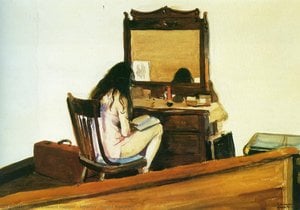
Circle Theatre

Edward Hopper’s evocative ‘Circle Theatre’ captures the lonely beauty of urban solitude—a quintessential American scene rendered in masterful realism during the mid-century period. Observe the quiet theater and vintage automobile, inviting you to explore this timeless masterpiece.

Explore las icónicas pinturas realistas americanas de Edward Hopper (1882-1967). Conocido por sus evocadoras escenas urbanas y rurales, su maestrosa utilización de la luz y sus temas de soledad y vida moderna. Descubre 'House by the Railroad' y más en WahooArt.

Reproducción al óleo hecha a mano

Óleo sobre lienzo pintado a mano en el tamaño y marco de su elección, realizado por encargo por nuestros artistas. (Comprar impresión Comprar impresiónComprar imagen Comprar imagen)

P118B £10
P118H £10
P118W £10
P438Z £10
P508JH £12
P508YH £12
P805H £10
P805Z £10
P919BZ £10
P919G £10
P919XJ £10
P959ZH £10
P968JZ £12
W106C £8
W218G £10
W218JH £8
W218Y £10
W307PJ £10
W316G £10
W316PJ £8
W316Y £10
W398PJ £8
W4111J £10
W500HY £15
W500JH £15
W692G £12
W849H £8
W940BG £15
W953PJ £8

Estándar
a medida
CM
INCH

Elija entre nuestros tamaños predefinidos que respetan las proporciones originales de la obra.

ancho
altura

Puede ingresar sus propias dimensiones para adaptarse a un marco o espacio específico. Si el tamaño seleccionado no coincide con las proporciones de la imagen original, recortaremos la obra o extenderemos la pintura con elementos adicionales pintados a mano. Se le enviará una maqueta digital para su aprobación antes de comenzar la producción.
Tenga en cuenta que la vista previa en pantalla no refleja el recorte o la extensión reales. Solo la maqueta mostrará con precisión la composición final.
Si bien existen tamaños personalizados, recomendamos seleccionar una dimensión de la lista predefinida para preservar las proporciones originales.

Ejemplos de lo que se puede personalizar: Reemplace el rostro con una foto del cliente; Agregue una mascota (por ejemplo, cambie un gato por un perro); Incluya un mensaje oculto en el fondo; Cambie el paisaje o los elementos del fondo.
Tras realizar el pedido, el equipo de WahooArt.com enviará un correo electrónico al cliente para solicitar instrucciones y proporcionarle una vista previa del boceto.

Envío a todo el mundo () en 3-4 semanas en lugar de las 5 semanas estándar. (2 septiembre). Sin comprometer la calidad.

why_choose_icon
Envío exprés gratuito a todo el mundo
why_choose_icon
Lienzo de lino de alta calidad
why_choose_icon
Seguro de envío total
why_choose_icon
Garantía de reembolso de impuestos aduaneros
why_choose_icon
Garantía de fidelidad cromática exacta
why_choose_icon
Política de devolución de 60 días (solo por defectos)
why_choose_icon
Garantía de devolución del 100% del dinero
why_choose_icon
Descuento por cantidad

Precio total

£ 202

reproduction

Circle Theatre

Técnica de reproducción

Dimensiones de la reproducción

-

Precio total final

£ 202

Datos clave

  • Influences: Northern Renaissance
  • Artistic style: Urban landscape
  • Movement: American Realism
  • Subject or theme: Solitude; Modern life
  • Notable elements or techniques: Dramatic lighting; Precise detail
  • Year: 1930
  • Location: Private Collection

A Symphony of Solitude: The Urban Soul of Circle Theatre

In the quiet, heavy atmosphere of Edward Hopper’s "Circle Theatre," we are invited to witness more than just a street corner in a bustling metropolis; we are invited to feel the profound weight of modern existence. Painted during a transformative era of American history, this masterpiece serves as a poignant meditation on the paradox of urban life—the way one can be surrounded by the movement of a city yet remain utterly alone. As the late afternoon light filters through the scene, it casts a diffused, almost cinematic glow over the weathered brickwork and the passing vintage automobile, creating a moment frozen in time that feels both intensely real and hauntingly dreamlike.

Hopper’s mastery of American Realism is on full display through his meticulous attention to detail and his unparalleled ability to manipulate light and shadow. Unlike the fleeting, bright impressions of the Impressionists, Hopper’s technique involves a deliberate, layered approach to oil on canvas. He renders the chrome gleam of a passing car and the stark geometry of the theater sign with such precision that the textures feel palpable to the viewer. His palette, dominated by muted yellows, deep reds, and earthy browns, does not merely decorate the scene; it builds an emotional landscape of melancholy and stillness. The way light interacts with the architectural surfaces creates a sense of depth that draws the eye into the shadows, where the true narrative of the painting resides.

The Architecture of Isolation and Modernity

To understand "Circle Theatre," one must look through the lens of the 1930s—a period defined by the Great Depression and a rapid, often disorienting shift toward urbanization. The theater itself stands as a powerful symbol of human aspiration and the desire for communal entertainment, yet in Hopper’s vision, it remains strangely vacant, a silent sentinel amidst the traffic. This disconnect between the grandeur of the urban infrastructure and the palpable emptiness within it reflects the growing anxieties of an era grappling with the impersonal nature of modern life. The presence of pedestrians and vehicles provides a rhythmic movement to the composition, yet they seem like ghosts passing through a stage, emphasizing the theme of transient connection.

For the discerning collector or interior designer, this artwork offers a sophisticated emotional anchor for any space. It is a piece that commands attention not through loud colors, but through its quiet, commanding presence. A high-quality reproduction of "Circle Theatre" brings a sense of intellectual depth and timeless elegance to a room, making it an ideal centerpiece for those who appreciate art that provokes thought and invites contemplation. Whether placed in a contemporary gallery setting or a classic study, the painting’s ability to evoke both the grandeur of the American cityscape and the intimate ache of solitude ensures its enduring relevance in the modern home.


Biografía del artista

**vida temprana e influencias**

edward hopper, un destacado pintor y grabador realista estadounidense, nació el 22 de julio de 1882 en Upper Nyack, Nueva York. Su familia, de ascendencia mayoritariamente holandesa, proporcionó una crianza cómoda que le permitió perseguir sus inclinaciones artísticas desde temprana edad. - **inspiraciones:** La obra de Hopper fue influenciada por las escrituras de Ralph Waldo Emerson y los maestros impresionistas franceses Édouard Manet y Edgar Degas. - **formación inicial:** Comenzó estudios de arte con un curso por correspondencia en 1899, posteriormente transfiriéndose a la Escuela de Arte y Diseño de Nueva York.

**estilo artístico y temas**

edward hopper's representaciones cuidadosas y con un diseño preciso reflejaban su visión personal de la vida moderna estadounidense. Su obra se puede caracterizar por: - **escenas urbanas y rurales:** Ambos entornos fueron retratados con una mezcla única de realismo y profundidad emocional. - **iluminación:** Un dominio de la luz, a menudo utilizada para evocar sentimientos de aislamiento o contemplación. - **figuras:** A menudo sin rostro o en segundo plano, enfatizando al entorno sobre las figuras.

**obras notables y su significado**

- House by the Railroad (Museo de Arte Moderno, Nueva York, Estados Unidos), un ejemplo de la capacidad de Hopper para evocar una sensación de melancolía a través de una composición simple pero poderosa. - Reclining Nude (50 x 35 cm, Nuevo Realismo, acuarela), que muestra su versatilidad para capturar la forma humana.

**legado e influencia**

- **influencia en artistas futuros:** El estilo único de Hopper ha influido a numerosos artistas, incluyendo Pierre Sanford Ross, conocido por sus escenas urbanas y rurales. - **popularidad perdurable:** Sus obras continúan cautivando al público con sus temas atemporales de soledad y la condición humana.

**explora más en WahooArt**

- [https://WahooArt.com/@/edward-hopper](obras de Edward Hopper) - /es/art/show/art-8xyffg-es/compra arte inspirado por los maestros)
  • Profundiza en el mundo del arte con la extensa colección de WahooArt.
  • Descubre cómo el legado de Edward Hopper continúa inspirando a artistas y amantes del arte.

**referencias**

- [https://WahooArt.com/@/edward-hopper](Wikipedia: Edward Hopper) - [https://en.wikipedia.org/wiki/edward_hopper](Wikipedia: Biografía de Edward Hopper)
Edward Hopper

Edward Hopper

1931 - 1967 , Estados Unidos de América

Datos clave

  • Artistas Influenciados: ['Pierre Sanford Ross']
  • Artistas Que Influyeron:
    • Ralph Waldo Emerson
    • Édouard Manet
    • Edgar Degas
  • Fecha De Muerte: 1967
  • Fecha De Nacimiento: 22 de julio de 1882
  • Lugar De Nacimiento: Upper Nyack, EE. UU.
  • Movimiento Artístico: Realismo americano
  • Nacionalidad: Estadounidense
  • Nombre Completo: Edward Hopper
  • Obras Notables:
    • House by the Railroad
    • Reclining Nude
    • Nighthawks
    • Gas
    • Chop Suey
Explore obras de arte organizadas por temas, estilos y características.