Vista previa Vista previa en RA Cambiar a formato impreso Ver versión en imagen digital Compartir
Ver detalles Guía Añadir a favoritos Descargar Ver artículos similares Radiografía Presentación de diapositivas Estadísticas

American Village

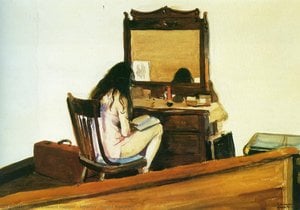
Edward Hopper's "American Village" (1912) captures a poignant moment of urban isolation and everyday life in early 20th-century America. Explore the quiet beauty & subtle melancholy through this iconic painting.

Explore las icónicas pinturas realistas americanas de Edward Hopper (1882-1967). Conocido por sus evocadoras escenas urbanas y rurales, su maestrosa utilización de la luz y sus temas de soledad y vida moderna. Descubre 'House by the Railroad' y más en WahooArt.

Reproducción al óleo hecha a mano

Óleo sobre lienzo pintado a mano en el tamaño y marco de su elección, realizado por encargo por nuestros artistas. ( Cambiar a formato impreso Ver versión en imagen digital)

P118B $10
P118H $10
P118W $10
P438Z $10
P508JH $12
P508YH $12
P805H $10
P805Z $10
P919BZ $10
P919G $10
P919XJ $10
P959ZH $10
P968JZ $12
W106C $8
W218G $10
W218JH $8
W218Y $10
W307PJ $10
W316G $10
W316PJ $8
W316Y $10
W398PJ $8
W4111J $10
W500HY $15
W500JH $15
W692G $12
W849H $8
W940BG $15
W953PJ $8

Estándar
personalizado
CM
INCH

Elija entre nuestros tamaños predefinidos que respetan las proporciones originales de la obra.

ancho
altura

Puede ingresar sus propias dimensiones para adaptarse a un marco o espacio específico. Si el tamaño seleccionado no coincide con las proporciones de la imagen original, recortaremos la obra o extenderemos la pintura con elementos adicionales pintados a mano. Se le enviará una maqueta digital para su aprobación antes de comenzar la producción.
Tenga en cuenta que la vista previa en pantalla no refleja el recorte o la extensión reales. Solo la maqueta mostrará con precisión la composición final.
Si bien existen tamaños personalizados, recomendamos seleccionar una dimensión de la lista predefinida para preservar las proporciones originales.

Ejemplos de lo que se puede personalizar: Reemplace el rostro con una foto del cliente; Agregue una mascota (por ejemplo, cambie un gato por un perro); Incluya un mensaje oculto en el fondo; Cambie el paisaje o los elementos del fondo.
Tras realizar el pedido, el equipo de WahooArt.com enviará un correo electrónico al cliente para solicitar instrucciones y proporcionarle una vista previa del boceto.

Envío a todo el mundo () en 3-4 semanas en lugar de las 5 semanas estándar. (21 septiembre). Sin comprometer la calidad.

why_choose_icon
Envío exprés gratuito a todo el mundo
why_choose_icon
Lienzo de lino de alta calidad
why_choose_icon
Seguro de envío completo
why_choose_icon
Garantía de reembolso de impuestos aduaneros
why_choose_icon
Garantía de fidelidad cromática exacta
why_choose_icon
Política de devolución de 100 días (solo por defectos)
why_choose_icon
Garantía de devolución del 100% del dinero
why_choose_icon
Oferta por volumen

Precio total

$ 272

reproduction

American Village

Técnica de reproducción

Tamaño de la reproducción

-

Precio total

$ 272

Datos clave

  • Title: American Village
  • Notable elements: Street scene, awnings
  • Artist: Edward Hopper
  • Medium: Oil on canvas
  • Year: 1912
  • Movement: New Realism
  • Dimensions: 66 x 96 cm

Cuestionario de arte

Cada pregunta tiene una única respuesta correcta.

Pregunta 1:
What is the primary subject matter depicted in Edward Hopper’s ‘American Village’?
Pregunta 2:
The painting ‘American Village’ is primarily associated with which art movement?
Pregunta 3:
What element in the painting suggests a coming storm?

The Silent Stage of Everyday Life

Edward Hopper's 1912 painting, “American Village,” isn’t a vibrant celebration of community; rather, it’s a carefully constructed tableau of quiet solitude and the subtle anxieties inherent in modern American life. Captured with his signature mastery of light and shadow, the scene unfolds from an elevated perspective – perhaps a passing automobile or overpass – offering a detached yet deeply observant view of a small town street. The composition immediately draws the eye down the gently curving road, leading us into a world that feels both familiar and subtly unsettling. It’s a snapshot of routine, but one imbued with a poignant sense of isolation.

Hopper's deliberate use of muted tones – predominantly grays, browns, and yellows – creates an atmosphere of subdued evening light. The buildings lining the street are rendered in realistic detail, yet they possess a slightly melancholic quality, their stone facades hinting at stories untold. The absence of bright colors contributes significantly to the painting’s overall mood; it's not a joyous depiction of small-town America, but one that quietly acknowledges its inherent loneliness.

Realism and the New Aesthetic

“American Village” firmly places Hopper within the context of the New Realism movement, which emerged in the early 20th century. Rejecting the romanticized depictions of rural life prevalent in earlier American art, New Realists sought to portray everyday subjects with unflinching honesty and a focus on the psychological realities of modern experience. Hopper’s work aligns perfectly with this ethos; he doesn't offer easy answers or sentimental narratives but instead presents a slice of life stripped bare of embellishment.

The painting’s technique is characterized by Hopper’s precise observation and his ability to capture the subtle nuances of light and shadow. He employs a limited palette and carefully considered brushstrokes, creating a sense of depth and atmosphere that draws the viewer into the scene. Note the strategic use of paint dabs – small, suggestive marks – to indicate movement and activity without resorting to detailed rendering. This technique subtly suggests the bustle of daily life while simultaneously reinforcing the painting’s overall feeling of detachment.

Symbolism in the Details

Beyond its straightforward depiction of a street scene, “American Village” is rich with symbolic elements. The parked cars and passing bus represent the encroachment of modernity onto rural America, hinting at the disruption of traditional ways of life. The solitary figures walking along the road – some alone, others in small groups – embody the theme of isolation that runs throughout Hopper’s oeuvre. Even the white frame house and yellow trolley car, rendered with a slight emphasis, feel almost like stage props within this carefully constructed scene.

The implied rainstorm overhead adds another layer of complexity to the painting's mood. It suggests an impending change, perhaps a shift in fortune or a disruption of the established order. It’s a subtle but powerful reminder that even in the most seemingly ordinary settings, there is always the potential for uncertainty and transformation.

A Legacy of Quiet Observation

“American Village” stands as a quintessential example of Edward Hopper's unique artistic vision. It’s a painting that invites contemplation, prompting us to consider the complexities of modern life and the enduring human need for connection – even in the face of isolation. Reproductions of this iconic work offer a remarkable opportunity to bring this evocative scene into your home or office, allowing you to experience firsthand the quiet power of Hopper's masterful observation and his profound understanding of the American psyche.


Biografía del artista

**vida temprana e influencias**

edward hopper, un destacado pintor y grabador realista estadounidense, nació el 22 de julio de 1882 en Upper Nyack, Nueva York. Su familia, de ascendencia mayoritariamente holandesa, proporcionó una crianza cómoda que le permitió perseguir sus inclinaciones artísticas desde temprana edad. - **inspiraciones:** La obra de Hopper fue influenciada por las escrituras de Ralph Waldo Emerson y los maestros impresionistas franceses Édouard Manet y Edgar Degas. - **formación inicial:** Comenzó estudios de arte con un curso por correspondencia en 1899, posteriormente transfiriéndose a la Escuela de Arte y Diseño de Nueva York.

**estilo artístico y temas**

edward hopper's representaciones cuidadosas y con un diseño preciso reflejaban su visión personal de la vida moderna estadounidense. Su obra se puede caracterizar por: - **escenas urbanas y rurales:** Ambos entornos fueron retratados con una mezcla única de realismo y profundidad emocional. - **iluminación:** Un dominio de la luz, a menudo utilizada para evocar sentimientos de aislamiento o contemplación. - **figuras:** A menudo sin rostro o en segundo plano, enfatizando al entorno sobre las figuras.

**obras notables y su significado**

- House by the Railroad (Museo de Arte Moderno, Nueva York, Estados Unidos), un ejemplo de la capacidad de Hopper para evocar una sensación de melancolía a través de una composición simple pero poderosa. - Reclining Nude (50 x 35 cm, Nuevo Realismo, acuarela), que muestra su versatilidad para capturar la forma humana.

**legado e influencia**

- **influencia en artistas futuros:** El estilo único de Hopper ha influido a numerosos artistas, incluyendo Pierre Sanford Ross, conocido por sus escenas urbanas y rurales. - **popularidad perdurable:** Sus obras continúan cautivando al público con sus temas atemporales de soledad y la condición humana.

**explora más en WahooArt**

- [https://WahooArt.com/@/edward-hopper](obras de Edward Hopper) - /es/art/show/art-8xyffg-es/compra arte inspirado por los maestros)
  • Profundiza en el mundo del arte con la extensa colección de WahooArt.
  • Descubre cómo el legado de Edward Hopper continúa inspirando a artistas y amantes del arte.

**referencias**

- [https://WahooArt.com/@/edward-hopper](Wikipedia: Edward Hopper) - [https://en.wikipedia.org/wiki/edward_hopper](Wikipedia: Biografía de Edward Hopper)
Edward Hopper

Edward Hopper

1931 - 1967 , Estados Unidos de América

Datos clave

  • Artistas Influenciados: ['Pierre Sanford Ross']
  • Artistas Que Influyeron:
    • Ralph Waldo Emerson
    • Édouard Manet
    • Edgar Degas
  • Fecha De Muerte: 1967
  • Fecha De Nacimiento: 22 de julio de 1882
  • Lugar De Nacimiento: Upper Nyack, EE. UU.
  • Movimiento Artístico: Realismo americano
  • Nacionalidad: Estadounidense
  • Nombre Completo: Edward Hopper
  • Obras Notables:
    • House by the Railroad
    • Reclining Nude
    • Nighthawks
    • Gas
    • Chop Suey
Explore obras de arte organizadas por temas, estilos y características.