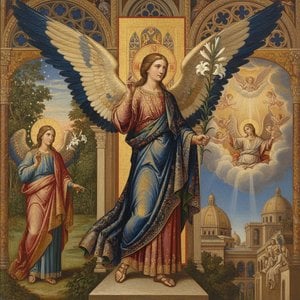
**vida temprana e influencias**
Dante Gabriele Rossetti, un poeta, ilustrador, pintor, traductor y miembro de la ilustre
familia Rossetti, nació el 12 de mayo de 1828 en Londres. Su vida temprana estuvo marcada por un profundo interés en el arte italiano medieval y las obras de Shakespeare, Dickens, Sir Walter Scott y Lord Byron.
**el hermano mayor prerrafaelita**
En 1848, Rossetti cofundó el
hermano mayor prerrafaelita junto con William Holman Hunt y John Everett Millais. Este movimiento buscaba reformar el arte inglés rechazando el enfoque mecánico del manierismo y abrazando los abundantes detalles e intensos colores del arte italiano y flamenco del Quattrocento.
**estilo artístico y obras notables**
El arte de Rossetti se caracteriza por su sensualidad y revivalismo medieval. Su poesía temprana fue influenciada por John Keats y William Blake, mientras que su obra posterior mostró una compleja interconexión de pensamiento y sentimiento, como se ve en su secuencia de sonetos
La casa de la vida. Obras notables incluyen:
**legado e influencia**
El trabajo de Rossetti influyó en la próxima generación de artistas y escritores, incluidos William Morris y Edward Burne-Jones. Su arte también tuvo un impacto significativo en los simbolistas europeos y el movimiento estético.
**Visualiza las obras de arte de Rossetti en WahooArt:** [https://WahooArt.com/@/dante-gabriele-rossetti](https://WahooArt.com/@/dante-gabriele-rossetti) | 122 obras de arte
**Explora la filosofía del hermano mayor prerrafaelita en WahooArt:** /es/art/show/art-d3arwx-es/
**Aprende más sobre la vida y obra de Rossetti en Wikipedia:** [https://en.wikipedia.org/wiki/dante_gabriel_rossetti](https://en.wikipedia.org/wiki/dante_gabriel_rossetti)



 Ver en contexto
 Comprar pintura hecha a mano
 Enviar
 Compartir
 Detalles
 Guía
Guía

 Descargar
 Similares
 Radiografía
 Presentación de diapositivas
 Q&A
Q&A Estadísticas
 Ver más






































 La opción de vidrio solo está disponible en tamaños inferiores a 110 cm.