Vista previa Vista previa en RA Encargar reproducción pintada a mano Ver versión en imagen digital Compartir
Ver detalles Guía Añadir a favoritos Descargar Ver artículos similares Radiografía Presentación de diapositivas Estadísticas

Untitled

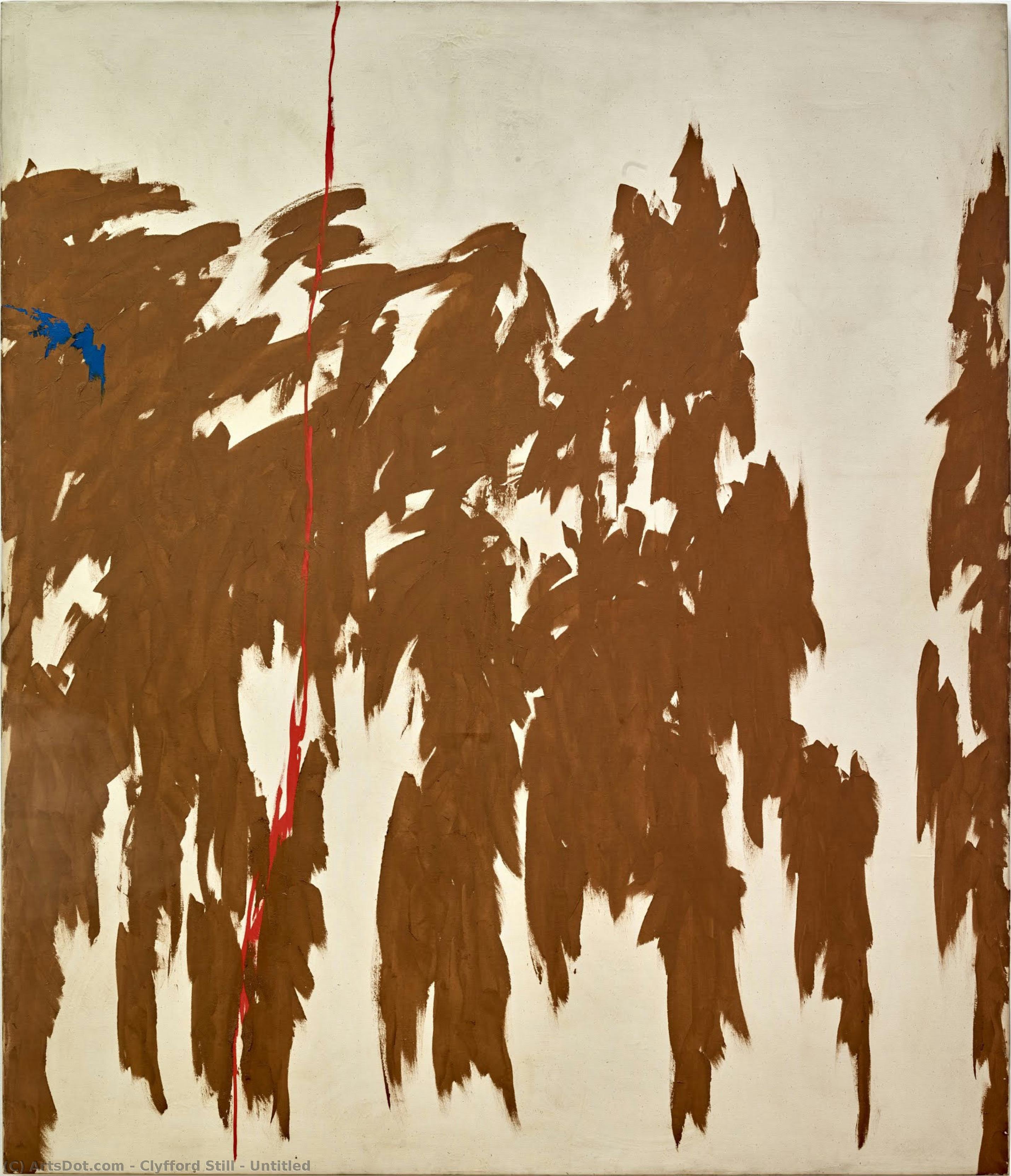
Experience Clyfford Still’s powerful Untitled (1964) – a monumental abstract expressionist canvas filled with vibrant red lines and textured forms, reflecting his unique vision of the American sublime.

Clyfford Still (1904-1980) fue un pionero del Expresionismo Abstracto, conocido por sus pinturas monumentales y de campos de color que exploran la vida, la muerte y la naturaleza a través de formas dinámicas y angulosas. Su obra influyó profundamente en el arte moderno.

La obra de arte que se muestra en esta página está protegida por las leyes de propiedad intelectual, lo que significa que no podemos crear ni vender legalmente una reproducción idéntica. Esta protección se hace cumplir en virtud de acuerdos internacionales como el Convenio de Berna y por las leyes nacionales, incluidas aquellas establecidas por el Ley de derechos de autor de los EE. UU. - Título 17.

Este método cumple plenamente con las normativas de derechos de autor, ya que no implica la copia ni la duplicación de la obra protegida. En su lugar, se trata de una reinterpretación creativa: una nueva pintura influenciada por la original, pero que no es idéntica a ella.

Giclée / Impresión de arte

Impresiones giclée o en lienzo de calidad de museo con producción rápida y opciones de acabado flexibles. ( Encargar reproducción pintada a mano Ver versión en imagen digital)

Corner sample of the P118B picture frame: moulded polystyrene, 5 cm wide and 3 cm thick
P118B €10
Corner sample of the P118H picture frame: moulded polystyrene, 5 cm wide and 3 cm thick
P118H €10
Corner sample of the P118W picture frame: moulded polystyrene, 5 cm wide and 3 cm thick
P118W €10
Corner sample of the P438Z picture frame: moulded polystyrene, 5.5 cm wide and 3.5 cm thick
P438Z €10
Corner sample of the P508JH picture frame: moulded polystyrene, 7 cm wide and 3.5 cm thick
P508JH €12
Corner sample of the P508YH picture frame: moulded polystyrene, 7 cm wide and 3.5 cm thick
P508YH €12
Corner sample of the P805H picture frame: moulded polystyrene, 5 cm wide and 3.5 cm thick
P805H €10
Corner sample of the P805Z picture frame: moulded polystyrene, 5 cm wide and 3.5 cm thick
P805Z €10
Corner sample of the P919BZ picture frame: moulded polystyrene, 7 cm wide and 3.5 cm thick
P919BZ €10
Corner sample of the P919G picture frame: moulded polystyrene, 7 cm wide and 3.5 cm thick
P919G €10
Corner sample of the P919XJ picture frame: moulded polystyrene, 7 cm wide and 3.5 cm thick
P919XJ €10
Corner sample of the P959ZH picture frame: moulded polystyrene, 5 cm wide and 3 cm thick
P959ZH €10
Corner sample of the P968JZ picture frame: moulded polystyrene, 6 cm wide and 4 cm thick
P968JZ €12
Corner sample of the W106C picture frame: solid wood, 5 cm wide and 3 cm thick
W106C €8
Corner sample of the W218G picture frame: solid wood, 5 cm wide and 3 cm thick
W218G €10
Corner sample of the W218JH picture frame: solid wood, 5 cm wide and 3 cm thick
W218JH €8
Corner sample of the W218Y picture frame: solid wood, 5 cm wide and 3 cm thick
W218Y €10
Corner sample of the W307PJ picture frame: solid wood, 6 cm wide and 3 cm thick
W307PJ €10
Corner sample of the W316G picture frame: solid wood, 6 cm wide and 3 cm thick
W316G €10
Corner sample of the W316PJ picture frame: solid wood, 6 cm wide and 3 cm thick
W316PJ €8
Corner sample of the W316Y picture frame: solid wood, 6 cm wide and 3 cm thick
W316Y €10
Corner sample of the W398PJ picture frame: solid wood, 5 cm wide and 3 cm thick
W398PJ €8
Corner sample of the W4111J picture frame: solid wood, 6.5 cm wide and 3.5 cm thick
W4111J €10
Corner sample of the W500HY picture frame: solid wood, 7 cm wide and 5 cm thick
W500HY €15
Corner sample of the W500JH picture frame: solid wood, 7 cm wide and 5 cm thick
W500JH €15
Corner sample of the W692G picture frame: solid wood, 8 cm wide and 4 cm thick
W692G €12
Corner sample of the W849H picture frame: solid wood, 5 cm wide and 3 cm thick
W849H €8
Corner sample of the W940BG picture frame: solid wood, 7.5 cm wide and 4.5 cm thick
W940BG €15
Corner sample of the W953PJ picture frame: solid wood, 6 cm wide and 3.5 cm thick
W953PJ €8

Estándar
personalizado
CM
INCH

Elija entre nuestros tamaños predefinidos que respetan las proporciones originales de la obra.

ancho
altura

Puede introducir sus propias dimensiones para adaptarse a un marco o espacio específico. Si el tamaño seleccionado no coincide con las proporciones de la imagen original, recortaremos la obra de arte o extenderemos la imagen con un borde con efecto espejo o de color sólido. Se enviará una maqueta digital para su aprobación antes de que comience la producción.
Tenga en cuenta que la vista previa en pantalla no refleja el recorte o la extensión real. Solo la maqueta mostrará con precisión la composición final.
Aunque existen tamaños personalizados, recomendamos seleccionar una dimensión de la lista predefinida para preservar las proporciones originales.

Envío a todo el mundo () en 2 semanas en lugar de las 4/5 semanas estándar. (10 octubre)

Envío exprés gratuito a todo el mundo
Lienzo de lino de alta calidad
Seguro de envío completo
Garantía de reembolso de impuestos aduaneros
Garantía de fidelidad cromática exacta
Política de devolución de 100 días (solo por defectos)
Garantía de devolución del 100% del dinero
Oferta por volumen

Precio total

€ 59

Untitled

Giclée / Impresión de arte

Tamaño de la reproducción

-

Precio total

€ 59

Datos clave

  • Subject or theme: Transcendental experience
  • Medium: Oil on Canvas
  • Title: Untitled
  • Artistic style: Non-figurative painting
  • Dimensions: 236 x 273 cm
  • Year: 1964
  • Notable elements or techniques: Bare canvas, verticality

Cuestionario de arte

Cada pregunta tiene una única respuesta correcta.

Pregunta 1:
What is the primary subject matter depicted in Clyfford Still’s ‘Untitled’?
Pregunta 2:
The prominent bare canvas in ‘Untitled’ is significant because it:
Pregunta 3:
According to the description, what artistic movement is Clyfford Still most closely associated with?
Pregunta 4:
What year was ‘Untitled’ created, according to the provided information?
Pregunta 5:
The verticality of ‘Untitled’ is emphasized by:

The Raw Essence of Form: An Exploration of Clyfford Still's Untitled

Clyfford Still’s “Untitled,” a monumental canvas from 1964, isn’t merely a painting; it’s an immersion into the heart of Abstract Expressionism and a profound meditation on American identity. Measuring a substantial 236 x 273 centimeters, this work immediately commands attention with its scale and the sheer physicality of its execution. Yet, it's not the size that dominates, but rather the intensely concentrated field of color – a restless interplay of ochre, red, and the stark, almost unsettling presence of bare canvas – that draws the viewer in. Still, a pivotal figure who largely shunned the limelight, deliberately eschewed representational imagery, opting instead to explore the very essence of form and color as conduits for emotional and philosophical experience.

The painting’s genesis lies within a specific period of Still's life – 1961 – following his deliberate retreat from New York City. This isolation in rural Maryland profoundly shaped his artistic vision, fostering a sense of detachment and a focus on the elemental. The work embodies this shift; it feels less like a depiction of something external and more like an articulation of internal states. The prominent bare canvas isn’t simply a compositional element; it acts as a visual anchor, a deliberate void that invites contemplation and forces the viewer to confront the raw materiality of the paint itself.

A Symphony of Verticality: Deconstructing Space

Perhaps the most striking aspect of “Untitled” is its insistent verticality. A dominant, deep red line – approximately two and a half meters in height – cuts diagonally across the canvas, acting as both a structural element and a powerful directional force. This line isn’t static; it appears to thrust upward, almost aggressively, challenging any sense of conventional spatial boundaries. The ochre forms that surround this central vertical are similarly oriented, creating a dynamic tension between horizontal and vertical planes. It's a deliberate disruption of perspective, suggesting an attempt to transcend the limitations of traditional representation and access a more primal, visceral experience.

This emphasis on verticality resonates with broader themes within Still’s oeuvre – his exploration of American ideals of freedom and individuality. The upward thrust can be interpreted as a symbolic reaching for something beyond the earthly realm, a striving towards an abstract notion of transcendence. The painting isn't about capturing a specific landscape or object; it’s about conveying a feeling, a state of being—a powerful declaration of independence from the constraints of the material world.

Technique and Materiality: The Language of Paint

Still’s technique is characterized by a remarkable directness. He applied paint with broad, gestural strokes, often layering colors directly onto the canvas without any intervening underpainting. This creates a palpable sense of texture and physicality – the ridges of the paint, the drips and splatters, all contribute to the painting's raw energy. The use of unprimed canvas allows the inherent qualities of the material to shine through, further emphasizing the painting’s materiality.

The color palette is deliberately restrained, yet intensely evocative. The dominant red is not a cheerful hue; it possesses an almost brooding quality, suggesting both passion and danger. The ochre tones are earthy and grounding, providing a counterpoint to the intensity of the red. It’s a carefully calibrated balance between opposing forces – chaos and order, emotion and restraint.

Symbolism and Emotional Resonance: A Portrait of an Era

“Untitled” is more than just a visually arresting composition; it's a potent symbol of its time—the mid-1960s in America. The painting reflects the anxieties and aspirations of a nation grappling with profound social and political change, while simultaneously seeking to redefine its identity. Still’s rejection of traditional representation can be seen as a deliberate act of rebellion against the prevailing cultural norms, mirroring the broader countercultural movements of the era.

Ultimately, “Untitled” invites viewers to engage in a deeply personal dialogue with the artwork. It's a painting that demands attention, provoking contemplation and eliciting a range of emotional responses—from awe and wonder to unease and perhaps even a sense of disorientation. It remains a powerful testament to Clyfford Still’s unique vision and his enduring legacy as one of America’s most important Abstract Expressionist painters.

Preguntas y respuestas

¿Qué edad tenía Clyfford Still cuando se creó "Untitled"?

Clyfford Still realizó "Untitled" a la edad de 60. El artista nació en 1904 y la obra data de 1964.

¿A qué artista se le atribuye "Untitled"?

El artista detrás de "Untitled" es Clyfford Still. La obra está catalogada bajo el nombre de Clyfford Still.

¿Qué configuración de impresión se sugiere para "Untitled" de Clyfford Still?

Se recomienda imprimir "Untitled" de Clyfford Still en un tamaño de Large con una orientación Portrait.

¿En qué etapa de la carrera de Clyfford Still se sitúa "Untitled", dada su fecha?

La fecha de 1964 sitúa a "Untitled" en el Late Period del desarrollo de Clyfford Still.

¿Qué espacio combina con los colores de "Untitled" de Clyfford Still?

Teniendo en cuenta sus colores Neutrals, se sugiere "Untitled" para un/a Living Room.

¿En qué año se creó "Untitled" de Clyfford Still?

"Untitled" data de 1964. La fecha sitúa la obra dentro de la trayectoria de Clyfford Still y de su época.

¿A qué se debe el estado de los derechos de autor de "Untitled"?

"Untitled" de Clyfford Still es de aún protegido por derechos de autor. Los términos de derechos de autor se calculan a partir del fallecimiento del artista, y Clyfford Still murió en 1980.


Biografía del artista

A Pioneer of Abstract Expressionism: The Life and Art of Clyfford Still

Clyfford Still, born in 1904 amidst the vast landscapes of Grandin, North Dakota, stands as a pivotal figure in the evolution of American art. His journey, marked by an unwavering commitment to artistic integrity and a relentless exploration of form and color, positioned him among the leading lights of Abstract Expressionism. Though often overshadowed by contemporaries like Jackson Pollock and Mark Rothko, Still’s contribution was foundational; he ventured into non-figurative painting earlier than many of his peers, forging a path toward a new visual language that would profoundly influence modern art. His early life, spent moving between North Dakota, Washington, and Alberta, Canada, instilled in him a deep connection to the natural world – a resonance that would echo throughout his artistic career. A brief period of study at the Art Students League in New York City in 1925 offered initial exposure to the art world, but it was his subsequent experiences teaching and painting on the West Coast that truly shaped his unique vision. He wasn’t simply seeking to depict nature; he aimed to capture its raw essence, its underlying forces of creation and destruction.

From Representation to Revelation: The Development of a Unique Style

The transformation from representational work to the radical abstraction for which Still is celebrated occurred between 1938 and 1942, a period of intense experimentation and self-discovery. This shift wasn’t merely stylistic; it was profoundly philosophical. He sought to strip away all recognizable imagery, believing that true artistic expression lay in confronting the fundamental elements of painting itself – color, form, and surface. Early works like PH-616 (1929) offer a glimpse into this transitional period, showcasing his initial exploration of rural life rendered with a muted palette and evocative symbolism. These paintings weren’t simply depictions; they were imbued with a sense of longing, a quiet contemplation of the human condition within the vastness of the American landscape. As he moved further toward abstraction, these representational elements gradually dissolved into jagged planes of color, fractured surfaces, and imposing vertical forms. These weren’t merely abstract shapes; they were imbued with raw emotion, existential angst, and the sublime power of nature. He worked primarily with oil paint applied with palette knives, building up layers of texture that created a dynamic interplay between light and shadow. This technique allowed him to create surfaces that seemed to pulse with energy, inviting viewers into an immersive experience—a confrontation with the very act of painting itself.

The Language of Color and Form: Key Characteristics of Still’s Work

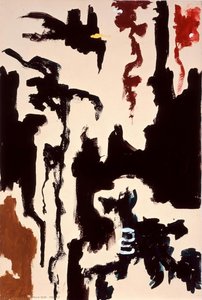
Still's mature paintings are characterized by their monumental scale and dramatic color juxtapositions. He favored large canvases, believing that only through such expansiveness could he convey the full emotional weight of his vision. His compositions typically feature irregular, fractured planes of color – often dark and brooding hues punctuated by flashes of brighter tones. These forms aren’t simply arranged on the canvas; they seem to emerge from it, creating a sense of depth and spatial ambiguity. The vertical element is particularly significant in Still's work, representing what he termed “the vertical necessity of life” – a defiant assertion of human spirit against overwhelming forces. 1957-D No. 1, with its predominantly black and yellow palette accented by white and red, exemplifies this characteristic use of color and form to evoke powerful emotional responses. He deliberately avoided titles that might suggest specific interpretations, preferring a numerical system (e.g., “1957-D No. 1”) that emphasized the painting’s purely visual qualities. This was part of his broader effort to resist categorization and maintain control over how his work was perceived. He wanted viewers to experience the paintings directly, without preconceived notions or external narratives.

Legacy and Influence: A Lasting Impact on Modern Art

Clyfford Still's influence extends far beyond his own body of work. He is considered a key progenitor of Color Field painting, a movement that emphasized the expressive potential of color as an independent element in art. His uncompromising artistic vision and rejection of conventional norms paved the way for subsequent generations of abstract painters. While he often distanced himself from the New York art world, his impact on its development was undeniable. He taught at various institutions, including Washington State University and the California School of Fine Arts, inspiring countless students to explore their own creative potential. In 1959, a comprehensive retrospective of his work at the Albright-Knox Art Gallery in Buffalo, New York, solidified his reputation as a major force in American art. Perhaps one of his most significant legacies is The Clyfford Still Museum in Denver, Colorado, which houses an extraordinary collection of over 3,125 works – representing 93 percent of his lifetime output and complete archives. This museum provides unparalleled access to the breadth and depth of his artistic vision, ensuring that his contributions will continue to be studied and appreciated for generations to come. His work continues to resonate with viewers today, offering a powerful meditation on the human condition and the enduring mysteries of existence. ## Further Exploration
  • Explore more about Clyfford Still’s artworks at WahooArt.com.
  • Discover the Color Field art movement.
  • Learn about artists like Mark Rothko and their influence on the art world.
Clyfford Still

Clyfford Still

1904 - 1980 , Estados Unidos

Datos clave

  • Artistic Movement Or Style: Expresionismo abstracto
  • Date Of Birth: 1904
  • Date Of Death: 1980
  • Full Name: Clyfford Elmer Still
  • Nationality: American
  • Notable Artworks:
    • PH-616
    • 1957-D No. 1
  • Place Of Birth: Grandin, USA
Explore obras de arte organizadas por temas, estilos y características.