Ver en contextoVer en contexto Vista previa en RAVista previa en RA Comprar pintura hecha a mano Comprar pintura hecha a manoComprar imagen Comprar imagen EnviarEnviar
DetallesDetalles Añadir a favoritos Añadir a favoritos DescargarDescargar SimilaresSimilares RadiografíaRadiografía Presentación de diapositivasPresentación de diapositivas

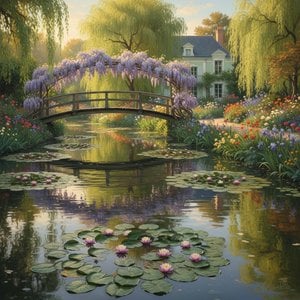
Jardin Ó Bordighera, Efecto del Matin

Admira una impresionante reproducción de 'Jardin Ó Bordighera, Efecto del Matin' de Claude Monet, obra maestra impresionista que captura la belleza del jardín italiano en luz y color.

¡Explora a Claude Monet (1840-1926), el fundador del Impresionismo! Descubre nenúfares icónicos, paja y paisajes que capturan la luz y la esencia de la naturaleza. Una figura fundamental en el arte moderno.

Giclée / Impresión de arte

Impresiones giclée o en lienzo de calidad de museo con producción rápida y opciones de acabado flexibles. (Comprar pintura hecha a mano Comprar pintura hecha a manoComprar imagen Comprar imagen)

P118B $10
P118H $10
P118W $10
P438Z $10
P508JH $12
P508YH $12
P805H $10
P805Z $10
P919BZ $10
P919G $10
P919XJ $10
P959ZH $10
P968JZ $12
W106C $8
W218G $10
W218JH $8
W218Y $10
W307PJ $10
W316G $10
W316PJ $8
W316Y $10
W398PJ $8
W4111J $10
W500HY $15
W500JH $15
W692G $12
W849H $8
W940BG $15
W953PJ $8

Estándar
a medida
CM
INCH

Elija entre nuestros tamaños predefinidos que respetan las proporciones originales de la obra.

ancho
altura

Puede introducir sus propias dimensiones para adaptarse a un marco o espacio específico. Si el tamaño seleccionado no coincide con las proporciones de la imagen original, recortaremos la obra de arte o extenderemos la imagen con un borde con efecto espejo o de color sólido. Se enviará una maqueta digital para su aprobación antes de que comience la producción.
Tenga en cuenta que la vista previa en pantalla no refleja el recorte o la extensión real. Solo la maqueta mostrará con precisión la composición final.
Aunque existen tamaños personalizados, recomendamos seleccionar una dimensión de la lista predefinida para preservar las proporciones originales.

Envío a todo el mundo () en 2 semanas en lugar de las 4/5 semanas estándar. (7 septiembre)

why_choose_icon
Envío exprés gratuito a todo el mundo
why_choose_icon
Lienzo de lino de alta calidad
why_choose_icon
Seguro de envío total
why_choose_icon
Garantía de reembolso de impuestos aduaneros
why_choose_icon
Garantía de fidelidad cromática exacta
why_choose_icon
Política de devolución de 100 días (solo por defectos)
why_choose_icon
Garantía de devolución del 100% del dinero
why_choose_icon
Descuento por cantidad

Precio total

$ 68

reproduction

Jardin Ó Bordighera, Efecto del Matin

Giclée / Impresión de arte

Dimensiones de la reproducción

-

Precio total final

$ 68

Datos clave

  • Influences: Eugène Boudin
  • Artist: Claude Monet
  • Year: 1884
  • Movement: Impressionism
  • Notable elements or techniques: Loose brushwork, vibrant colors
  • Title: Garden at Bordighera, Morning
  • Artistic style: Impressionistic

Test de arte

Cada pregunta tiene una única respuesta correcta.

Pregunta 1:
What artistic movement is Claude Monet’s ‘Garden at Bordighera, Morning’ primarily associated with?
Pregunta 2:
During which year was this painting created?
Pregunta 3:
What prominent element is visible in the background of the painting?
Pregunta 4:
Monet utilized a technique known for capturing fleeting light and color effects. What is this technique called?
Pregunta 5:
Where can you find Claude Monet’s ‘Garden at Bordighera, Morning’ currently displayed?

Claude Monet: Capturing the Ephemeral Beauty of Light

Claude Monet (1840-1926) stands as a titan among Impressionist painters, forever enshrined in art history for his groundbreaking approach to depicting nature. His canvases aren’t merely representations of landscapes; they are embodiments of fleeting moments—the dance of sunlight on foliage, the subtle shifts in color as dawn breaks over the Ligurian coast. And “Garden at Bordighera, Morning,” painted in 1884 during his idyllic stay in Italy, exemplifies this philosophy with breathtaking precision and emotional resonance.

A Visionary's Retreat: Bordighera and Monet’s Inspiration

Bordighera, nestled on the Italian Riviera near France, proved to be a pivotal location for Monet’s artistic endeavors. Drawn by the region’s lush gardens—a haven of exotic flora cultivated with meticulous care—Monet established himself there from January to April 1884. This period yielded some of his most celebrated works, reflecting not just visual observation but also an intense engagement with the atmosphere and sensory experience of place. As Monet famously penned to his friend Théodore Duret, “I set up in a fairyland.” It’s this very feeling—a palpable sense of wonder—that permeates "Garden at Bordighera, Morning."

Impressionistic Technique: Light as Subject Matter

Monet's mastery lay in his revolutionary technique – *plein air* painting. Rather than painstakingly recreating scenes indoors from sketches, he worked directly onto canvas outdoors, capturing the immediacy of natural light and color. In “Garden at Bordighera,” Monet achieves this remarkable feat through loose brushstrokes layered upon brushstrokes, creating a textured surface that vibrates with luminosity. The artist eschewed traditional blending methods, allowing colors to mingle organically on the palette and merging seamlessly onto the canvas. This deliberate disregard for conventional artistic conventions was precisely what defined Impressionism and cemented Monet’s legacy as one of its foremost champions.

Analyzing Composition and Color Palette

The painting's composition is thoughtfully balanced, guiding the viewer’s eye towards a distant vista of the sea while anchoring it within the vibrant tapestry of the garden itself. Dominating the foreground are palm trees—a symbol of exotic beauty and resilience—their silhouettes etched against the diffused morning light. A winding path leads into this verdant expanse, subtly directing attention toward the hazy horizon where the azure sea merges with the pale sky. Monet’s color palette is equally masterful, employing hues of yellow, pink, and blue to convey warmth and vibrancy. These colors aren't applied uniformly; instead, they are modulated through delicate gradations—a technique known as *téchnique au trait*—further enhancing the painting’s ethereal quality.

Symbolism Beyond Representation: The Essence of Impression

“Garden at Bordighera, Morning” transcends mere visual depiction; it embodies the core tenets of Impressionist philosophy – capturing not just what is seen but how it feels. The garden represents tranquility and rejuvenation, mirroring Monet’s own desire to escape the pressures of Parisian life and reconnect with the restorative power of nature. Furthermore, the church steeple towering over the greenery serves as a reminder of faith and tradition amidst the dynamism of the natural world. Ultimately, Monet’s masterpiece invites contemplation—a celebration of beauty that resides not in meticulous detail but in the fleeting impression of light and color—a testament to his enduring genius.

Where to Buy Handmade Oil Paintings Reproductions

If you are captivated by Monet’s vision and wish to experience “Garden at Bordighera, Morning” in a tangible form, WahooArt.com offers exceptional reproductions crafted by skilled artists using premium materials. Visit WahooArt.com to explore our collection and discover the beauty of Impressionism at Musée Marmottan Monet, a renowned museum in Paris, France. Photo Description: The painting is a beautiful landscape of a garden with palm trees in the foreground. The scene features a church steeple towering over the lush greenery. There are several palm trees scattered throughout the painting, some closer to the viewer and others further away. In addition to the palm trees, there is also a clock visible on one of the buildings in the background. The overall atmosphere of the painting is serene and peaceful, capturing the beauty of nature and architecture. Size: Unknown Date: Unknown ARTIST INFORMATION: ================== Artist: Claude Monet Birth Year: 1840 Death Year: 1926 Birth City: Paris Birth Country: France Biography:

A Life Immersed in Light: The World of Claude Monet

Oscar-Claude Monet, a name synonymous with Impressionism, wasn't merely a painter of landscapes; he was a chronicler of fleeting moments, a poet of light and color. Born in Paris on November 14, 1840, his early life took an unexpected turn when his family relocated to Le Havre, Normandy, at the age of five. While initially destined for a commercial career by his father, young Claude’s innate artistic talent quickly surfaced, manifesting first in charcoal caricatures sold locally – a testament to both his skill and entrepreneurial spirit. However, it was his encounter with Eugène Boudin that proved pivotal. Boudin didn't just teach Monet *how* to paint; he instilled within him the revolutionary idea of painting en plein air—directly from nature—a practice that would define his entire artistic journey.

Monet’s formal training began in Paris, briefly at the Académie Beaux-Arts, but he quickly abandoned academic conventions in favor of pursuing his own vision. Influenced by Japanese prints and the theories of Eugène Delacroix, Monet embraced a radical aesthetic that prioritized capturing atmospheric conditions over precise representation.

Throughout his prolific career, Monet relentlessly experimented with color and brushstroke techniques, pushing the boundaries of artistic expression. He developed his signature *Impressionism* style—characterized by loose, visible brushstrokes and vibrant hues—to depict scenes from daily life and nature with unprecedented immediacy. His works explore the transformative effects of light on landscapes and portraits alike.

Monet's enduring legacy rests upon his unwavering dedication to capturing the ephemeral beauty of the natural world and his pioneering role in establishing Impressionism as a dominant artistic movement. He died in Giverny, France, in 1926, leaving behind an unparalleled body of work that continues to inspire artists and captivate audiences worldwide.


Biografía del artista

Primeros Años y Influencias (1840-1860)

Nacido Oscar-Claude Monet el 14 de noviembre de 1840 en París, Francia, los primeros años de Claude Monet estuvieron marcados por una mudanza familiar a Le Havre, Normandía, cuando tenía solo cinco años. Su padre, un comerciante al por mayor, inicialmente tuvo la intención de que joven Claude siguiera una carrera en los negocios, pero el niño demostró un talento e interés innatos por dibujar desde muy temprana edad. Si bien su padre desaprobaba, su madre alentó sus inclinaciones artísticas.

Un momento decisivo llegó con el encuentro de Monet con Eugène Boudin, un pintor paisajista que le presentó los principios de la pintura en plein air – capturar escenas directamente del entorno natural. Esta experiencia moldeó fundamentalmente el enfoque artístico de Monet, enfatizando la observación y la espontaneidad sobre la precisión basada en estudio. También comenzó a hacer caricaturas para negocios locales, demostrando un espíritu emprendedor temprano junto con su talento artístico.

Formación Formal y Primeras Obras (1860-1874)

En 1859, Monet se mudó a París, sumergiéndose en el vibrante panorama artístico de la ciudad. Asistió brevemente a la Academia Suiza y estudió bajo Charles Gleyre, donde conoció a otros artistas como Auguste Renoir. Estos primeros años estuvieron caracterizados por la experimentación con diversos estilos, incluyendo el realismo y el retrato. Sus primeras obras, como paisajes y escenas marinas, reflejaban una habilidad en desarrollo pero carecían del estilo distintivo que definiría más tarde su obra.

La Guerra Franco-Prusiana (1870-1871) interrumpió su progreso artístico, obligándolo a buscar refugio en Londres. Durante este tiempo, estudió pintores paisajistas ingleses como J.M.W. Turner, cuyos efectos atmosféricos influyeron profundamente en su propio estilo en evolución.

El Nacimiento del Impresionismo y la "Impression, soleil levant" (1874-1883)

Monet, junto con otros artistas insatisfechos con el sistema conservador del Salón, comenzó a exhibir su obra de forma independiente. La exposición de 1874 organizada por estos artistas se considera un evento histórico en la historia del arte, dando origen al término "Impresionismo". La pintura de Monet “Impression, soleil levant” (Impresión, Amanecer), expuesta en esta muestra, proporcionó el nombre para el movimiento.

Este período vio a Monet desarrollar su estilo distintivo: pinceladas sueltas, colores vibrantes y un enfoque en capturar los momentos fugaces de luz y atmósfera. Pintaba con frecuencia en plein air, trabajando rápidamente para registrar sus impresiones inmediatas del paisaje.

Giverny y la Serie de las Lilas (1883-1926)

En 1883, Monet se estableció en Giverny, un pueblo al noroeste de París. Compró una casa con un jardín extenso, que transformó en un paraíso elaborado que incluía lirios acuáticos, sauces llorones y puentes japoneses – todos ellos convirtiéndose en temas recurrentes en su arte.

Las últimas décadas de la vida de Monet estuvieron dedicadas principalmente a pintar el estanque de lirios acuáticos de Giverny. Esto resultó en la monumental serie Lirios Acuáticos (Nymphéas), una vasta colección de pinturas que representan los reflejos del estanque y las cambiantes condiciones de luz. Estas obras, caracterizadas por su gran escala e inmersividad, se consideran entre sus mayores logros.

Desarrollo Artístico y Técnicas

Pintura al Aire Libre: El compromiso de Monet con la pintura al aire libre fue central para su desarrollo artístico. Esto le permitió observar directamente y capturar los efectos de la luz y la atmósfera. Color Fragmentado: Empleó una técnica llamada "color fragmentado", aplicando pequeños trazos de colores puros e inmezclados uno junto al otro, permitiendo que el ojo del espectador los mezcle ópticamente. Pintura por Series: La exploración de Monet de la pintura por series – representando el mismo tema bajo diferentes luces y condiciones climáticas – fue revolucionaria, demostrando el poder transformador de la luz y el tiempo.

Logros Importantes y Reconocimiento

  • Fundador del Impresionismo
  • Creación de la icónica serie Lirios Acuáticos
  • Revolucionando la pintura paisajista a través de las técnicas en plein air
  • Alcanzando un éxito comercial considerable durante su vida, algo raro para los artistas vanguardistas.

Significado Histórico

El impacto de Claude Monet en la historia del arte es innegable. No solo lideró el movimiento impresionista, sino que también allanó el camino para la exploración de la subjetividad y la abstracción por parte del arte moderno. Su enfoque en capturar momentos fugaces y la experiencia subjetiva de ver influyó profundamente en las generaciones posteriores de artistas. Su obra continúa inspirando asombro y admiración, consolidando su lugar como una de las figuras más importantes del arte occidental.

Monet murió el 5 de diciembre de 1926, dejando un legado que sigue dando forma a nuestra comprensión de la luz, el color y la belleza del mundo natural. Museos como el Musée d'Orsay y el Musée Marmottan Monet en París albergan importantes colecciones de su obra, asegurando su presencia perdurable en el mundo del arte.

Claude Monet

Claude Monet

1840 - 1926 , Francia

Datos clave

  • Artistas Que Influyeron:
    • Eugène Boudin
    • J.M.W. Turner
  • Estilo Artístico: Impresionismo
  • Fecha De Muerte: 5 de diciembre de 1926
  • Fecha De Nacimiento: 14 de noviembre de 1840
  • Lugar De Nacimiento: París, Francia
  • Nacionalidad: Francés
  • Nombre Completo: Claude Monet
  • Obras Notables:
    • Impresión, amanecer
    • Serie Nenúfares
    • Paja
    • Catedral de Rouen
Explore obras de arte organizadas por temas, estilos y características.