Vista previa Vista previa en RA Cambiar a formato impreso Encargar reproducción pintada a mano Compartir
Ver detalles Guía Añadir a favoritos Descargar Ver artículos similares Radiografía Presentación de diapositivas Estadísticas

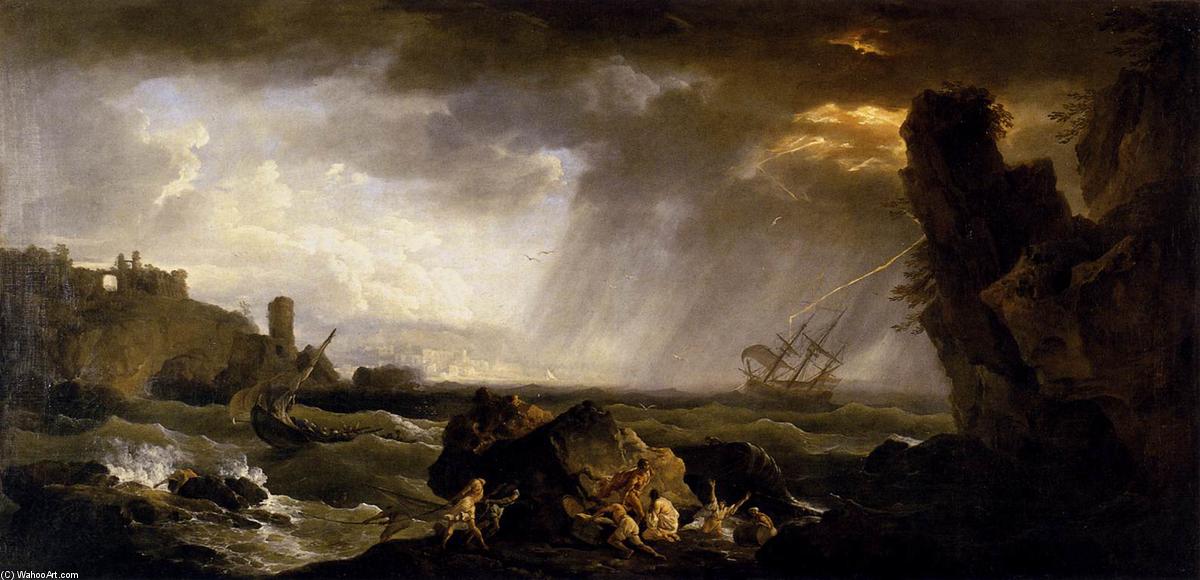
Seascape: Tempest

Experience Claude Joseph Vernet's 'Seascape: Tempest,' a dramatic oil painting capturing a tumultuous sea storm. Explore its history, details & significance at WahooArt.com.

Descubre a Claude-Joseph Vernet (1714-1789), maestro francés de paisajes y escenas marinas. Admira su arte equestre, puertos atmosféricos y tormentas dramáticas en WahooArt.

Adquiera una imagen digital de alta resolución y optimizada, muy superior a la vista previa en línea.

Cada archivo es preparado meticulosamente por nuestros especialistas internos mediante el uso de herramientas avanzadas y un experto retoque manual. Nos aseguramos de que cada imagen posea una claridad excepcional, una precisión cromática impecable y un detalle minucioso.

El archivo final se entrega por correo electrónico en un plazo de 72 horas, optimizado para su uso inmediato en entornos profesionales, editoriales y de impresión. Esta es la misma calidad en la que confían los estudios de diseño, las editoriales y las galerías de primer nivel.

Imagen Digital

Descarga un archivo de alta resolución para exhibición personal, impresión y proyectos creativos. ( Cambiar a formato impreso Encargar reproducción pintada a mano)

Precio total

$ 24,90

Incluido en cada pedido de imágenes digitales

Entrega digital experta, garantizada.

Al elegir WahooArt.com, no solo está adquiriendo una imagen; está recibiendo una obra de arte digital mejorada profesionalmente, elaborada con precisión y respaldada por una garantía de satisfacción. Esto es todo lo que incluye su pedido, automáticamente:

shipping_icon
Entrega inmediata por email

Recibirá su archivo de imagen digital en alta resolución por correo electrónico en un plazo de 72 horas tras realizar su pedido, listo para su uso inmediato.

canvas_icon
Archivo digital optimizado por IA

Su obra de arte se optimiza profesionalmente mediante herramientas avanzadas de IA y edición manual, garantizando el máximo detalle, claridad y precisión cromática.

insurance_icon
Reenvío gratuito de por vida

¿Has borrado o perdido tu archivo por error? No te preocupes: te lo volveremos a enviar en cualquier momento, sin coste adicional.

tax_icon
Sin gastos de importación, siempre

Disfrute de su obra de arte al instante sin aduanas, aranceles ni gastos de envío; las descargas digitales siempre están libres de impuestos.

color_icon
Garantía de precisión de color

Garantizamos que su imagen digital refleje los colores originales con la mayor fidelidad posible, mediante el uso de herramientas profesionales y gestión del color.

return_icon
Garantía de satisfacción de 100 días

Si no está satisfecho con su imagen digital, la revisaremos o le reembolsaremos el 100% en un plazo de 100 días, sin preguntas.

guarantee_icon
100% Garantía de devolución de dinero

¿No está satisfecho? Obtenga un reembolso completo dentro de los 100 días posteriores a la recepción de su archivo digital, sin preguntas.

discount_icon
Descuentos por volumen

Compra 3 imágenes, ahorra 10% - Compra 5, ahorra 15% - Compra 10+, ahorra 20%. Ideal para proyectos creativos, galerías y agencias.

Datos clave

  • Influences: Neoclassicism
  • Dimensions: 78 x 156 cm
  • Artist: Claude-Joseph Vernet
  • Style: Rococo
  • Medium: Oil on canvas
  • Year: 1735
  • Location: Musée du Louvre, Paris

Cuestionario de arte

Cada pregunta tiene una única respuesta correcta.

Pregunta 1:
What is the primary subject matter depicted in Claude Joseph Vernet’s ‘Seascape: Tempest’?
Pregunta 2:
In what year was Claude Joseph Vernet’s ‘Seascape: Tempest’ painted?
Pregunta 3:
The painting 'Seascape: Tempest' is housed in which museum?
Pregunta 4:
Which artistic style is most closely associated with ‘Seascape: Tempest’?
Pregunta 5:
What technique does Vernet primarily employ to convey the movement and chaos of the sea?

A Tempestuous Vision: Vernet’s “Seascape: Tempest”

Claude-Joseph Vernet's "Seascape: Tempest," painted in 1735, isn’t merely a depiction of a storm at sea; it’s a visceral embodiment of nature’s raw power and the precariousness of human existence. More than two centuries after its creation, this oil on canvas continues to resonate with viewers, drawing them into the heart of the tempestuous scene with an immediacy rarely achieved in landscape painting. Vernet, a master of maritime light and atmosphere, elevates the seascape beyond simple representation, transforming it into a dramatic narrative filled with both terror and sublime beauty.

The painting immediately commands attention through its masterful use of color and composition. Dark blues and greens dominate the canvas, swirling together to create an illusion of relentless motion. The sky is choked with ominous clouds, pregnant with impending violence, while flashes of orange – likely representing a brief glimpse of sunlight piercing through the storm – offer fleeting moments of intense visual contrast. The waves themselves are rendered with remarkable detail; each crest and trough sculpted with meticulous care, conveying their immense force and unpredictable nature. The artist’s strategic use of light and shadow further amplifies this sense of drama, highlighting the chaotic energy of the scene while simultaneously creating a profound feeling of depth.

Rococo Drama and the Dawn of Romanticism

“Seascape: Tempest” is firmly rooted in the Rococo style, yet it anticipates the burgeoning Romantic movement. The emphasis on dynamic movement, emotional intensity, and the sublime – the awe-inspiring power of nature – are hallmarks of both styles. Vernet’s work represents a pivotal moment in art history, bridging the gap between the formal elegance of the late Baroque and the passionate individualism that would characterize the Romantics. The painting's loose brushwork and dramatic lighting, combined with its focus on the overwhelming force of nature, foreshadowed the Romantic fascination with untamed landscapes and the emotional experience of confronting the sublime.

Interestingly, Vernet’s background as a horse painter subtly informs his seascape. The dynamism and powerful musculature of his equine subjects are echoed in the surging waves and the desperate struggle for survival depicted in the foreground. The figures clinging to the rocks – rendered with a remarkable degree of realism despite the chaotic environment – evoke a sense of vulnerability and resilience, mirroring the themes often explored in Vernet’s equestrian compositions.

Symbolism of Survival and Fate

Beyond its technical brilliance, “Seascape: Tempest” is rich in symbolic meaning. The shipwreck itself represents human fallibility and the ultimate powerlessness of man against the forces of nature. The figures clinging to the rocks embody a desperate struggle for survival, highlighting the fragility of life. Yet, amidst this scene of devastation, there’s also a sense of awe and wonder—a recognition of the grandeur and majesty of the natural world. The lighthouse in the background, a beacon of hope against the storm, symbolizes guidance and resilience, suggesting that even in the darkest moments, there is always a path forward.

A Timeless Masterpiece

“Seascape: Tempest” remains a profoundly moving work of art, captivating viewers with its dramatic intensity and evocative power. Its masterful composition, skillful use of color and light, and rich symbolic content combine to create an unforgettable experience. Whether viewed in the Louvre’s hallowed halls or reproduced as a stunning print, Vernet's masterpiece continues to inspire contemplation on the relationship between humanity and nature—a theme that resonates deeply with audiences today. It is a testament to the artist’s ability to capture not just a scene, but an entire emotional landscape.


Biografía del artista

Primeros años y formación

Claude-Joseph Vernet, un renombrado pintor francés, nació el 14 de agosto de 1714 en Burdeos, Francia. Desde la tierna edad de cinco años, exhibió una pasión extraordinaria por dibujar caballos, lo que más tarde se convertiría en una característica distintiva de su carrera artística. Vernet recibió la formación académica tradicional como alumno de su padre y Nicolas-Bernard Lépicié, perfeccionando aún más sus habilidades.

Logros destacados

  • En 1782, Vernet ganó el prestigioso Prix de Rome, un testimonio de su destreza artística.
  • Su hijo, Antoine Charles Horace Vernet, también siguió los pasos de su padre como pintor.

Obras icónicas

Evolución artística e influencias

Claude-Joseph Vernet desarrolló un estilo distintivo caracterizado por la elegancia equina, una profunda comprensión de los caballos y una representación realista de paisajes marítimos. Su formación académica le proporcionó una base sólida en técnicas tradicionales, pero su interés particular por el movimiento y la vitalidad de los animales lo llevó a explorar nuevas formas de representar la figura equina en sus obras. Vernet se inspiró en artistas como Claude Lorrain y Gaspard Dughet, maestros del paisaje clásico francés, quienes influyeron en su enfoque de la composición y el uso de la luz. Su trabajo temprano muestra influencias rococó, pero con el tiempo evolucionó hacia un estilo más sobrio y realista, reflejando las tendencias artísticas de su época.

Legado e importancia histórica

El legado de Vernet reside en su capacidad para combinar la precisión técnica con una sensibilidad artística que captura la belleza y el dinamismo del mundo natural. Sus representaciones de puertos, barcos y caballos son ejemplos notables de su maestría en la pintura paisajística y marítima. Su obra contribuyó significativamente al desarrollo del arte francés del siglo XVIII, influyendo en generaciones posteriores de artistas. Vernet es recordado como un maestro del paisaje y un retratista excepcional de caballos, dejando una huella imborrable en la historia del arte.

Conclusión

El viaje artístico de Claude-Joseph Vernet, marcado por su pasión por el arte equino, ha dejado una huella indeleble en el mundo de la pintura francesa. A través de sus obras, disponibles en WahooArt, y su legado, Vernet continúa inspirando a generaciones de entusiastas del arte y profesionales por igual. Lecturas recomendadas: * Claude-Joseph Vernet's a Landscape at Sunset - Una inmersión más profunda en una de sus obras notables en WahooArt * El puerto de Burdeos de Edouard Manet - Explore la obra de otro artista francés en WahooArt
Claude-Joseph Vernet

Claude-Joseph Vernet

1714 - 1789 , Francia

Datos clave

  • Artistas Que Influyeron En Este Artista: ['Nicolas-Bernard Lépicié']
  • Fecha De Nacimiento: 14 de agosto de 1714
  • Lugar De Nacimiento: Burdeos, Francia
  • Nacionalidad: Francés
  • Nombre Completo: Claude-Joseph Vernet
  • Notable Obras:
    • intérieur du port de marseille
    • a view of the port of naples