x
Ver en contextoVer en contexto Vista previa en RAVista previa en RA Comprar pintura hecha a mano Comprar pintura hecha a manoComprar imagen Comprar imagen EnviarEnviar
DetallesDetalles Añadir a favoritos Añadir a favoritos DescargarDescargar SimilaresSimilares RadiografíaRadiografía Presentación de diapositivasPresentación de diapositivas

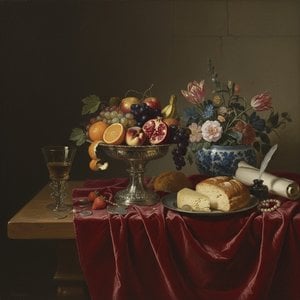
Still Life

Explore Cheong Soo Pieng’s ‘Still Life,’ a Cubist-influenced oil painting capturing Southeast Asian life through fragmented forms & earthy tones. A key Nanyang style piece.

Cheong Soo Pieng (1917-1983) fue un artista pionero de Singapur del estilo Nanyang, conocido por sus óleos y acuarelas modernistas que representan la vida del sudeste asiático, con figuras y escenas estilizadas.

Giclée / Impresión de arte

Impresiones giclée o en lienzo de calidad de museo con producción rápida y opciones de acabado flexibles. (Comprar pintura hecha a mano Comprar pintura hecha a manoComprar imagen Comprar imagen)

P118B $10
P118H $10
P118W $10
P438Z $10
P508JH $12
P508YH $12
P805H $10
P805Z $10
P919BZ $10
P919G $10
P919XJ $10
P959ZH $10
P968JZ $12
W106C $8
W218G $10
W218JH $8
W218Y $10
W307PJ $10
W316G $10
W316PJ $8
W316Y $10
W398PJ $8
W4111J $10
W500HY $15
W500JH $15
W692G $12
W849H $8
W940BG $15
W953PJ $8

Estándar
a medida
CM
INCH

Elija entre nuestros tamaños predefinidos que respetan las proporciones originales de la obra.

ancho
altura

Puede introducir sus propias dimensiones para adaptarse a un marco o espacio específico. Si el tamaño seleccionado no coincide con las proporciones de la imagen original, recortaremos la obra de arte o extenderemos la imagen con un borde con efecto espejo o de color sólido. Se enviará una maqueta digital para su aprobación antes de que comience la producción.
Tenga en cuenta que la vista previa en pantalla no refleja el recorte o la extensión real. Solo la maqueta mostrará con precisión la composición final.
Aunque existen tamaños personalizados, recomendamos seleccionar una dimensión de la lista predefinida para preservar las proporciones originales.

Envío a todo el mundo () en 2 semanas en lugar de las 4/5 semanas estándar. (2 septiembre)

why_choose_icon
Envío exprés gratuito a todo el mundo
why_choose_icon
Lienzo de lino de alta calidad
why_choose_icon
Seguro de envío total
why_choose_icon
Garantía de reembolso de impuestos aduaneros
why_choose_icon
Garantía de fidelidad cromática exacta
why_choose_icon
Política de devolución de 60 días (solo por defectos)
why_choose_icon
Garantía de devolución del 100% del dinero
why_choose_icon
Descuento por cantidad

Precio total

$ 68

reproduction

Still Life

Giclée / Impresión de arte

Dimensiones de la reproducción

-

Precio total final

$ 68

Datos clave

  • Medium: Oil paint on canvas
  • Subject or theme: Fruits and objects on a table
  • Artistic style: Abstract realism
  • Notable elements or techniques: Cubist-influenced, thick impasto, fragmented
  • Title: Still Life
  • Dimensions: 49 x 59 cm

A Symphony of Form and Fragmented Light

In the quiet intimacy of Cheong Soo Pieng’s Still Life, the viewer is invited into a world where the mundane becomes monumental. This captivating composition transcends a simple arrangement of fruit; it is a profound exploration of structure, light, and the tactile essence of objects. At first glance, one encounters a rhythmic dance of bananas, oranges, and grapes, nestled alongside the translucent elegance of a glass bottle and a delicate vessel. Yet, as the eye lingers, the traditional boundaries of the subject begin to dissolve. Through a masterful application of Cubist-influenced abstraction, the artist deconstructs these familiar elements into a series of overlapping planes and geometric echoes. The composition breathes with a controlled chaos, where angular lines and broken shapes create a sense of movement that feels both spontaneous and meticulously orchestrated.

The technique employed in this piece is nothing short of visceral. Utilizing the rich, heavy medium of oil on canvas, Cheong Soo Pieng employs a thick impasto application that lends the work a sculptural quality. Each brushstroke is visible and expressive, contributing to a rugged, layered texture that invites the touch. This tactile depth is complemented by a sophisticated play of light; rather than relying on a single, predictable source, the illumination seems to emanate from multiple directions, casting highlights and shadows that define the three-dimensionality of the fruit while simultaneously flattening the perspective in a nod to modernism. The color palette, dominated by earthy, grounded tones with subtle whispers of blue and white, creates a muted yet emotionally resonant atmosphere that feels timeless.

The Legacy of Nanyang Modernism

To understand the soul of this painting, one must look toward the historical currents of the Nanyang style. As a pioneer of this movement, Cheong Soo Pieng achieved something extraordinary: the seamless fusion of Western modernist techniques—such as the fragmentation of Cubism and the dreamlike qualities of Surrealism—with the vibrant, soulful essence of Southeast Asian life. This particular work serves as a testament to that synthesis. While the structural language is undeniably rooted in the European avant-garde, the warmth of the palette and the organic arrangement evoke the tropical abundance of the region. It is a piece that bridges continents, merging the intellectual rigor of academic training from the Xiamen Academy of Fine Art with the lived experience of a master artist navigating a changing cultural landscape.

Beyond its formal brilliance, the Still Life carries a subtle, poetic symbolism. The genre itself has long served as a meditation on abundance and the fleeting nature of time—a memento mori expressed through the ripeness of fruit. In Cheong’s hands, this theme is elevated by the abstraction; as the forms fragment, there is a sense of the ephemeral, a reminder that beauty exists in the tension between permanence and decay. For the discerning collector or interior designer, this artwork offers more than mere decoration. It provides a sophisticated focal point that commands attention through its complexity and depth. Whether placed in a contemporary gallery setting or a curated residential space, the painting acts as an anchor of intellectual and aesthetic prestige, offering a window into a pivotal moment in 20th-century art history.


Biografía del artista

Cheong Soo Pieng: Pionero del Modernismo Nanyang

Cheong Soo Pieng (1917-1983) se erige como una figura monumental en la historia del arte singapurense, reconocido mundialmente por su contribución al estilo Nanyang, un movimiento distintivo que fusionó las técnicas modernistas occidentales con las tradiciones artísticas del sudeste asiático. Nacido en Penang, Malasia, los años formativos de Cheong estuvieron impregnados de influencias coloniales, pero profundamente moldeados por el vibrante paisaje cultural de la Malaya.

  • Primeros años y formación: Realizó su formación artística en la Academia de Bellas Artes de Xiamen, en China, donde absorbió los preceptos estilísticos del cubismo y el surrealismo junto a los métodos tradicionales de la pintura china. Esta dualidad de influencias se convertiría en el núcleo central de su visión artística.
  • El surgimiento del estilo Nanyang: Tras su regreso a Singapur después de la Segunda Guerra Mundial, Cheong lideró la creación del Cathay Studio junto a sus colegas Liu Kang y Chen Mu, fomentando un colectivo que defendió el estilo Nanyang. Estos artistas rechazaron deliberadamente las convenciones académicas europeas, optando en su lugar por paletas de colores audaces, formas simplificadas y pinceladas expresivas que reflejaban los ritmos y texturas del sudeste asiático rural.

La obra de Cheong Soo Pieng se caracteriza por una dedicación inquebrantable a la representación de la vida cotidiana en Malasia e Indonesia con una sensibilidad y un detalle extraordinarios. Sus pinturas retratan con frecuencia a pescadores arrastrando redes, agricultores cuidando arrozales y mercados bulliciosos rebosantes de color y movimiento. A diferencia de muchos artistas occidentales de la época, que buscaban grandes narrativas o representaciones idealizadas, Cheong se centró en capturar la esencia palpable de la experiencia humana dentro de un contexto cultural específico.

  • Obras notables: Entre sus piezas más celebradas se encuentran “Naturaleza muerta”, “Secando pescado salado” y “Composición abstracta”. Cada una de ellas ejemplifica los sellos estilísticos del arte Nanyang: formas geométricas fracturadas yuxtapuestas con tonos terrosos, capturando el dinamismo de la vida rural.

  • Influencia y legado: La influencia de Cheong Soo Pieng se extendió mucho más allá de las fronteras de Singapur, inspirando a generaciones de artistas que abrazaron el espíritu de experimentación y compromiso cultural. Se le considera una piedra angular de la identidad artística de Singapur y permanece como un símbolo perdurable de innovación artística arraigada en las tradiciones locales.

Su obra continúa resonando en el público actual, sirviendo como testimonio del poder del arte para comunicar temas universales —resiliencia, belleza y conexión con el territorio— a través de una lente única del sudeste asiático. El legado de Cheong Soo Pieng asegura su posición como una de las voces artísticas más importantes de Singapur.

Cheong Soo Pieng

Cheong Soo Pieng

1917 - 1983 , China

Datos clave

  • Artistic Movement Or Style: Estilo Nanyang
  • Artists Or Movements Influenced By This Artist: ['Modernismo']
  • Artists Who Influenced This Artist: ['Cubismo']
  • Date Of Birth: 1917
  • Date Of Death: 1 de julio de 1983
  • Full Name: Cheong Soo Pieng
  • Nationality: Singapurense
  • Notable Artworks:
    • Naturaleza muerta
    • Secando pescado salado
    • Composición abstracta
  • Place Of Birth: Xiamen