Vista previa Vista previa en RA Cambiar a formato impreso Ver versión en imagen digital Compartir
Ver detalles Guía Añadir a favoritos Descargar Ver artículos similares Radiografía Presentación de diapositivas Estadísticas

Springtime

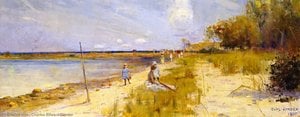
Charles Conder's 'Springtime' captures a serene Australian countryside scene with figures and nature bathed in sunlight. A beautiful example of Heidelberg School art.

Descubre las vibrantes escenas impresionistas y paisajes de Charles Edward Conder (1868-1909), figura clave del Heidelberg School australiano. ¡Explora sus obras en WahooArt!

Reproducción al óleo hecha a mano

Óleo sobre lienzo pintado a mano en el tamaño y marco de su elección, realizado por encargo por nuestros artistas. ( Cambiar a formato impreso Ver versión en imagen digital)

Corner sample of the P118B picture frame: poliestireno moldeado, 5 cm wide and 3 cm thick
P118B €10
Corner sample of the P118H picture frame: poliestireno moldeado, 5 cm wide and 3 cm thick
P118H €10
Corner sample of the P118W picture frame: poliestireno moldeado, 5 cm wide and 3 cm thick
P118W €10
Corner sample of the P438Z picture frame: poliestireno moldeado, 5.5 cm wide and 3.5 cm thick
P438Z €10
Corner sample of the P508JH picture frame: poliestireno moldeado, 7 cm wide and 3.5 cm thick
P508JH €12
Corner sample of the P508YH picture frame: poliestireno moldeado, 7 cm wide and 3.5 cm thick
P508YH €12
Corner sample of the P805H picture frame: poliestireno moldeado, 5 cm wide and 3.5 cm thick
P805H €10
Corner sample of the P805Z picture frame: poliestireno moldeado, 5 cm wide and 3.5 cm thick
P805Z €10
Corner sample of the P919BZ picture frame: poliestireno moldeado, 7 cm wide and 3.5 cm thick
P919BZ €10
Corner sample of the P919G picture frame: poliestireno moldeado, 7 cm wide and 3.5 cm thick
P919G €10
Corner sample of the P919XJ picture frame: poliestireno moldeado, 7 cm wide and 3.5 cm thick
P919XJ €10
Corner sample of the P959ZH picture frame: poliestireno moldeado, 5 cm wide and 3 cm thick
P959ZH €10
Corner sample of the P968JZ picture frame: poliestireno moldeado, 6 cm wide and 4 cm thick
P968JZ €12
Corner sample of the W106C picture frame: madera maciza, 5 cm wide and 3 cm thick
W106C €8
Corner sample of the W218G picture frame: madera maciza, 5 cm wide and 3 cm thick
W218G €10
Corner sample of the W218JH picture frame: madera maciza, 5 cm wide and 3 cm thick
W218JH €8
Corner sample of the W218Y picture frame: madera maciza, 5 cm wide and 3 cm thick
W218Y €10
Corner sample of the W307PJ picture frame: madera maciza, 6 cm wide and 3 cm thick
W307PJ €10
Corner sample of the W316G picture frame: madera maciza, 6 cm wide and 3 cm thick
W316G €10
Corner sample of the W316PJ picture frame: madera maciza, 6 cm wide and 3 cm thick
W316PJ €8
Corner sample of the W316Y picture frame: madera maciza, 6 cm wide and 3 cm thick
W316Y €10
Corner sample of the W398PJ picture frame: madera maciza, 5 cm wide and 3 cm thick
W398PJ €8
Corner sample of the W4111J picture frame: madera maciza, 6.5 cm wide and 3.5 cm thick
W4111J €10
Corner sample of the W500HY picture frame: madera maciza, 7 cm wide and 5 cm thick
W500HY €15
Corner sample of the W500JH picture frame: madera maciza, 7 cm wide and 5 cm thick
W500JH €15
Corner sample of the W692G picture frame: madera maciza, 8 cm wide and 4 cm thick
W692G €12
Corner sample of the W849H picture frame: madera maciza, 5 cm wide and 3 cm thick
W849H €8
Corner sample of the W940BG picture frame: madera maciza, 7.5 cm wide and 4.5 cm thick
W940BG €15
Corner sample of the W953PJ picture frame: madera maciza, 6 cm wide and 3.5 cm thick
W953PJ €8

Estándar
personalizado
CM
INCH

Elija entre nuestros tamaños predefinidos que respetan las proporciones originales de la obra.

ancho
altura

Escriba el ancho y el alto que necesite para adaptarse a su marco o a su pared. Al ser una obra pintada a mano, para un tamaño con una forma distinta, el artista puede pintar un poco más alrededor de la imagen o recortar un poco; usted elige. Le enviaremos una maqueta digital para su aprobación antes de comenzar la pintura. La imagen que se muestra en esta página no refleja el resultado real; solo la maqueta lo hace.

Ejemplos de lo que se puede personalizar: Reemplace el rostro con una foto del cliente; Agregue una mascota (por ejemplo, cambie un gato por un perro); Incluya un mensaje oculto en el fondo; Cambie el paisaje o los elementos del fondo.
Tras realizar el pedido, el equipo de WahooArt.com enviará un correo electrónico al cliente para solicitar instrucciones y proporcionarle una vista previa del boceto.

Envío a todo el mundo () en 3-4 semanas en lugar de las 5 semanas estándar. (24 octubre). Sin comprometer la calidad.

Envío exprés gratuito a todo el mundo
Lienzo de lino de alta calidad
Seguro de envío completo
Garantía de reembolso de impuestos aduaneros
Garantía de fidelidad cromática exacta
Política de devolución de 100 días (solo por defectos)
Garantía de devolución del 100% del dinero
Oferta por volumen

Precio total

€ 239

Springtime

Técnica de reproducción

Tamaño de la reproducción

-

Precio total

€ 239

Datos clave

  • Medium: Oil on canvas
  • Title: Springtime
  • Movement: Heidelberg School
  • Location: NGV, Melbourne
  • Artist: Charles Conder

Cuestionario de arte

Cada pregunta tiene una única respuesta correcta.

Pregunta 1:
What artistic movement is Charles Edward Conder primarily associated with?
Pregunta 2:
In 'Springtime', what is the primary subject matter depicted?
Pregunta 3:
What year was 'Springtime' painted?
Pregunta 4:
Charles Edward Conder was born in which city?
Pregunta 5:
Which of the following best describes Conder's style as evident in 'Springtime'?

Charles Edward Conder’s “Springtime,” A Window into Heidelberg’s Soul

Charles Edward Conder's "Springtime," painted in 1888, isn’t merely a depiction of a rural scene; it’s a vibrant distillation of the Heidelberg School’s artistic philosophy – a celebration of light, color, and the fleeting beauty of the Australian landscape. This oil on canvas captures a moment of idyllic tranquility nestled within the rolling hills of New South Wales, yet it resonates with a deeper sense of observation and emotional resonance that distinguishes Conder's work from purely topographical representations.

The painting immediately draws the eye to the luminous quality of the light, characteristic of the Heidelberg School’s approach. Conder masterfully employs broken brushstrokes and a palette dominated by greens, blues, and yellows – not in a photographic realism, but rather as an expression of how these colors *feel* under the intense Australian sun. The composition is deceptively simple: a meandering dirt track cuts through a field dotted with grazing sheep and cows, leading towards distant trees that are rendered with a hazy, atmospheric quality. A small group of figures – likely children – are visible in the foreground, adding a touch of human presence to this otherwise serene vista.

The Heidelberg School and its Artistic Roots

To fully appreciate “Springtime,” it’s crucial to understand the context within which Conder was working. The Heidelberg School, emerging in Melbourne during the 1880s, represented a significant shift away from the academic traditions of European art that had previously dominated Australian painting. Artists like Conder, Tom Roberts, and Frederick McCubbin sought inspiration directly from the Australian landscape, rejecting idealized representations in favor of capturing its raw beauty and inherent drama. They embraced *plein air* painting – working outdoors directly from nature – a technique championed by Impressionist painters in Europe.

Conder’s early life, marked by his mother's death in India and subsequent relocation to England before returning to Australia, undoubtedly shaped his artistic sensibility. His experiences as a surveyor instilled a keen eye for detail and an appreciation for the natural world, while his time spent studying art in London exposed him to the burgeoning Impressionist movement. However, Conder ultimately forged his own unique style, blending European influences with a distinctly Australian perspective.

Symbolism and Emotional Resonance

Beyond its picturesque subject matter, “Springtime” is rich in symbolic meaning. The dirt track suggests a journey – perhaps a metaphorical one – while the grazing animals represent the bounty of the land. The figures in the foreground invite us to contemplate our relationship with nature and the simple pleasures of rural life. There’s an underlying sense of nostalgia for a bygone era, a yearning for connection with the earth and its rhythms.

The hazy atmosphere and diffused light contribute significantly to the painting's emotional impact. It evokes a feeling of warmth, tranquility, and perhaps even melancholy – a recognition that such moments of beauty are fleeting and precious. Conder’s use of color is particularly effective in conveying this mood, creating a sense of depth and luminosity that draws the viewer into the scene.

A Legacy of Australian Impressionism

“Springtime” stands as a pivotal work in the development of Australian Impressionism. It exemplifies the Heidelberg School’s commitment to capturing the essence of the Australian landscape with vibrant color, loose brushwork, and an emphasis on light and atmosphere. Conder's ability to imbue his paintings with both visual beauty and emotional depth cemented his place as one of Australia’s most important artists. Reproductions of this captivating work continue to resonate with audiences today, offering a glimpse into the soul of Heidelberg and the enduring appeal of the Australian landscape.

Preguntas y respuestas

¿Cómo encaja "Springtime" con los temas y el estilo de Charles Edward Conder?

"Springtime" comparte con otras obras de Charles Edward Conder su estilo Heidelberg School y los temas recurrentes: heidelberg school realism, australian landscape painting, impressionistic light study, rural life depiction”, “conder’s artistic evolution”.

¿Muestra "Springtime" contrastes marcados entre luces y sombras?

El nivel de contraste de "Springtime" de Charles Edward Conder es Bold.

¿Qué tamaño y orientación se recomiendan para una impresión de "Springtime" de Charles Edward Conder?

Se recomienda imprimir "Springtime" de Charles Edward Conder en un tamaño de Medium con una orientación Landscape.


Biografía del artista

Primeros años y trayectoria artística

Charles Edward Conder, pintor, litógrafo y diseñador británico, dejó una huella imborrable en el mundo del arte. Nacido en Tottenham, Middlesex, el 24 de octubre de 1868, la primera etapa de la vida de Conder se vio marcada por el fallecimiento de su madre en India cuando tan solo tenía cuatro años.

Carrera artística en Australia

En 1884, a los 16 años, Conder se trasladó a Sydney, Australia, donde trabajó para su tío como topógrafo. Sin embargo, pronto descubrió que su verdadera pasión residía en dibujar el paisaje en lugar de realizar levantamientos topográficos. Para 1886, ya había sido contratado como artista del Illustrated Sydney News, junto con artistas destacados como Albert Henry Fullwood y Frank Mahony.

La Escuela de Heidelberg y obras notables

La obra maestra de Conder, “La partida del Orient – Circular Quay” (1888), demostró su dominio recién adquirido de la forma y el pincel. Esta escena portuaria, que representa el bullicioso puerto en Sydney Cove, fue rápidamente adquirida por la Galería de Arte de Nueva Gales del Sur, convirtiéndose en su primera obra en ingresar a una colección pública.
  • “Un día de vacaciones en Mentone” (1888), una pintura llena de alegría que muestra a hombres y mujeres relajándose en la playa, es otro ejemplo notable de su obra.
  • La asociación de Conder con G. P. Nerli, un pintor italiano itinerante, influyó significativamente en su desarrollo artístico.
  • Sus contribuciones a la Exposición de Impresionismo 9x5 en Melbourne, junto con Tom Roberts y Arthur Streeton, consolidaron su posición dentro del movimiento de la Escuela de Heidelberg.

Desarrollo Artístico y Influencias

Conder recibió influencias diversas que moldearon su estilo único. El contacto con artistas como Alfred Daplyn, Ashton y Nerli lo encaminó hacia el realismo al aire libre. La influencia de Phil May y Blamire Young le atrajo al arte de Whistler y la estética japonesa. Su obra se caracteriza por una poderosa inspiración en el pintor rococó Jean-Antoine Watteau, traduciendo su estilo al simbolismo a través de escenas ambientadas en las típicas festas galantes watteaunianas.

Últimos años y legado

Los últimos años de Conder estuvieron marcados por problemas de salud, incluyendo parálisis y un episodio de delirium tremens. A pesar de esto, continuó pintando, dejando atrás un legado como una figura clave en la Escuela de Heidelberg. Su arte fue mejor recibido en Inglaterra que en París, con su retrato siendo pintado por Henri de Toulouse-Lautrec en 1892. Vea las obras de Conder en la Galería de Arte de Nueva Gales del Sur o explore más sobre la Escuela de Heidelberg en la página de Charles Edward Conder de WahooArt.

Significado Histórico

El impacto de Charles Edward Conder en el impresionismo australiano es innegable. Su legado, marcado por sus cautivadoras pinturas y su asociación con la Escuela de Heidelberg, continúa inspirando a los entusiastas del arte en todo el mundo.
Charles Edward Conder

Charles Edward Conder

1868 - 1909 , Reino Unido

Datos clave

  • Artistas Que Influyeron:
    • G. P. Nerli
    • Jean-Antoine Watteau
  • Fecha De Muerte: 9 de febrero de 1909
  • Fecha De Nacimiento: 24 de octubre de 1868
  • Lugar De Nacimiento: Tottenham, Reino Unido
  • Movimiento Artístico: Impresionismo australiano
  • Nacionalidad: Británico
  • Nombre Completo: Charles Edward Conder
  • Obras Notables:
    • Departure of the Orient
    • A Holiday at Mentone
Explore obras de arte organizadas por temas, estilos y características.