Michelangelo Merisi Da Caravaggio: The Lute Player – A Symphony of Light and Emotion
Michelangelo Merisi da Caravaggio, universally known as Caravaggio (1571–1610), stands as one of the most influential figures in Baroque art. His revolutionary approach to painting—characterized by dramatic chiaroscuro, intense realism, and psychological depth—continues to captivate audiences centuries later. This essay delves into the intricacies of “The Lute Player,” examining its artistic merit, historical significance, and enduring legacy.
Background: Caravaggio’s early biographer Giovanni Baglione recounts a tale that encapsulates his artistic vision: he painted for Cardinal Francesco Maria del Monte a young man who played the lute, creating an illusion of life so convincing that it resembled a carafe brimming with water. Reflections from a window mirrored within the water, overlaid with dew glistening on the blossoms—all meticulously rendered—demonstrated Caravaggio’s unparalleled skill in capturing essence through observation.
The Composition: The painting depicts a young woman absorbed in music, her eyes closed as she plays the lute. Positioned centrally, the instrument dominates the scene, its strings visible and contributing to the sense of depth. Two vases flank the woman—one on the upper left corner and another on the lower right—adding visual balance and reinforcing the theme of harmony. Beneath the lute rests a book, suggesting musical notation and furthering the narrative’s contemplative mood.
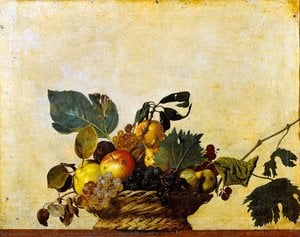
Symbolism and Elements: Caravaggio imbued his canvases with symbolic richness. The scattered fruits – apples in the lower left and oranges near the top right—represent abundance and prosperity. More profoundly, the luminous interplay of light and shadow—a hallmark of Caravaggio's technique—embodies spiritual contemplation. The artist’s masterful use of chiaroscuro creates a dramatic contrast between illuminated areas and darkened recesses, drawing the viewer’s gaze inward and conveying an emotional intensity rarely achieved in earlier art.
Versions and Exhibitions: Three versions of “The Lute Player” exist—the original residing at Badminton House since 2001, another housed in the Wildenstein Collection, and a third displayed at the Galleria Borghese in Rome during a joint exhibition with the Hermitage Museum in 2020. The meticulous reproductions produced by WahooArt.com capture the essence of Caravaggio’s masterpiece, allowing enthusiasts to experience its beauty firsthand.
Artistic Influence: Caravaggio's style profoundly impacted subsequent artists like Diego Velázquez, whose portraits—such as “Head of a Man”—demonstrate the enduring influence of his groundbreaking approach. His innovations extended beyond technique; he challenged conventions regarding representation and psychological portrayal, paving the way for new artistic expressions.
Reproductions and Prints: WahooArt.com offers exceptional handmade oil painting reproductions and prints on canvas of Caravaggio’s celebrated artworks, including “The Lute Player.” These reproductions are crafted with unwavering attention to detail, preserving the luminous drama and emotional resonance of Caravaggio's original vision.
Conclusion: “The Lute Player” stands as a testament to Caravaggio’s unparalleled mastery of light and shadow, alongside his profound understanding of human emotion. This painting continues to inspire admiration worldwide, cementing Caravaggio's place among the titans of Baroque art.



 Vista previa
 Cambiar a formato impreso
 Compartir
 Compartir
 Ver detalles
 Guía
Guía

 Descargar
 Ver artículos similares
 Radiografía
 Presentación de diapositivas
 Estadísticas


 Leer más






































 La opción de vidrio solo está disponible en tamaños inferiores a 110 cm.